
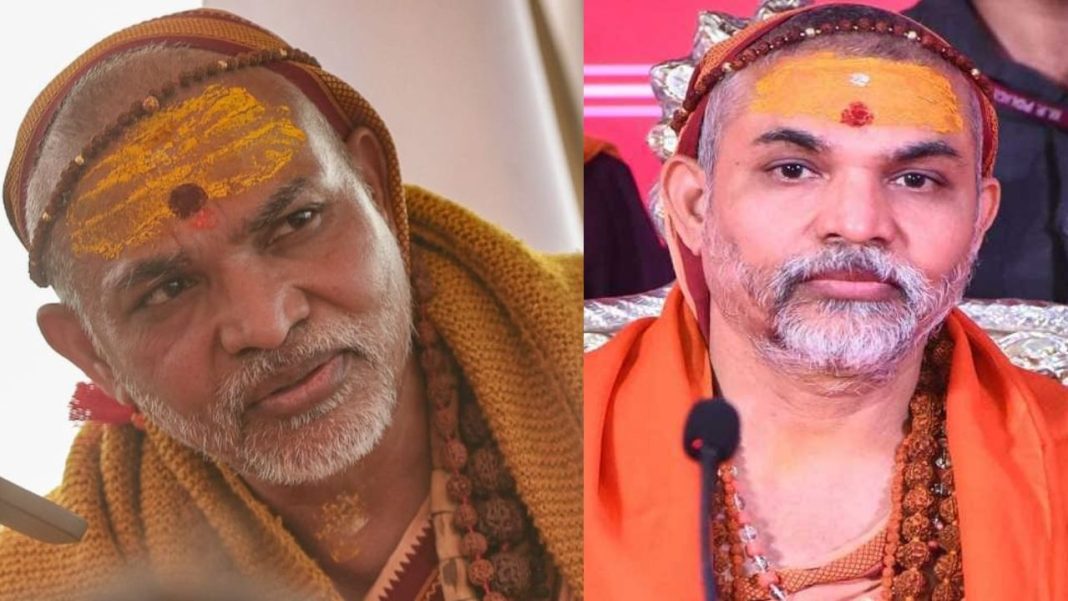

Swami Avimukteshwaranand Saraswati Biography: A spiritual leader rooted in ancient Hindu traditions yet vocal on contemporary religious and cultural issues, Swami Avimukteshwaranand Saraswati Ji is one of the most prominent Hindu monks in modern India.
As the Shankaracharya of Jyotish Peeth, Badrinath, he represents the centuries-old Advaita Vedanta lineage established by Adi Shankaracharya.
Known for his firm ideological stand, sharp oratory, and active engagement in socio-religious debates, he has emerged as a powerful voice in Sanatan Dharma discourse.
Personal Overview
| Birth name | Umashankar Pandey , Umashankar Upadhyay |
| Full Name | Shankaracharya Swami Avimukteshwaranand Saraswati |
| Date of Birth | 15 August,1969 |
| Place of Birth | Brahmanpur village, Pratapgarh district, Uttar Pradesh. |
| Profession | Spiritual Leader |
| Father Name | Pandit Ramsumer Pandey |
| Mother Name | Anara Devi |
| Siblings | Brother- Girirja Shankar Pandey,(storyteller)Sisters- 6 |
| Marital Status | Unmarried |
Early Life and Family Background
Swami Avimukteshwaranand Saraswati Ji was born into a traditional Hindu Brahmin family in eastern Uttar Pradesh.
From childhood, he showed a deep inclination toward religion, Sanskrit learning, and philosophical inquiry. His early environment—rooted in ritual discipline and scriptural respect—played a crucial role in shaping his spiritual temperament.
Unlike many monks who renounce early, he first pursued formal education and intellectual engagement, which later gave his spiritual discourse a strong academic and argumentative foundation.
Education and Intellectual Formation
He completed his primary education in his native region and later studied at:
-Maharaja Sayajirao University of Baroda (Gujarat)
-Bajoria Sanskrit College, Varanasi
-Sampurnanand Sanskrit University, Varanasi
He earned the prestigious Acharya degree in Navya Vyakarana (advanced Sanskrit grammar).
During his university years, he was actively involved in student politics, serving as Vice President and President of the student union, an experience that sharpened his leadership and public-speaking abilities.
His studies included:
-Vedas and Upanishads
-Bhagavad Gita
-Advaita Vedanta
-Sanskrit grammar and classical Shastras
Monk Life and Spiritual Journey
Spiritual Initiation
Driven by the pursuit of higher Vedantic knowledge, he renounced worldly life and accepted Sannyasa in the 1990s. He was also associated with Swami Karpatri Maharaj during his later years, gaining exposure to traditional Dharmic activism.
Guru and Monastic Name
He became a disciple of Jagadguru Swami Swaroopanand Saraswati, one of the most influential Shankaracharyas of modern times.
On 15 April 2003, he received Dand Sannyasa and was given the monastic name Swami Avimukteshwaranand Saraswati.
Philosophical Framework
He follows Advaita Vedanta within the Smarta tradition, emphasizing non-dualism, scriptural authority, and orthodox Vedic interpretation.
Role as Shankaracharya
Position
He is widely recognized by his followers as the 46th Shankaracharya of Jyotir Math, one of the four cardinal peethas established by Adi Shankaracharya.
Succession
After the death of his guru Swami Swaroopanand Saraswati in September 2022, he was designated as the successor. However, his coronation became subject to legal dispute, which later shaped many controversies around him.
Public Role and Religious Leadership
He leads:
-Religious discourses
-Yajnas and rituals
-Sanatan Dharma–based movements
He is particularly vocal on:
-Cow protection (Gau Raksha)
-Ganga sanctity
-Temple autonomy
-Opposition to state control of Hindu institutions
He frequently addresses youth, saints, and the public through media interactions and religious platforms.
Major Contributions and Activism
Ganga Protection: Actively involved in movements demanding the spiritual and ecological protection of the Ganga.
Cow Protection: Promotes strict laws against cow slaughter and advocates cow as a civilizational symbol.
Kashi Vishwanath Corridor: Criticised demolition of ancient temple structures during redevelopment.
Joshimath Crisis: Filed and supported legal actions highlighting environmental damage due to unchecked development in the Himalayas.
Major Controversies
- Supreme Court Stay on Coronation (2022)
The Supreme Court stayed his formal Pattabhishek as Shankaracharya following petitions challenging the succession process. While not declared illegitimate, his legal status remains under adjudication.
- Hunger Strike at Kashi (2022)
He undertook a hunger strike after being stopped from performing worship of the Shivling found during the Gyanvapi survey. The protest ended after serious health concerns and intervention by his Guru.
- Kedarnath Gold Allegations (2024)
He alleged irregularities involving temple gold at Kedarnath. The temple committee denied the claims, calling them baseless. The issue sparked national debate on temple transparency.
- Defamation Case Against Swami Govindanand Saraswati (2024)
After being publicly called a “fake baba” and accused of crimes, he filed a defamation suit. The Delhi High Court issued notice but remarked that saints should rise above reputation disputes.
- Praise for Prime Minister Modi (2024)
Despite earlier criticism of Ram Mandir rituals, he praised PM Modi for restoring Hindu self-confidence, clarifying that criticism does not equal opposition.
- Comments on Caste and Varnashrama
He strongly defended the Shastric Varnashrama system, opposing attempts to dilute caste identity, which drew criticism from reformist and political circles.
- Magh Mela Controversy & Ongoing Case (2026)
Denied ceremonial privileges during Magh Mela, he launched a hunger strike. Authorities issued a notice questioning his title. He left without bathing and issued a 40-day ultimatum demanding cow protection laws, making the dispute ongoing.
Vision, Impact, and Public Image
Vision
To preserve Sanatan Dharma, protect temple autonomy, uphold Advaita Vedanta, and resist political control over Hindu institutions.
Impact
He has forced national attention on issues of religious dignity, temple governance, and tradition vs modern governance.
Public Image
Highly polarising—revered as a fearless Dharmic voice by supporters, criticised as confrontational by opponents. ]
Undeniably, he remains one of the most talked-about Hindu monks of the present era.
Also read: Yogi Adityanath Biography: Know about the story of a yogi