


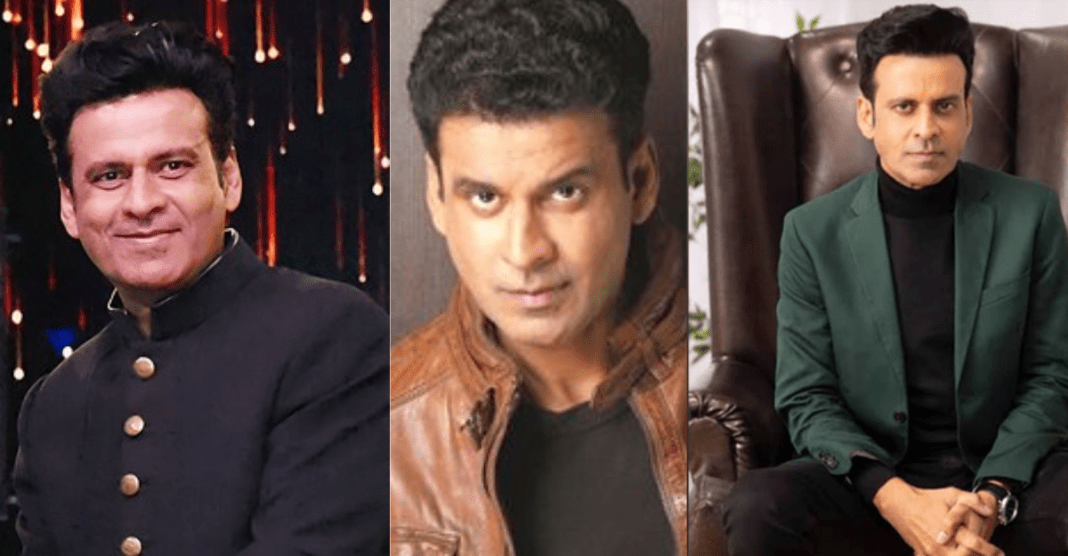

Manoj Bajpayee Biography: He once sold his belongings just to survive in a city that refused to accept him.
Rejected three times by the prestigious National School of Drama, he battled self-doubt, isolation, and financial hardship in cramped rented rooms shared with fellow strugglers some of whom would later become stars.
The rejections were painful, but they did not defeat him; instead, they forged an unbreakable resolve that would define his journey.
From the dusty lanes of Belwa village in Bihar to the fiercely competitive streets of Delhi and Mumbai, his path was anything but easy.
With no industry connections, no financial backing, and no shortcuts, he relied solely on craft, discipline, and relentless perseverance.
The boy who once struggled to pay rent would go on to redefine realism in Indian cinema , this is the extraordinary rise of Manoj Bajpayee, A family Man.
Personal Overview
| Full Name | Manoj Bajpayee |
| Date of Birth | April 23, 1969 |
| Age (As of 2025) | 56 Years |
| Place of Birth | Champaran, Bihar, India |
| Hometown | Belwa, West Champaran, Bihar |
| Profession | Actor, Producer |
| Net Worth | Approx. ₹125–130 Crore |
| Current Location | Mumbai |
| Father | Radhakant Bajpai (Passed away in 2021) |
| Mother | Geeta Bajpayee (Passed away in 2022) |
| Siblings | Kamini Shukla |
| Poonam Dubey (Fashion Designer) |
| Garima Bajpayee |
| Sujit Kumar Bajpayee |
| Vinay Bajpayee |
| Marital Status | Married |
| Spouse | Neha (aka Shabana Raza) |
| Daughter | Ava Rayla Bajpayee |
| Nationality | Indian |
| Caste | Brahmin |
| Religion | Hinduism |
The Family Legacy
Father: Radhakant Bajpayee, a farmer who was an avid “filmchi” (movie buff). Interestingly, Radhakant once auditioned for an acting course at FTII Pune during his college days in the presence of legends like Dharmendra and Manoj Kumar. He passed away in 2021.
Mother: Geeta Devi, a homemaker who was the pillar of his early emotional support. She passed away in 2022.
Siblings: Manoj is the second of six siblings (two brothers and three sisters). One of his sisters, Poonam Dubey, is a fashion designer in the film industry.
The Name Origin: His father named him after the veteran actor Manoj Kumar. In his youth, Manoj actually hated the name because it was “too common” in Bihar and briefly considered changing it to “Samar.”
Education and Early Struggle
The “Hut School” Beginnings
Manoj Bajpayee Biography: Manoj’s education began in a local “hut school” in Belwa. He later attended Khrist Raja High School in Bettiah. For higher studies, he moved to New Delhi at 17, graduating in History from Satyawati College and later attending Ramjas College, Delhi University.
The Trial by Fire
The road to Mumbai was paved with rejection.
The NSD Heartbreak: Manoj applied to the National School of Drama (NSD) three times and was rejected every single time. After the third rejection, he fell into a deep depression.
The Barry John Era: On the suggestion of Raghubir Yadav, he joined Barry John’s acting workshop. Barry was so impressed by Manoj’s talent that he eventually hired him as an assistant teacher.
The Irony: When he applied to NSD for the fourth time, they were so aware of his talent that they offered him a teaching position instead of a seat as a student.
Career Timeline: From Dacoit to Spy
The Beginning (1994–1997)
Manoj Bajpayee Biography: Debut: A one-minute role in Drohkaal (1994).
Bandit Queen (1994): Cast by Shekhar Kapur as the dacoit Maan Singh, a role that gave him his first real footing.
TV Survival: He worked in series like Swabhimaan and Imtihaan to make ends meet.
The Breakthrough: Bhiku Mhatre (1998)
Ram Gopal Varma’s “Satya” changed Indian cinema. Manoj’s portrayal of the gangster Bhiku Mhatre became a cultural phenomenon. His iconic line “Mumbai ka Raja kaun? Bhiku Mhatre!” is still echoed today.
The “Stardom of the Actor” (1999–2012)
Manoj chose the “road less traveled,” opting for intense, character-driven roles over typical chocolate-boy heroes.
Shool (1999): Played the honest Inspector Samar Pratap Singh.
Pinjar (2003): His portrayal of Rashid remains one of the most haunting depictions of the Partition era.
Raajneeti (2010): Played Veerendra Pratap, proving he could hold his own against a massive ensemble cast.
The Second Coming & Digital Reign (2012–Present)
Gangs of Wasseypur (2012): As Sardar Khan, he reinvented the “cool” factor in rustic revenge dramas.
Aligarh (2016): A sensitive portrayal of a gay professor, widely considered his career-best performance.
The Family Man (2019–Present): As Srikant Tiwari, he became a global sensation, bridging the gap between a middle-class father and a world-class spy. It is one of the inconic Indian web series.
The Rise and Versatility
- The “Bhiku Mhatre” Explosion (1998)
After years of bit roles in films like Bandit Queen and Daud, Manoj’s first meteoric rise came with Ram Gopal Varma’s Satya.
The Performance: His portrayal of the gangster Bhiku Mhatre was so visceral that it shifted the focus from the protagonist to the supporting lead.
The Impact: He broke the “chocolate hero” mold of the 90s. For the first time, a man with a sharp, unconventional face and a gritty Bihari-Maharashtrian dialect became a national sensation. He won his first National Award and became the “King of Mumbai” in the public eye.
- The Resurgence: Sardar Khan and the Cult Status (2010–2012)
After a lull in the mid-2000s where he felt “merged with the dust” due to a lack of quality roles, Manoj staged a massive comeback.
Raajneeti (2010): Playing the antagonist Veerendra Pratap, he proved he could outshine an ensemble of superstars through sheer screen presence.
Gangs of Wasseypur (2012): This was his “Renaissance.” As Sardar Khan, he delivered a performance that became a template for modern Indian noir. It didn’t just bring him back; it elevated him to an untouchable status where directors began writing scripts specifically for him.
- The OTT Superstardom: The Global Common Man (2019–Present)
While many veterans struggled to adapt to the digital age, Manoj conquered it.
–The Family Man (2019): This show transformed him from a “critics’ favorite” to a “global household name.” His character, Srikant Tiwari, became the ultimate relatable icon, a man fighting terrorists while worrying about his home loan.
–The Mastery of 2023–2026: In the last few years, his rise has peaked with films like Sirf Ek Bandaa Kaafi Hai and Gulmohar (for which he received a special mention at the 70th National Film Awards in 2024). As of 2026, he is seen as the “undisputed king of content,” transitioning seamlessly from intense courtroom dramas to lighthearted streaming hits like Killer Soup.
Awards & Global Recognition
- National Honors (The Big Ones)
Manoj is a rare gem in Indian cinema, having received the National Film Award four times.
National Film Awards:
- 1999: Best Supporting Actor (Satya).
- 2004: Special Jury Award (Pinjar).
- 2021: Best Actor (Bhonsle).
- 2024: Special Mention (Gulmohar).
- Padma Shri (2019): India’s fourth-highest civilian honor, awarded by the President of India for his monumental contribution to the Arts.
- International Accolades
He is a darling of the global festival circuit, often recognized for his “silent intensity.”
- Asia Pacific Screen Awards (APSA): He made history as the first actor to win Best Actor twice at the “Asian Oscars” (for Aligarh in 2016 and Bhonsle in 2019).
- Durban International Film Festival (2023): Won Best Actor for the survival drama Joram.
- Indian Film Festival of Melbourne (IFFM): Won Best Actor in a Series (2021) for The Family Man 2.
- New York Indo-American Arts Council (2018): Best Actor for Gali Guleiyan.
- Popular & OTT Awards
- Filmfare Awards: He has won 4 Filmfare Awards, with his Critics’ Best Actor wins for Satya, Shool, and Aligarh being legendary.
- Filmfare OTT Awards: He dominated the streaming space with Best Actor wins for The Family Man (Season 1 & 2) and Sirf Ek Bandaa Kaafi Hai (2023).
- Zee Cine & Iconic Gold Awards (2024/2026): Recently recognized for his performances in Killer Soup and Joram.
Controversies
- The “Ghooskhor Pandat” Title War (2026)
The biggest recent drama. His Netflix project with Neeraj Pandey, originally titled Ghooskhor Pandat, faced massive backlash from the Brahmin community for linking a caste name to corruption.
The Fallout: FIRs were filed, and the case reached the Supreme Court.
The Resolution: In February 2026, the makers officially withdrew the title and all posters. Manoj cleared the air, saying he was just playing a “flawed individual” and never meant to insult his own community.
- The Legal Hunt for KRK (2021–Present)
Manoj is one of the few actors who didn’t just ignore self-proclaimed critic KRK.
The Spark: KRK called him a “drug addict” in a tweet.
The Action: Manoj filed a criminal defamation case in Indore. KRK tried to move it to Mumbai, but the Supreme Court rejected it in 2023. As of 2026, Manoj is still pursuing the case, proving he’s not a “minimum guy” when it comes to his dignity.
- The Boulder Chase (Anurag Kashyap)
His relationship with director Anurag Kashyap is legendary for its “hot and cold” vibes.
The Fight: During their younger days, they had a massive falling out. Manoj once famously chased Anurag with a boulder on a set.
The Silence: They didn’t speak for 11 years until Gangs of Wasseypur brought them back together. Today, they are close, but they still “poke” each other constantly in interviews.
Personal Life
First Marriage: Manoj was briefly married to a girl from Delhi during his struggling days, but the marriage ended in divorce due to the financial and emotional toll of his career struggle.
Second Marriage: In 2006, he married actress Shabana Raza (known as Neha, the lead in Kareeb).
Children: They have a daughter named Ava Nayla.
Interests: He is an avid reader and a fan of world cinema. He enjoys traveling back to his village to practice farming during his downtime.
Acting Style and Impact
Method Acting: Manoj is a classic method actor who “lives” the character.
He spends months researching the diction, body language, and psyche of his roles.
Subtlety vs. Intensity: He is famous for his “unspoken” acting, conveying more through a twitch of his eye or a heavy silence than most do with pages of dialogue.
The Influence: Actors like Nawazuddin Siddiqui and Pankaj Tripathi often cite Manoj as the pioneer who opened the doors for “non-traditional” looking actors to become superstars.
Connection with Peers: “Actor’s Actor “
The SRK Bond: He and Shah Rukh Khan were struggling youngsters in Delhi’s theater scene. Manoj famously taught SRK how to use the Delhi local trains, and SRK once took Manoj to his first-ever disco.
The Mentor to Icons: Modern powerhouses like Pankaj Tripathi and Nawazuddin Siddiqui treat him like a god. Pankaj Tripathi once famously kept Manoj’s lost slipper as a “souvenir” because he idolized him so much.
The RGV & Anurag Connection: He shares a “love-hate-respect” relationship with directors Ram Gopal Varma and Anurag Kashyap. They fought, didn’t speak for years, but eventually reunited to create cinematic history like Satya and Gangs of Wasseypur.
The OTT Brotherhood: He shares a high-intellect bond with peers like Kay Kay Menon and Gajraj Rao, often engaging in deep discussions about the “craft” rather than box office numbers.
Set Vibes: On sets like The Family Man, he is known as the “cool elder brother” who protects younger actors from industry politics and keeps the atmosphere grounded.
Top 5 most legendary lines
- “Mumbai ka King kaun? Bhiku Mhatre!” (Film: Satya, 1998) The scream on the edge of a cliff that changed Indian cinema forever. This isn’t just a line; it’s the birth of a legend.
- “Keh ke lenge uski.” (Film: Gangs of Wasseypur, 2012) Delivered with cold, chilling confidence by Sardar Khan. It became a cultural war cry for anyone seeking calculated revenge.
- “Don’t be a ‘Minimum Guy’.” (Web Series: The Family Man, 2019) A single line that resonated with every corporate employee in India. It perfectly captured the struggle of Srikant Tiwari balancing a middle-class life with high-stakes espionage.
- “Aasmaan mein thookne waale ko shayad yeh pata nahin hai… ki palat ke thook unhi ke chere par giregi.” (Film: Raajneeti, 2010) A masterclass in biting, political arrogance. Manoj’s portrayal of Veerendra Pratap used this line to show his mastery over wordplay and intimidation.
- “Aap the zero, hai zero aur aap hamesha rahenge zero!” (Film: Aarakshan, 2011) Facing off against the legendary Amitabh Bachchan, Manoj delivered this with such sharp, disrespectful perfection that it became a highlight of his career.
Net Worth and Reach
Net Worth: Estimated to be around ₹110–130 Crore ($14M–$16M) in 2026, largely accumulated through high-profile OTT deals, films, and brand endorsements.
Global Reach: With The Family Man, his reach extended to over 240 countries via Prime Video, making him a household name in the global South Asian diaspora.
Politics, Ideology, and Vision
Political Journey: Despite his deep roots in Bihar, Manoj has no political career. He has repeatedly stated that he has been approached by every major political party in India for 24 years, but he refuses because his “only passion is acting.”
Ideology: He is a staunch believer in freedom of expression and democracy. He often advocates for the “common man” and rural development, remaining deeply connected to his roots in Bihar.
Vision for Cinema: He champions “Content-driven Cinema.” He believes that for an industry to survive, it must respect the writer and the craft over the “star system.”
Lessor Known Facts
The UPSC “Deception”: To get his parents to agree to his move to Delhi, he lied and said he was preparing for the UPSC (Civil Services). In reality, he was spending all his time in the local theater scene.
The Suicide Watch: After his third rejection from the National School of Drama (NSD), he fell into such a deep depression that his friends feared for his life. They actually started a 24-hour rotation (a “suicide watch”) to make sure he was never alone.
The “Chappal” Incident: His old friend Shah Rukh Khan once took him to a fancy Delhi disco for the first time. Manoj felt so out of place because he was wearing bathroom slippers (chappals) that he spent the whole night hiding in a dark corner.
The Irony of NSD: After being rejected as a student 3 times, when he applied a 4th time, the institution recognized his talent and offered him a teaching position instead of a seat in the class.
No Dinner for 18 Years: He has followed a strict health regime for nearly two decades where he skips dinner entirely. He usually has his last meal of the day by 3 PM or 4 PM.
The Set Crasher: During his starving days in Mumbai, he would often figure out which film sets had the best food and “get-crash” during lunch hours, pretending to be a crew member just to get a free hot meal.
Turned Down “Dangal”: He is one of the few actors who reportedly turned down a role in Aamir Khan’s Dangal because he felt the character lacked the “creative depth” he craves.
Biography By: Snigdha