

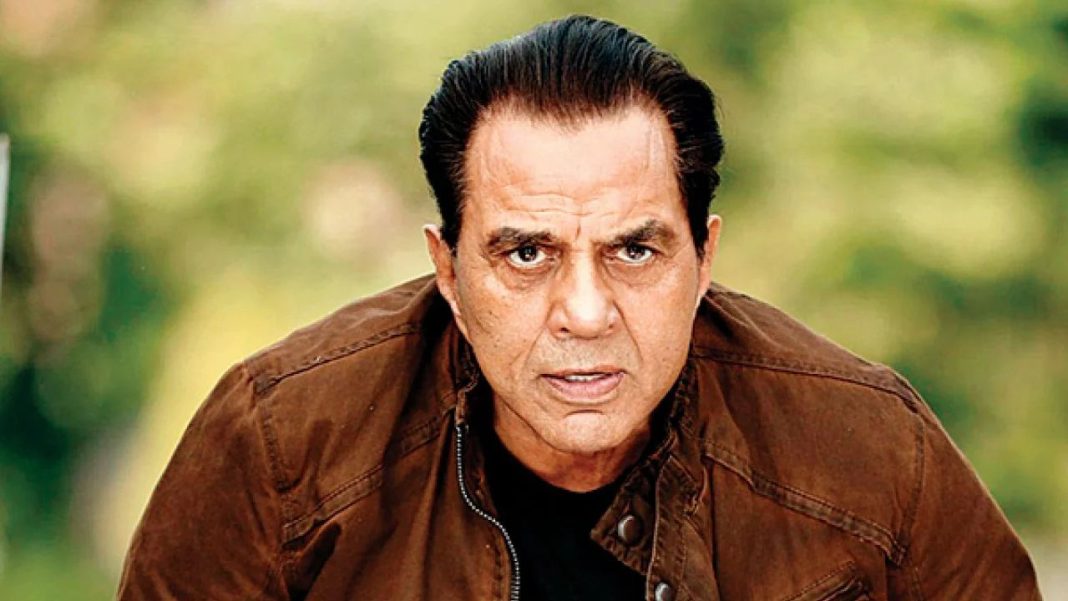

Dharmendra Biography: In the 1960s and 70s, Hindi cinema discovered a new kind of hero—one who could look like a warrior yet speak with the innocence of a village boy.
His broad shoulders, soft-spoken charm, and emotional intensity created a persona that audiences trusted.
Directors admired his discipline, co-stars praised his humility, and fans saw in him the embodiment of the “garam-dil, garam-jism” hero: warm-hearted yet powerful.
He could deliver lines with quiet restraint or thunder across the screen with righteous anger.
Whether in rural dramas, intense action films, or lighthearted comedies, his presence commanded attention. He became a bridge between the romantic heroes of the 1960s and the action icons that dominated the 1970s and 80s.
The actor who carried this extraordinary journey from a small Punjabi village to the pinnacle of Indian cinema was none other than Dharmendra often lovingly called the
“He-Man of Bollywood.”
Personal Overview
| Full Name | Dharam Singh Deol |
| Nickname | Dharmendra,Dharam,He-man of bolllywood,Garam dharam |
| Date of Birth | 8 December 1935 |
| Age | 89 years (at the time of death) |
| Place of Birth | Sahnewal,Punjab, India |
| Hometown | Sahnewal,Ludhiyana,Punjab,India |
| Profession | Actor, Producer, Politician |
| Debut Film | Actor Dil bhi tera hum bhi tere (1960)Film Producer Betab (1983) |
| Political Inclination | Bhartiya Janta Party |
| Father | Kewal Kishan Singh Deol |
| Mother | Satwant Kaur |
| Sibling | Ajit Singh Deol |
| Maritial Status | Married |
| Spouse | Wife 1- Prakash Kaur Wife 2- Hema Malini |
| Children | Sunny Deol and Bobby Deol (both from first wife) Vijeeta Deol and Ajeeta Deol (both from first wife) Esha Deol and Ahana Deol (both from second wife) |
| Religon | Sikhism |
| Nationality | Indian |
The Genesis: Roots and Rural Punjab
Born as Dharam Singh Deol on December 8, 1935, in the tiny hamlet of Nasrali, Ludhiana, his early life was defined by the golden wheat fields of Punjab.
His father, Kewal Kishan Singh Deol, was a strict disciplinarian and a village school headmaster.
This upbringing instilled in him a grounded, “mitti se juda” (connected to the soil) persona that he never lost, even at the height of global fame.
The Cinema Spark: Young Dharam would often bunk school and travel several miles to the nearest town just to watch a film.
He famously watched the film Shaheed (1948) starring Dilip Kumar over 40 times.
The Physical Foundation: He spent his youth wrestling in akhadas and drinking fresh buffalo milk, developing the natural, rugged physique that would later revolutionize the “shirtless” hero trope in Bollywood long before it became a trend.
Education
The Headmaster’s Son: He grew up in a scholarly home; his father, Kewal Kishan Singh Deol, was a village school headmaster in Sahnewal, Punjab.
Schooling: He completed his Matriculation (10th grade) in 1952 at the Government Senior Secondary School in Phagwara.
College: He enrolled at Ramgarhia College, Phagwara, for his intermediate studies (12th grade).
The Pivot: He didn’t finish his degree. The “University of Life” called—he worked briefly for an American drilling company and a government dispensary before winning a talent hunt and hopping on a train to Mumbai.
Self-Taught Scholar: While he left formal books behind, he became a master of Urdu poetry (Shayari) later in life, proving that a degree isn’t the only way to be a man of letters.
The Struggle: From Sahnewal to Mumbai
Dharmendra’s journey to stardom was not a red-carpet walk. He was a married man with a child when he decided to pursue acting.
The Filmfare Talent Hunt: In 1958, he won the Filmfare New Talent Award. He moved to Mumbai (then Bombay) with high hopes, but the industry was cold.
The Days of Hunger: He often spoke about days when he didn’t have money for a single meal.
He once shared an anecdote about being so hungry that he ate a whole pack of glucose biscuits and drank water to bloat his stomach so he wouldn’t feel the pangs of hunger while waiting for auditions.
The Debut: He finally landed Dil Bhi Tera Hum Bhi Tere (1960). He was paid a meager 51 Rupees, a far cry from the millions he would eventually command.
Career Timeline
1.The Formative Years: The Gentle Romantic (1960–1965)
Dharmendra entered Bollywood when the industry was ruled by the “Big Three” (Dilip Kumar, Raj Kapoor, and Dev Anand). To find his space, he initially took on roles that highlighted his soft, boyish charm and soulful eyes.
1960: Debuted in Dil Bhi Tera Hum Bhi Tere. He was paid a signing amount of just ₹51.
1962–1963: Gained recognition through “woman-oriented” classics. In Bimal Roy’s Bandini (1963), he played a sensitive prison doctor, a role that proved he was more than just a handsome face.
1964: Hit the jackpot with Haqeeqat, India’s greatest war film, and the musical hit Ayee Milan Ki Bela, where he played a character with shades of grey.
2.The Rise of the “He-Man” (1966–1974)
This era saw the transformation of Dharmendra from a romantic hero into India’s first true action icon.
1966: Phool Aur Patthar released. He played the criminal “Shaka.” The scene where he removes his shirt to cover a widow (Meena Kumari) made him an overnight sensation and established his “He-Man” persona.
1969: Delivered his career-best performance in Satyakam. He played an uncompromisingly honest man, a role that remains a benchmark for acting excellence in Hindi cinema.
1971–1973: Despite the “Rajesh Khanna Wave,” Dharmendra remained untouchable with massive hits like Mera Gaon Mera Desh (the spiritual predecessor to Sholay) and Yaadon Ki Baaraat.
3.The Zenith: The “Veeru” Era (1975–1979)
In the mid-70s, Dharmendra was arguably the most bankable star in the country, even as the “Angry Young Man” (Amitabh Bachchan) began his ascent.
1975: A landmark year. He starred in Sholay as the boisterous, lovable Veeru. He also starred in the cult comedy Chupke Chupke, showing his world-class comic timing.
1977: Proved his mass appeal with Dharam Veer, a “lost and found” costume drama that became a golden jubilee hit.
The Global Recognition: During this time, he was voted as one of the Top 10 Most Handsome Men in the World, a rare international feat for an Indian actor at the time.
4.The Action King & The Mentor (1980–1995)
As he matured, Dharmendra leaned heavily into the “Action King” brand, often playing the righteous patriarch or the vengeful hero.
1983: Launched his son, Sunny Deol, in Betaab under his own banner, Vijayta Films.
1987: A record-breaking year. He had seven major successful films released in a single year, including the massive hit Hukumat, which was the highest grosser of 1987.
Early 90s: Continued to lead action films like Tahalka and Kshatriya, maintaining a loyal fan base in “Single Screen” theaters even as the “Khans” began to take over the urban market.
5.The Veteran & The “Grandpa” of the Nation (2000–2025)
Dharmendra didn’t retire; he evolved into a beloved elder statesman of cinema.
2007: Made a brilliant comeback in character roles with Life in a… Metro and Apne (starring alongside both his sons).
2011: Capitalized on his “Jat” humor with the Yamla Pagla Deewana franchise.
2023–2025: His final act. He moved audiences in Karan Johar’s Rocky Aur Rani Kii Prem Kahaani (2023). His final appearance was in the film Ikkis (scheduled for 2025), completing a full circle in a career that never truly saw a
Poltical Snapshot
The Entry (2004): He joined the BJP and contested the Lok Sabha elections from Bikaner, Rajasthan. Using his massive star power, he won by a landslide margin of about 60,000 votes.
The “Absentee” Label: His political career was plagued by criticism over his low attendance in Parliament. He was often accused of being a “missing MP” because he preferred his farmhouse or film sets over the Lok Sabha benches.
The “Dictator” Comment: He sparked a national controversy when he frustratedly suggested he should be made “Dictator for life” to fix the country’s problems, which critics called anti-democratic.
The Struggle: A man of emotion and poetry, he found the “dirty games” of politics suffocating. He famously said he felt like a “fish out of water” and regretted ever joining.
The Exit (2009): He refused to contest again, officially quitting active politics to return to his first loves: farming and films.
Family Footsteps: While he left, he paved the way for his wife Hema Malini (long-time MP from Mathura) and son Sunny Deol (former MP from Gurdaspur) to enter the arena.
| Detail | Information |
| Party | Bharatiya Janata Party (BJP) |
| Constituency | Bikaner, Rajasthan |
| Term | 2004 – 2009 |
| Key Margin | ~60,000 Votes |
| Final Stance | Disenchanted; called it “suffocating.” |
Controversies
The Bigamy Scandal (1980): His marriage to Hema Malini was a massive controversy.
Since he was already married to Prakash Kaur (and Hindu law forbids a second marriage), it is widely alleged he converted to Islam and took the name Dilawar Khan to marry Hema without a divorce.
The “Sholay” Mischief: He famously bribed light-boys on the set of Sholay to make mistakes during romantic scenes so he could have more “retakes” and extra time hugging Hema Malini.
Alcohol Addiction: Dharmendra was very candid about his battle with the bottle. He admitted that his drinking habits often caused friction with his son, Sunny Deol, and nearly derailed his career in the late 80s.
The Anita Raj Rumors: In the 80s, his extreme closeness to actress Anita Raj sparked rumors of a third marriage, which reportedly led to a major confrontation within his family.
The “Invisible” MP: During his political stint (2004–2009), he was heavily criticized for his near-zero attendance in Parliament, eventually admitting he was “unfit” for the world of politics.
Awards & Honors
| Category | Award / Honor | Year | Details / Work |
|---|
| Highest Civilian | Padma Vibhushan | 2026 | Awarded posthumously (India’s 2nd highest honor). |
| Civilian | Padma Bhushan | 2012 | For his massive contribution to the Arts. |
| National Level | National Film Award | 1991 | Best Popular Film (Producer) for Ghayal. |
| Industry Legend | Filmfare Lifetime Achievement | 1997 | Famous “37 years of stitching suits” speech. |
| Global Recognition | Top 10 Most Handsome Men | 1970s | Voted as one of the world’s best-looking men globally. |
| International | BAFTA “In Memoriam” | 2026 | Honored by the British Academy after his passing. |
| Excellence | Dadasaheb Phalke DPIFF | 2021 | Outstanding Contribution to the Film Industry. |
| Legacy | Filmfare Best Film of 50 Years | 2005 | Special award for his masterpiece Sholay. |
| Regional / State | Punjab Rattan | 2004 | Honored by his home state for bringing pride to Punjab. |
| Stardom | IIFA Lifetime Achievement | 2007 | Recognition for global Indian cinematic impact. |
| Early Talent | Filmfare New Talent Hunt | 1958 | The contest win that started his entire journey. |
| TV Recognition | Indian Telly Award | 2012 | Best Judge on a TV Show (India’s Got Talent). |
The “Dream Girl” Saga & Personal Life
Dharmendra’s personal life was a tapestry of tradition and rebellion.
Prakash Kaur (1954): Married at 19 in an arranged match. She remained his silent support, staying out of the limelight while raising Sunny, Bobby, Vijeeta, and Ajeeta.
Hema Malini (1980): Their love story began on the sets of Tum Haseen Main Jawaan. Despite being married, Dharmendra pursued Hema Malini relentlessly.
The Marriage Controversy: Because Hindu law did not allow a second marriage while the first was subsisting, and his first wife refused a divorce, it is widely reported (though he rarely discussed it) that he and Hema converted to Islam to marry legally. This union produced Esha and Ahana Deol.
The Iconic One-Liners
| Movie | The Famous Dialogue | The Vibe |
|---|---|---|
| Sholay | “Basanti, in kutton ke saamne mat naachna!” | Protective Hero |
| Yaadon Ki Baaraat | “Kutte, kameene! Main tera khoon pee jaunga!” | Pure Rage |
| Sholay | “Mausi, suicide! Suicide!” | Drunken Comedy |
| Dharam Veer | “Mard banne ke liye shareer nahi, himmat chahiye.” | True Masculinity |
| Phool Aur Patthar | “Jo darr gaya, samjho marr gaya.” | Fearless Attitude |
| Ghulami | “Kabhi zameen se baat ki hai Thakur? Ye zameen humari maa hai.” | Earthy Roots |
| Yamla Pagla Deewana | “Oye, ilaaka kutton ka hota hai… sher ka nahi!” | Swag |
Connection with Peers
The Jai-Veeru Bond: He was a mentor to Amitabh Bachchan. In fact, Dharmendra was the one who personally recommended Amitabh for Sholay when Big B was still a struggling actor.
The Dilip Kumar Idolization: He worshipped Dilip Kumar. Dilip Sahab once famously said, “Whenever I want to see a handsome man, I look at Dharmendra.” They shared a father-son bond that lasted until Dilip’s passing.
The Peacekeeper: Unlike other stars, Dharmendra had zero rivalries. Even when he and Sanjeev Kumar both loved Hema Malini, Dharmendra maintained a dignified professional relationship with him.
The “Jat” Hospitality: He was famous for his heart and his kitchen. Whether it was a superstar or a spot boy, no one left his set or home without being fed a massive Punjabi meal.
Mentor to the Ladies: He was the favorite co-star of actresses like Meena Kumari (who taught him Urdu) and Sharmila Tagore, who called him the ultimate “gentleman” hero.
Acting Style: The “Rugged Romantic”
Dharmendra’s style was a unique blend of raw power and extreme sensitivity.
Masculine Vulnerability: He was the first alpha hero who made it “cool” to be vulnerable. He could demolish fifty villains in one scene and shed genuine, heart-wrenching tears in the next.
The “Jat” Naturalism: He didn’t rely on over-the-top drama. His acting felt “earthy”—like a real man from the village who just happened to be on camera.
Comic Timing: He pioneered the “goofy hero.” His drunk scenes and playful banter (especially in Sholay and Chupke Chupke) set the blueprint for future stars like Salman and Govinda.
| Movie | Year | Genre / Note |
|---|---|---|
| Satyakam | 1969 | Drama – His Best Performance |
| Sholay | 1975 | Action / Comedy |
| Phool Aur Patthar | 1966 | Action / Romance |
| Chupke Chupke | 1975 | Comedy |
| Anupama | 1966 | Romance |
His Poetry: The “Soulful Farmer”
While his body belonged to the screen, his soul belonged to Urdu and Punjabi poetry.
The Farmhouse Poet: In his later years, he became a prolific Shayar (poet). Living at his Lonavala farm, he wrote about the “simplicity of the soil” versus the “fake glitz of Bollywood.”
Themes: His verses were usually about Nostalgia (Tanhai), the beauty of nature, and his deep love for his roots in Sahnewal.
His Philosophy: He used poetry to stay grounded. He once wrote: “I am not a superstar; I am just a sensitive soul trapped in a hero’s body.”
Industry Appreciation
The “Father Figure”: To the Khans and the younger generation, he wasn’t just a star; he was a mentor. Shah Rukh Khan and Salman Khan often called him a “guiding light” and a father figure who treated them like his own sons.
Zero Enemies: He is one of the few actors in history with no rivalries. Everyone from Amitabh Bachchan to the smallest technician loved him for his humility and “big heart.”
Humanizing Stardom: The industry appreciated him for being “real.” He was famous for feeding the entire crew and treating a spot boy with the same respect as a director.
The “Dilip Kumar” Connection: He was officially recognized as the “successor” to Dilip Kumar’s legacy of grace, with Saira Banu calling him Dilip Sahab’s “dearest brother.”
Global Respect: His legacy was so huge that even BAFTA (2026) gave him a special tribute, proving he wasn’t just India’s hero, but a global cinematic icon.
Lesser Known Facts & Trivia
The Railway Clerk: Before the glitz, he worked as a railway clerk earning just ₹125 a month. He used to walk miles to save money for food.
The “Ikkis” Parting Gift: His final film, Ikkis (released posthumously in early 2026), saw him play a poignant role as a war hero’s grandfather. It was directed by Sriram Raghavan, making it his cinematic farewell.
Foodie to the Core: He opened a restaurant chain called “Garam Dharam Dhaba” to bring the authentic taste of Punjab’s roadside eateries to the city.
The “Fan” Salman Khan: Salman Khan once said Dharmendra is the only man he ever followed consistently, calling him the “most beautiful man” because of the innocence in his eyes despite his macho build.
Refusal of “Zanjeer”: He was the first choice for the film Zanjeer. He turned it down, and the role went to Amitabh Bachchan, creating the “Angry Young Man” legend.
Health Issues & Final Days
Dharmendra’s later years were spent in the quiet of his farmhouse, but age-related health challenges eventually caught up with him.
Respiratory Struggles: In late 2025, he was admitted to Breach Candy Hospital in Mumbai due to respiratory complications and age-related ailments.
The Passing: On November 24, 2025, at the age of 89, the “He-Man” of India passed away peacefully at his residence in Mumbai.
The Nation Wept: His funeral saw a sea of humanity—from Bollywood titans to common farmers—proving his impact crossed all social divides.
Legacy & Public Image
Dharmendra was the “Bridge Star.” He connected the black-and-white era of Bimal Roy to the high-octane masala era of the 80s, and finally to the modern aesthetics of the 2020s.
The Posthumous Honor: In early 2026, the Government of India announced the Padma Vibhushan (posthumous) for him, cementing his status as a national treasure.
Global Tribute: In February 2026, the BAFTA Awards in London featured him in their In Memoriam segment. He was the only Indian actor honored that year, standing alongside Hollywood greats like Val Kilmer and Robert Duvall.
Vision: He wanted Indian cinema to stay “rooted.” He often said, “Technique will change, but the heart (the emotion) must stay Indian.”
By: Snigdha Singh
ALSO READ : Deepti Sharma Biography: From Rejected Trials to World Cup Glory, The Making of India’s Greatest All-Rounder