
PM RAHAT Scheme
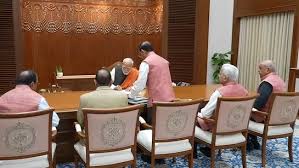
Every year, thousands of people die in road accidents in India not always because their injuries were too severe, but because help did not reach them in time. To fix this, the Union Government has launched the PM RAHAT Scheme. The full name is the PM Road Accident Victim Hospitalization and Assured Treatment Scheme. It is a major step forward in emergency healthcare. The scheme ensures that any road accident victim gets immediate, cashless medical treatment without worrying about money. It was one of the first big decisions taken after the government moved to Seva Teerth.
What is the PM RAHAT Scheme?
The PM RAHAT Scheme is a government initiative run by the Ministry of Road Transport and Highways. Its main goal is simple: no road accident victim should die because they could not afford hospital treatment.
Under the PM Rahat Yojana, accident victims can get cashless treatment at designated hospitals. This means the hospital treats the patient first and gets paid later through a government fund. The patient or their family does not need to pay anything upfront.
The scheme is built on the idea of the “Golden Hour” the first 60 minutes after a serious injury. Doctors say that nearly 50% of road accident deaths can be prevented if the victim receives proper hospital care within this window. The PM RAHAT Scheme is designed to make sure that window is never missed due to financial reasons.
Key Features of the PM RAHAT Scheme
Coverage Amount: Up to ₹1.5 lakh per victim for medical expenses within 7 days of the accident.
• Cashless Treatment: The victim pays nothing at the hospital. All bills go directly through the government fund.
• Stabilization Care: Up to 24 hours of treatment for non-life-threatening injuries and up to 48 hours for life-threatening cases.
• Digital Process: The scheme links the eDAR (Electronic Detailed Accident Report) platform with the National Health Authority’s Transaction Management System (TMS 2.0) for smooth digital coordination.
• Emergency Helpline: The scheme is connected to ERSS Dial 112, India’s national emergency number, so anyone can call for an ambulance and find the nearest hospital quickly.
• Fast Payment to Hospitals: Once a claim is approved, the state health agency must pay the hospital within 10 days.
• Grievance System: Each district has a Grievance Redressal Officer under the District Road Safety Committee, chaired by the District Collector or Magistrate, to resolve any complaints.
PM RAHAT Scheme Eligibility: Who can apply?
The PM RAHAT Scheme eligibility is intentionally broad. It was designed so that no victim falls through the cracks:
• Any road accident victim in India, whether Indian or foreign national.
• Accidents involving insured, uninsured, or unknown (hit-and-run) vehicles.
• Accidents on any road type- national or local.
There is no income test, no paperwork needed before treatment begins, and no discrimination based on who was at fault. If you are injured in a road accident in India, you are covered.
How Will the PM RAHAT Scheme Process Work?
The PM RAHAT Scheme process is designed to be fast and fully digital. Here is how it works, step by step:
Step 1 – Accident is Reported
Anyone at the accident scene the victim, a bystander, or a Good Samaritan can dial 112 to report the accident. Ambulance services are dispatched immediately.
Step 2 – Police Authentication via eDAR
The accident is recorded digitally using the Electronic Detailed Accident Report (eDAR) platform. This creates a verified digital record of the incident, removing the need for lengthy paperwork.
Step 3 – Hospital Admission and Treatment
The victim is taken to the nearest designated hospital. The hospital begins cashless treatment immediately. No advance payment is required from the patient or family.
Step 4 – Claim is Filed via TMS 2.0
The hospital submits a claim through the National Health Authority’s Transaction Management System (TMS 2.0). The system processes the claim digitally.
Step 5 – Reimbursement to Hospital
The hospital is reimbursed through the Motor Vehicle Accident Fund (MVAF). If the offending vehicle was insured, insurance companies contribute to the fund. For uninsured or hit-and-run cases, the government pays directly from the budget. Approved claims must be settled within 10 days.
Supporting the Good Samaritan: The Rah-Veer Provision
One of the most human elements of this scheme is its support for Good Samaritans, referred to as Rah-Veer. In the past, bystanders feared legal or financial entanglement.
The PM RAHAT Scheme changes this:
• Legal Protection: Rah-Veers can assist victims without fear of police harassment or hospital deposits.
• Cash Rewards: To encourage bravery, the government provides a cash reward of ₹25,000 to any “Rah-Veer” who saves a life by transporting a victim to the hospital within the Golden Hour.
Why the PM RAHAT Scheme Matters for India
India loses more lives to road accidents than almost any other country in the world. The economic cost runs into thousands of crores annually, and the human cost is immeasurable. Most victims are young, working-age individuals whose families are left devastated.
The PM RAHAT Scheme addresses this not just as a healthcare problem, but as a governance challenge. By linking police, hospitals, insurers, and the national health authority on a single digital platform, it removes the silos that slow down emergency response. It reflects the Digital India philosophy using technology to deliver faster, fairer public services.
It also signals a shift in how the government views emergency care as a right, not a service that depends on the victim’s ability to pay.
For every family that has ever stood helplessly at a hospital counter, scrambling for money while a loved one waited for care the PM RAHAt Yojana is a direct answer. It says: treatment comes first, always.