


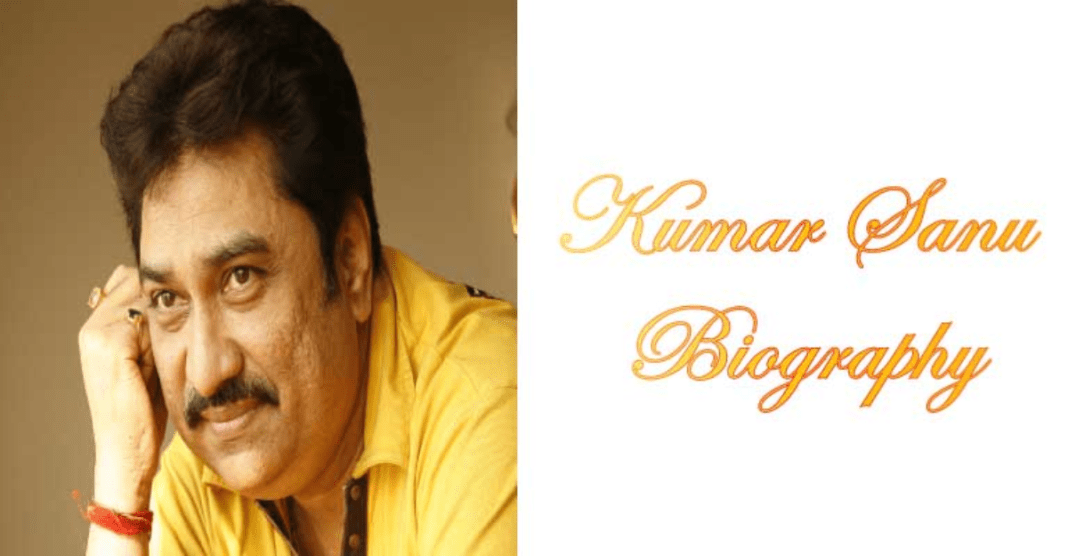

Kumar Sanu Biography: The stage was set, the orchestra was ready, and the air in the Mumbai recording studio was thick with anticipation.
It was 1993 an era where recording meant live musicians, physical tapes, and no “Auto-Tune” to hide behind. On that historic day, a man walked in at dawn with a stack of lyrics and a flask of tea.
By sunset, he hadn’t just completed a session; he had etched his name into the Guinness World Records by recording 28 songs in a single day.
This wasn’t just a display of vocal stamina; it was a feat of “one-take” precision that left seasoned sound engineers in awe.
With a voice that felt like a warm cashmere blanket on a shivering winter night, this artist became the undisputed pulse of the 1990s.
He didn’t just sing songs; he narrated the heartbeats of millions of lovers across the subcontinent.
This is the saga of Kedarnath Bhattacharya, the boy from the lanes of North Kolkata who transformed into the “King of Melody,” the legendary Kumar Sanu.
Personal Overview
| Full Name | Kedarnath Bhattacharya |
| Stage Name | Kumar Sanu |
| Nick Name | Sanu Daa |
| Date of Birth | 20 October 1957 |
| Age (as of 2025) | 68 Years |
| Place of Birth | Kolkata, West Bengal, India |
| Profession | Playback Singer, Musician |
| Languages Sung | Hindi, Bengali, Marathi, Gujarati, Bhojpuri, Nepali, Kannada, Assamese, Odia |
| Active Years | 1980s – Present |
| Net Worth | Around ₹160 – ₹250 Crore |
| Father | Pashupati Bhattacharya |
| Sibling | Tapan Bhattacharya |
| Marital Status | Married |
| Nationality | Indian |
| Religion | Hinduism |
Roots and Family Background
Kumar Sanu Biography: The story of the man we know as Kumar Sanu begins in the vibrant, rain-soaked streets of North Kolkata.
His identity is deeply rooted in the soil of undivided Bengal.
Ancestral Heritage: His family originally hails from Vikrampur (in present-day Bangladesh).
Following the partition and the search for better prospects, his father moved to Kolkata.
The Father’s Influence: His father, Pashupati Bhattacharya, was a formidable figure a renowned classical vocalist and composer.
Unlike many parents who pushed their children toward “stable” government jobs, Pashupati saw the spark in his son early on.
Cultural Environment: Growing up in the Sinthee area, Sanu’s “toys” were the Tabla and the Harmonium.
The house was a hub for local musicians, and Sanu spent his childhood absorbing Rabindra Sangeet and complex Hindustani classical ragas by simply breathing the air at home.
The Family Man: Sanu’s personal life has seen two chapters. His first marriage was to Rita Bhattacharya (his childhood sweetheart), with whom he has three sons: Jessy, Jiko, and Jaan Kumar Sanu.
After their divorce in 1994, he married Saloni Sanu, a Bikaner-based girl. They have two daughters, Shannon K (a rising singer in the West) and Annabelle.
Education
Kumar Sanu Biography: While his soul belonged to the recording booth, Sanu didn’t ignore the classroom.
He remains one of the more academically balanced artists of his era.
Schooling: He attended local schools in Kolkata, where he was known more for his “table-thumping” beats during recess than for his homework.
The Degree: He moved on to the prestigious University of Calcutta, where he successfully earned a Bachelor of Commerce (B.Com) degree.
Technical Training: Beyond his formal degree, his “real” education was in percussion. He was a trained Tabla player.
This education in rhythm is what allowed him later in life to record 28 songs in a single day, he understood the “Laya” (tempo) so perfectly that he rarely needed a second take.
The Struggle for English: Coming from a core Bengali-medium background, Sanu often spoke about how he had to work hard on his diction and English fluency when he first moved to the glamorous, multilingual world of Mumbai.
Challenges and Struggles
The “Clone” Curse: This was his biggest professional hurdle. Because his voice naturally resonated with the depth of Kishore Kumar, the industry labeled him a “duplicate.”
For years, he was only hired to sing cover versions of Kishoreda’s hits for “Polydor” and “HMV.”
Breaking out of that shadow to find the “Sanu Sound” took immense mental grit.
The Identity Shift: In Mumbai, he faced a subtle regional bias. He was told that “Kedarnath Bhattacharya” sounded like a priest or a regional folk singer..
To become a pan-Indian romantic icon, he had to sacrifice his birth name and adopt “Kumar Sanu” a name suggested by the composers Kalyanji-Anandji to give him a more “universal” appeal.
Financial Hardship: During his early days in Mumbai, he lived in cramped quarters, often skipping meals to save money for demo tapes.
He would wait for hours outside the gates of music directors like R.D. Burman, often being sent away without an audition.
The 2000s Shift: One of his greatest challenges came with the digital revolution and the rise of A.R. Rahman’s techno-sound.
Suddenly, the “Sanu Style” of pure melody was considered “old school.”
He had to deal with the heartbreak of seeing the industry he built move toward auto-tune and westernized beats.
Personal Scandals: His 1994 divorce was a massive scandal at the time, with the media painting him in a harsh light.
Managing his superstardom while his private life was falling apart in the headlines was perhaps his most grueling emotional challenge.
Career Timeline
1986–1989: The Ghost Singer Phase
Before the fame, Sanu was a “voice for hire.”
The “Kishore” Substitute: He started by singing cover versions of Kishore Kumar’s hits for budget music labels.
The First Break: In 1987, the legendary Jagjit Singh gave him a break in the film Aandhiyan. However, the film didn’t do much for his career.
The R.D. Burman Encounter: He recorded for the legendary Pancham Da in Taaqatwar (1989).
Even then, the industry saw him as a “replacement” rather than an “original.”
1990: The Big Bang (Aashiqui)
If 1990 had a sound, it was Kumar Sanu.
The Collaboration: Directed by Mahesh Bhatt and composed by Nadeem-Shravan, Aashiqui was a musical revolution.
The Result: Songs like “Dheere Dheere Se”, “Bas Ek Sanam Chaahiye”, and “Nazar Ke Samne” became national anthems.
This album holds the record for the highest-selling Bollywood soundtrack of all time.
Sanu was no longer a “clone”, he was a superstar.
1991–1999: The Era of Dominance (The Peak)
During this decade, Sanu was recording nearly 15 to 20 songs a day.
The Khans’ Voice: He became the go-to playback singer for the rising “Trinity”, Shah Rukh Khan (Baazigar, DDLJ), Salman Khan (Saajan, Hum Saath Saath Hain), and Aamir Khan (Dil Hai Ki Manta Nahin).
1994’s Masterpiece: He collaborated with R.D. Burman for the legendary composer’s final work, 1942: A Love Story.
The song “Ek Ladki Ko Dekha” showcased a soft, breathy texture that silenced every critic who ever called him “nasal.”
The 2020s Connection: The Legend’s Second Innings
Many superstars of the 90s faded with the advent of Auto-Tune and EDM, but Sanu has managed a rare feat: becoming “Vintage Cool.”
The Nostalgia Wave: In an era of aggressive remixes, the youth have turned back to Sanu’s original tracks for “soul.”
This has led to a massive resurgence of his hits on Instagram Reels and Spotify, where he remains one of the most-streamed legacy artists.
The “Dum Laga Ke Haisha” Moment (2015): This film was a turning point for his modern image.
Not only was the protagonist a die-hard Sanu fan, but Sanu himself made a cameo and sang the iconic “Tu” and “Dard Karaara”.
This reintroduced him to Gen Z as the “Godfather of Romance.”
Modern Collaborations: He hasn’t stayed stuck in the past.
Sanu has recently collaborated with indie artists and rappers, showing a surprising willingness to experiment with the “New Age” sound while keeping his signature melody intact.
The Career Breakthrough: From “Kishore-clone” to Icon
The journey to Mumbai was a gamble. In the late 80s, the industry was mourning the loss of Kishore Kumar, and every new singer was trying to mimic him.
The Discovery: It was the legendary Ghazal maestro Jagjit Singh who first noticed Sanu’s potential and brought him to Mumbai to record for the film Aandhiyan (1987).
The Name Change: Legendary composers Kalyanji-Anandji saw a superstar in Kedarnath but felt his name was too regional for a national heartthrob.
They rechristened him Kumar Sanu, a name that would soon become a household brand.
The Aashiqui Explosion (1990): Then came the earthquake. Under the baton of Nadeem-Shravan, Sanu sang for Aashiqui.
The album didn’t just sell; it created a madness. Tracks like “Ab Tere Bin” and “Dheere Dheere Se” turned him into an overnight messiah of romance.
National and Civil Honors: The Pride of India
These are the highest recognitions bestowed upon him by the Indian government and various state bodies for his unparalleled contribution to arts and culture.
Padma Shri (2009): The Government of India conferred upon him India’s fourth-highest civilian award. This solidified his status as a national treasure.
Lata Mangeshkar Award (2021): Awarded by the Government of Madhya Pradesh for his lifetime contribution to music.
Banga Bibhushan (2022): The highest civilian award of West Bengal, presented by the state government to honor its most illustrious son.
Mahanayak Samman (2014): Lifetime Achievement Award as a Bengali playback singer by the Government of West Bengal.
Dr. Babasaheb Ambedkar National Contribution Award (2023): Presented at Raj Bhavan, Mumbai, for his extensive impact on the musical fabric of India.
The Filmfare “Golden Streak”: A World-Class Feat
| Year | Winning Song | Movie |
|---|---|---|
| 1991 | Ab Tere Bin Jee Lenge Hum | Aashiqui |
| 1992 | Mera Dil Bhi Kitna Pagal Hai | Saajan |
| 1993 | Sochenge Tumhe Pyar | Deewana |
| 1994 | Yeh Kaali Kaali Aankhen | Baazigar |
| 1995 | Ek Ladki Ko Dekha | 1942: A Love Story |
International Recognition: The Global Melody King
Kumar Sanu’s influence crossed borders, earning him accolades rarely given to playback singers from the subcontinent.
Guinness World Record (1993): He recorded a staggering 28 songs in a single day, a record for vocal stamina and precision that remains one of the most famous milestones in music history.
UK Parliament Recognition (2018 & 2025): In 2018, he was honored at the Houses of Parliament for his contribution to Indian music and social service.
In February 2025, he was felicitated for the second time by the House of Commons, receiving a Lifetime Achievement Award from the World Book of Records at the UK Parliament.
“Kumar Sanu Day” in America: On March 31, 2001, Michael R. Turner, the Mayor of Dayton, Ohio, officially declared the day as “Kumar Sanu Day” the first time an Indian singer received such an honor in the U.S.
Nelson Mandela Nobel Peace Award (2021): He was awarded an honorary Doctorate by the American University of USA, approved by governors of 120 countries, for his global impact through music.
Other Significant Accolades
Beyond the big titles, Sanu has been the “Artist of the Decade” multiple times across various platforms:
Zee Real Heroes Awards (2024): Conferred with the Lifetime Achievement Award by the CM of Maharashtra.
ITA Music Legend Award (2024): Recognized as a “Singing Icon” at the 24th Indian Television Academy Awards.
Artist of the Decade (2003): Awarded at the Bollywood Music Awards in Atlantic City, USA.
IIFA Award (2000): For the soulful “Aankhon Ki Gustakhiyan” from Hum Dil De Chuke Sanam.
Screen Awards: Multiple wins, including for “Ek Ladki Ko Dekha” (1995)
The “Impact” Recognition
BBC’s Top 40: Several of his tracks are featured in the BBC’s “Top 40 Bollywood Soundtracks of All Time.”
Yash Raj Films Logo: In a historic shift, his voice was used for the background melody of the prestigious YRF logo, a spot held for 45 years by Lata Mangeshkar.
“I dedicate these honors to my fans. They didn’t just listen to my songs; they lived them.” – Kumar Sanu
Controversies and Rivalries
You don’t stay at the top for ten years without ruffling some feathers. Sanu’s journey had its fair share of “spicy” headlines.
- The Udit Narayan “Rivalry”
The 90s were divided into two camps: Team Sanu and Team Udit.
The Tension: While both singers maintained a professional facade, the media fueled a massive rivalry.
Udit was seen as the “versatile/chocolate” voice, while Sanu was the “soulful/romantic” king.
The Reality: They actually sang many duets together (like in Dilwale Dulhania Le Jayenge), but the competition for the #1 spot was fierce and often led to cold wars over song selections by big composers.
- The Abrupt “Exit” and Royalties
In the early 2000s, Sanu famously took a step back from mainstream Bollywood.
The Reason: He was vocal about his distaste for the growing “Westernization” of music and the lack of melody.
The Royalty Fight: Sanu was one of the few singers who stood up for performers’ rights and royalties, which didn’t sit well with some big production houses, leading to a period where he was “shadow-banned” by certain labels.
- The “Nasal” Critique
Music critics often attacked his singing style, calling it “too nasal.” Sanu famously responded by saying, “If being nasal gives me 5 Filmfare awards and a world record, I’ll keep it!”
Connection with Peers
The Alka Yagnik Synergy: If Sanu was the lock, Alka Yagnik was the key.
They recorded thousands of duets, and their voices blended so perfectly that they became the “official voice” of onscreen couples like SRK-Kajol and Govinda-Karisma. Off-screen, they remain the closest of friends, often touring the world together even today.
The Udit Narayan “Cold War”: The media loved pitting them against each other. Sanu recently admitted that while they were friendly, there was a “healthy distance” because Udit was his biggest competitor for every major song.
However, in recent years, they have embraced their joint legacy, often appearing together on reality shows to celebrate the “Sanu-Udit era.”
The Sonu Nigam Transition: As the late 90s arrived, Sonu Nigam emerged as the new prodigy.
While there was a shift in the industry’s preference, Sanu has always praised Sonu’s technical brilliance, and the two share a respectful, “senior-junior” bond.
Artistry and the “Sanu Style”
What made him different? It was the “Nasal-Baritone”—a unique texture that was both deep and piercing.
The Versatility: He could go from the playful “Main Khiladi Tu Anari” to the soul-crushing “Tujhe Na Dekhu Toh Chain.”
The “One-Take” King: His efficiency was legendary. Producers loved him because he saved them studio costs by delivering perfect takes in minutes.
The Duo Legend: His collaborations with Alka Yagnik are considered the gold standard of Bollywood duets. Together, they voiced the romance of SRK-Kajol, Karisma-Govinda, and many more.
Net Worth & Legacy
The Wealth: With a career spanning over 21,000 songs in 25 languages, Sanu’s net worth is estimated at $10 Million (approx. ₹85 Crores).
Most of this comes from royalty streams, massive world tours, and his stint as a judge on reality shows like Indian Idol and Sa Re Ga Ma Pa.
The Impact: He taught a generation of Indian men how to express love. His “muffled” romantic style became the blueprint for playback singing in the 90s.
Even today, “90s Retro” is synonymous with “Kumar Sanu.”
Vision, Public Image and Impact
- The Vision: The Purist’s Mission
Melody over Machine: Sanu’s core vision is to preserve “originality.” He is a vocal critic of Auto-Tune and Remixes, believing that a song’s soul lies in the singer’s natural ability and live instrumentation.
Legal Pioneer: He is a visionary in artist rights. In 2024, he moved the Delhi High Court to protect his Personality Rights, ensuring that AI cannot replicate his voice or likeness without permission, setting a precedent for all future Indian artists.
Indie Music: He aims to bypass commercial labels to provide “pure romance” directly to fans via his own digital platforms.
- Public Image: The Grounded “Dada”
The Nostalgia King: To the public, he is the face of the 90s. He carries a persona of warmth and accessibility, often seen as the “elder brother” (Dada) of the music industry.
Dignity & Wit: Despite personal controversies, he has maintained a dignified public stance.
On reality shows, he is loved for his sharp Bengali wit and his role as a “living textbook” of Bollywood melody.
Philanthropist: His image is also defined by his kindness; he funds the education of hundreds of children through the Kumar Sanu Vidya Niketan.
- Impact: The Architect of Romance
Cultural Shift: He single-handedly shifted Bollywood’s focus from the “Action 80s” to the “Romantic 90s.”
Without his voice, the superstardom of the Khans (SRK, Salman, Aamir) would have sounded very different.
Generational Bridge: His impact is timeless. While he ruled the Cassette era, he is now the king of Lo-Fi and Slowed & Reverb tracks on YouTube and Spotify, proving his voice remains the “Gold Standard” for Gen Z.
Global Footprint: By having a “Kumar Sanu Day” in Ohio and being honored in the UK Parliament twice, he proved that Indian melody is a global language.
Lessor Known Facts
The “Human Record” Diet: To record his 28 songs in one day, Sanu survived solely on black tea and biscuits to keep his vocal cords from becoming “heavy” or sluggish.
The 9-Minute Legend: He recorded the hit song “Sochenge Tumhe Pyar” (Deewana) in a single take lasting only 9 minutes, from entering the booth to walking out.
Hidden Percussionist: He is a trained Tabla player. This deep education in rhythm is the secret behind his ability to deliver “one-take” vocals without ever slipping off-beat.
Kishore Junior: Before his breakthrough, he was a “ghost singer” who recorded hundreds of tracks under the name “Kishore Kumar Junior” for budget music labels.
Aviophobia: Despite his global tours, Sanu had a severe fear of flying early in his career and preferred traveling by train across India whenever possible.
Phonetic Polyglot: He has sung in Spanish and Dutch without knowing a word of the languages.
He wrote the lyrics out in Bengali script to master the pronunciation perfectly.
The YRF Voice: He is one of the very few artists whose voice was chosen to grace the iconic Yash Raj Films (YRF) logo, an honor previously synonymous with Lata Mangeshkar.
Honorary Citizen: Beyond just having a “day” named after him in Ohio, he has been awarded the “Key to the City” in various US districts, a rare honor for an Indian artist.
Devotion to his Idol: Even at the height of his fame, he kept a photo of Kishore Kumar in his pocket during recordings as a lucky charm and a mark of respect.
By: Snigdha