
Imagine a time before the digital auto-tune of the 21st century, a time when the success of a Bollywood blockbuster didn’t just depend on the superstar on screen, but on the soul behind the playback microphone.
In the dusty, narrow lanes of a small village called Baisi, a young boy would sit by a battery-operated transistor, eyes closed, harmonizing with the legends of the past.
He didn’t just want to sing; he wanted to become the very air that India breathed.
For a decade, he was a ghost in the corridors of Mumbai’s recording studios a “struggler” who was often told his voice was “too sweet” or “too thin” for the masculine heroes of the 70s.
But true gold doesn’t fear the furnace. With a relentless smile and a heart rooted in the folk melodies of Mithila, he broke the doors down. From 1988 onwards, he didn’t just enter the industry; he conquered it.
He became the only male singer in history to win Filmfare Awards across three consecutive decades, proving that while trends change, true melody is eternal.
With a staggering discography of over 25,000 songs in 34 languages, he turned the “Three Khans” into romantic icons and gave a voice to every lover’s silent prayer.
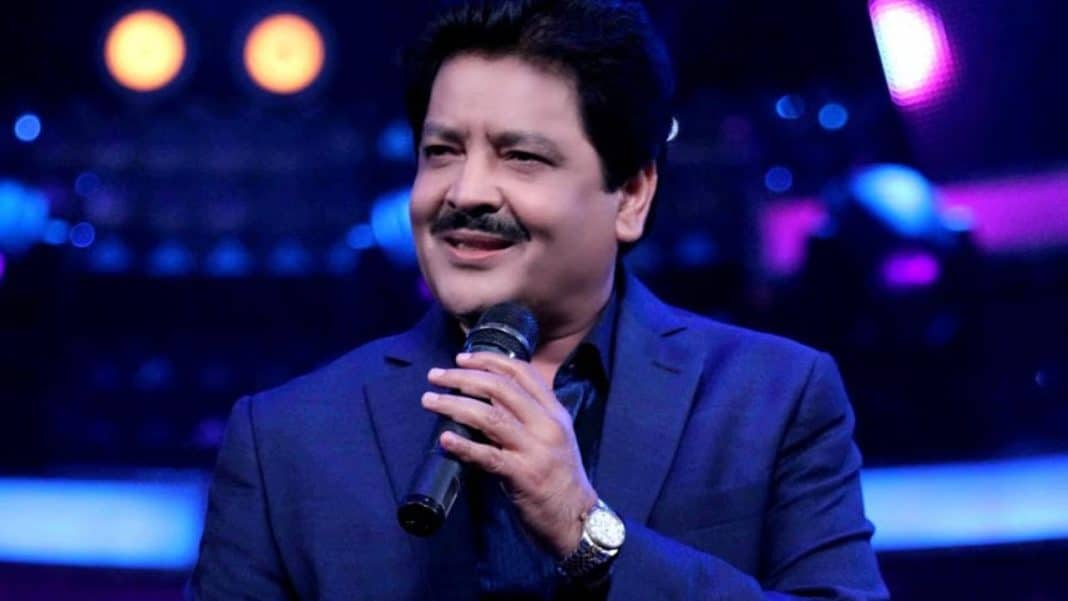
This is not just a biography; this is the odyssey of the “King of Melody,” the “Prince of Playback,” and the man with the eternal silk in his throat Udit Narayan Jha.
Personal Overview
| Field | Details |
|---|---|
| Full Name | Udit Narayan |
| Date of Birth | December 1, 1955 |
| Age (as of 2025) | 70 Years |
| Place of Birth | Baisi Village, Supaul District, Bihar, India |
| Profession | Playback Singer, Television Personality |
| Years Active | 1970s – Present |
| Languages Sung In | Hindi, Nepali, Bhojpuri, Maithili, Bengali, Kannada, Telugu, Tamil, Malayalam, Assamese, Odia and others |
| Net Worth | Approximately ₹150 Crore |
| Father | Hare Krishna Jha |
| Mother | Bhuwaneshwar Devi |
| Marital Status | Married |
| Children | Aditya Narayan |
| Nationality | Nepali–Indian |
| Religion | Hinduism |
Roots, Culture, and the “Mithila” Soul
The Indo-Nepal Connection
Udit Narayan Jha is a beautiful blend of two borders. He was born on December 1, 1955, into a Maithil Brahmin family.
The Father: Harekrishna Jha, a native of the Saptari District in Nepal.
The Mother: Bhuvaneshwari Devi, hailing from the Supaul district in Bihar, India.
The Birthplace: He was actually born at his maternal home in the small village of Baisi, Bihar, giving him a natural claim to both nations.
The “Mithila” Soul
His musical foundation wasn’t built in a studio, but in the heartland of Mithila culture.
Folk Beginnings: His mother was a gifted folk singer. As a child, Udit grew up listening to traditional Maithili songs, Bhajans, and Sohars. This “earthy” upbringing is exactly why his voice has that signature sweetness and crystal-clear diction.
Cultural Duality: While his father wanted him to pursue a “stable” job (like medicine), the vibrant folk festivals of his village pulled him toward the stage.
Academic Foundation
Udit’s early education took place in his father’s homeland, Nepal:
Schooling: He attended the P.B. School in Rajbiraj, Nepal. He was known as a quiet student who would often be caught humming during classes.
Intermediate Degree: He completed his intermediate degree from the Ratna Rajya Lakshmi Campus in Kathmandu.
The “Real” Education: Musical Training
The most critical part of his education wasn’t found in textbooks, but in “Riyaz” (practice).
The Scholarship: His talent was so undeniable that he won a music scholarship from the Indian Embassy in Nepal. This was his golden ticket to Mumbai.
Bharatiya Vidya Bhavan: Once in Mumbai, he enrolled at the prestigious Bharatiya Vidya Bhavan to study Indian classical music.
The Guru: He trained under the watchful eye of Pandit Dinkar Kaikini. This classical training is the reason Udit can hit high notes with such stability and why his “Murkiyan” (vocal twists) are so precise.
Learning on the Job
Udit often says that his “Ph.D.” in music came from watching legends like Lata Mangeshkar and Mohammed Rafi in the recording booth. He learned:
Diction: How to pronounce Urdu and Hindi words perfectly.
Mic Technique: How to modulate his voice to express emotions from the heartbreak of Lagaan to the cheekiness of Dil To Pagal Hai.
Career Timeline
1970 – 1977: The Radio Nepal Era
The Starting Line: At just 15, he joined Radio Nepal as a staff artist.
Folk Foundations: He sang in Maithili and Nepali, becoming a local star in Kathmandu before ever seeing a Mumbai studio.
1978 – 1987: The “Chawl” & Scholarship Year
The Big Move: Arrived in Mumbai (1978) to study at Bharatiya Vidya Bhavan.
1980 (The Debut): His first Hindi song, “Mil Gaya,” was recorded for the film Unees-Bees. In a dream start, he sang alongside his idol, Mohammed Rafi.
1983 – 1985: Recorded with Lata Mangeshkar (Bade Dil Wala) and Kishore Kumar (Kehdo Pyar Hai), but remained a “background” singer.
The Actor: In 1985, he starred in the hit Nepali film Kusume Rumal. For a brief moment, he was a movie star in Nepal while still a “struggler” in Mumbai.
1988 – 1989: The Big Bang (QSQT)
The Breakthrough: Qayamat Se Qayamat Tak (1988) changed his life.
“Papa Kehte Hain”: This single song shattered the “Angry Young Man” era of deep, heavy voices and introduced a boyish, romantic tone that the nation fell in love with.
The Award: He won his 1st Filmfare Award, marking the start of his domination.
1990 – 1999: The Undisputed King of Romance
This was the “Diamond Age” of his career. He became the voice of the three Khans:
1990: Dil (Aamir Khan hits like “Mujhe Neend Na Aaye”).
1992: Jo Jeeta Wohi Sikandar (“Pehla Nasha”—often called the “Perfect Romantic Song”).
1995: DDLJ (“Mehndi Laga Ke Rakhna”). He won his 2nd Filmfare.
1996: Raja Hindustani (“Pardesi Pardesi”). He won his 3rd Filmfare.
1997 – 1999: Dominated with Dil To Pagal Hai, Kuch Kuch Hota Hai, and Hum Dil De Chuke Sanam.
2000 – 2010: The National Legend
While the 90s were about stardom, the 2000s were about prestige.
2001: Lagaan (“Mitwa”) and Dil Chahta Hai. He won his 1st National Award.
2002 – 2004: Won National Awards back-to-back for Zindagi Khoobsoorat Hai and Swades (“Yeh Taara Woh Taara”).
2009: Awarded the Padma Shri by the Government of India.
2011 – 2026: The Statesman of Music
Judging Era: Became the beloved “Judge Sahab” on reality shows like Indian Idol and Sa Re Ga Ma Pa.
2016: Received the Padma Bhushan, cementing his status as a living legend.
Modern Impact: Even in the 2020s, he remains active. In 2026, his voice continues to be used for big-ticket recreations (like “Tip Tip Barsa Pani”) and soulful melodies in regional cinema.
The “Mumbai Local” Struggle (1978–1988)
In 1978, armed with a music scholarship and a trunk full of dreams, Udit landed in Mumbai. But the city of dreams is a harsh teacher.
The Survival Years: He spent nearly 10 years as a “struggler.” He lived in a tiny room in a chawl, traveled by crowded local trains, and waited for hours outside the gates of music directors like Laxmikant-Pyarelal.
The Mentor: He studied under the tutelage of Pandit Dinkar Kaikini at Bharatiya Vidya Bhavan, honing the classical base that gave him his legendary breath control.
The “Rafi” Blessing: His first break in Unees-Bees (1980) was a duet with Mohammed Rafi. Legend has it that Rafi Sahab patted the young Udit on the back and told him he had a “shining future.”
The Leading Man (Acting)
Before his voice took over the world, he was a silver-screen hero in Nepal.
Blockbuster Debut: He starred as the lead in the 1985 Nepali film Kusume Rumal. It was a massive hit and remained the highest-grossing Nepali film for over a decade.
Other Films: He also acted in the film Pirati. While he had the charm of a hero, he eventually chose the recording studio over the camera.
The Award-Winning Producer
Udit didn’t just sing for films; he helped make them.
National Success: He produced the Bhojpuri film Kab Hoi Gawna Hamar (2005).
The Honor: The film was so well-made that it won the National Film Award for Best Feature Film in Bhojpuri.
The Ultimate Playback Voice
This is where he became a god of the industry. He has been the “Ghost Voice” for India’s biggest superstars:
The “Khan” Specialist: He provided the soul for Shah Rukh Khan (DDLJ), Aamir Khan (Lagaan), and Salman Khan (Tere Naam).
Global Reach: He has sung for films in 34 languages, including a song for the independent English film When Harry Tries to Marry.
The Rahman Favorite: He mastered A.R. Rahman’s complex compositions in films like Taal, Lagaan, and Swades.
Controversies
The Marriage & Maintenance Drama
The biggest shadow on his personal life involves his first wife, Ranjana Jha (married in 1984).
The Secret: Udit married his second wife, Deepa, in 1985 without legally divorcing Ranjana. For years, he denied Ranjana existed until she went public in 2006.
Ongoing Battle (2025-2026): Just recently, in February 2026, the fire reignited. Ranjana filed a fresh complaint in Bihar alleging that in 1996, Udit and his brothers took her to a hospital and had her uterus removed without her consent.
Maintenance Fight: Udit appeared in court in early 2025, refusing a settlement and claiming the case is an attempt at extortion.
The “Viral Kiss” Row (2025)
Early in 2025, Udit faced massive backlash after a video of him kissing a female fan on the lips during a performance of “Tip Tip Barsa Pani” went viral.
Public Outcry: He was labeled a “serial kisser” by some on social media, with critics calling the behavior inappropriate for a veteran artist.
The Response: Udit stood his ground, calling it an “expression of pure love” between him and his fans and refusing to apologize.
The Nationality Debate
Born near the Indo-Nepal border, his citizenship has often been a political football.
The Padma Row: When he received the Padma Shri (2009), critics in Nepal felt he had “forsaken” them, while some in India argued he was a foreigner.
He settled this by clarifying he was born in his mother’s home in Bihar, making him an Indian citizen by birth.
Awards and recognition
National Film Awards
While Filmfare represents popularity, the National Awards represent the highest artistic recognition in India. Udit has won 5 National Awards:
2001: Best Male Playback Singer for “Mitwa” (Lagaan) and “Jaane Kyon” (Dil Chahta Hai).
2002: Best Male Playback Singer for “Chhote Chhote Sapne” (Zindagi Khoobsoorat Hai).
2004: Best Male Playback Singer for “Yeh Taara Woh Taara” (Swades).
2005: Best Feature Film in Bhojpuri (as a Producer) for Kab Hoi Gawna Hamar.
🇮🇳 & 🇳🇵 Civil Honors (The Highest Glory)
Udit is a bridge between two nations, and his honors reflect that:
Padma Bhushan (2016): India’s 3rd highest civilian honor.
Padma Shri (2009): India’s 4th highest civilian honor.
Order of Gorkha Dakshina Bahu (2001): One of the highest civilian honors in Nepal, awarded by the King.
Dr. Ambedkar National Contribution Award (2023): Presented by the Governor of Maharashtra.
International Buddha Peace Award (2023): For his global cultural impact.
Recent Recognition (2025–2026)
Even as a veteran, the industry continues to salute him:
August 2025: Honored with a prestigious Lifetime Achievement Award at a major cultural summit in Jharkhand for his 40+ years of contribution to Indian music.
December 2025: Received the Lata Mangeshkar Award (Government of Madhya Pradesh), a full-circle moment for the man she once called the “Prince of Playback.”
2026: Nominated for a special “Global Icon of Melody” award at an upcoming international film festival.
Other Major Awards
IIFA Awards: Best Male Playback for “Chand Chupa Badal Mein” (2000).
Screen Awards: Multiple wins, including for “Aaye Ho Meri Zindagi Mein” (1997).
Zee Cine Awards: Won for “Chand Chupa Badal Mein” (2000).
Hits FM Music Awards (Nepal): Record of the Year and Album of the Year (2004) for Upahaar.
The “BBC” Fact: As a testament to his global impact, 21 of his songs feature in the BBC’s list of the “Top 40 Bollywood Soundtracks of All Time.”
| Year | Song | Movie | Decade |
|---|
| 1989 | Papa Kehte Hain | Qayamat Se Qayamat Tak | 80s |
| 1996 | Mehndi Laga Ke Rakhna | Dilwale Dulhania Le Jayenge | 90s |
| 1997 | Pardesi Pardesi | Raja Hindustani | 90s |
| 2000 | Chand Chupa Badal Mein | Hum Dil De Chuke Sanam | 2000s |
| 2002 | Mitwa | Lagaan | 2000s |
Connection with Peers
The “Eternal Duo”: Udit & Alka Yagnik
If the 90s had a sound, it was their voices. Together, they have recorded thousands of duets, forming a legendary partnership often compared to Lata-Rafi.
The Bond: Alka once noted that Udit is the only person who can make her laugh during a high-stakes recording.
The “Flirty” Dynamic: On shows like Indian Idol and The Kapil Sharma Show, their playful banter is legendary. Udit often jokingly teases her about their 40-year “romance,” which Alka handles with her trademark grace and laughter.
Healthy Rivalry: Udit & Kumar Sanu
In the 90s, you were either a “Udit Fan” or a “Sanu Fan.”
The Trio: Along with Alka, they formed the “Holy Trinity” of 90s playback.
The Reality: While the media fueled rumors of a “Cold War,” the two are actually close friends who frequently tour the world together. Sanu recently (in 2026) mentioned that their competition was strictly about “who could sing the song better,” never about jealousy.
The “Fun Uncle” of the New Generation
He is deeply respected by modern titans like Sonu Nigam, Shaan, and Shreya Ghoshal.
Mentor Role: Shreya Ghoshal has often cited his “smile-singing” technique (you can hear the smile in his voice) as a major influence on her career.
The Comedian: Peers love him for his unfiltered nature. Whether it’s his viral stage antics or his “naughty” jokes on reality show panels, he is viewed as the elder statesman who refuses to grow old.
Net Worth & Grandeur (2026)
Udit Narayan isn’t just a singer; he’s a musical tycoon.
Total Net Worth: Estimated at roughly ₹150–₹200 Crores ($20M–$25M).
Monthly Income: He still rakes in over ₹1 Crore per month through royalties, live world tours, and reality show fees.
Real Estate: He owns a luxurious bungalow in Andheri (Mumbai), another in Bihar, and significant property in Nepal.
Car Collection: Unlike most stars, he isn’t obsessed with a fleet of cars, but he cruises in a high-end Mercedes-Benz.
Legacy & Impact
The Triple-Decade King: He remains the only male singer to win Filmfare Awards in the 80s, 90s, and 2000s.
Global Recognition: 21 of his tracks are featured in the BBC’s “Top 40 Bollywood Soundtracks of All Time.”
Cultural Bridge: He is arguably the biggest cultural icon connecting India and Nepal, holding high civilian honors from both nations (Padma Bhushan and Order of Gorkha Dakshina Bahu).
5 Lesser-Known Facts
The 21-Song Marathon: He once recorded a staggering 21 songs in a single day. His stamina in the booth is legendary.
English Debut: He has actually sung in English for an independent film called When Harry Tries to Marry.
First Paycheck: His very first salary at Radio Nepal was a humble ₹100. He used to sing at hotels in Kathmandu just to pay his bills.
The “Tailor” Connection: Music directors once thought his voice was too “tailor-made” for romance, which is why he became the go-to voice for chocolate-boy heroes.
25-Paise Gig: As a kid in his village, he won his first “singing prize” a 25-paise coin from a neighbor who heard him humming.