


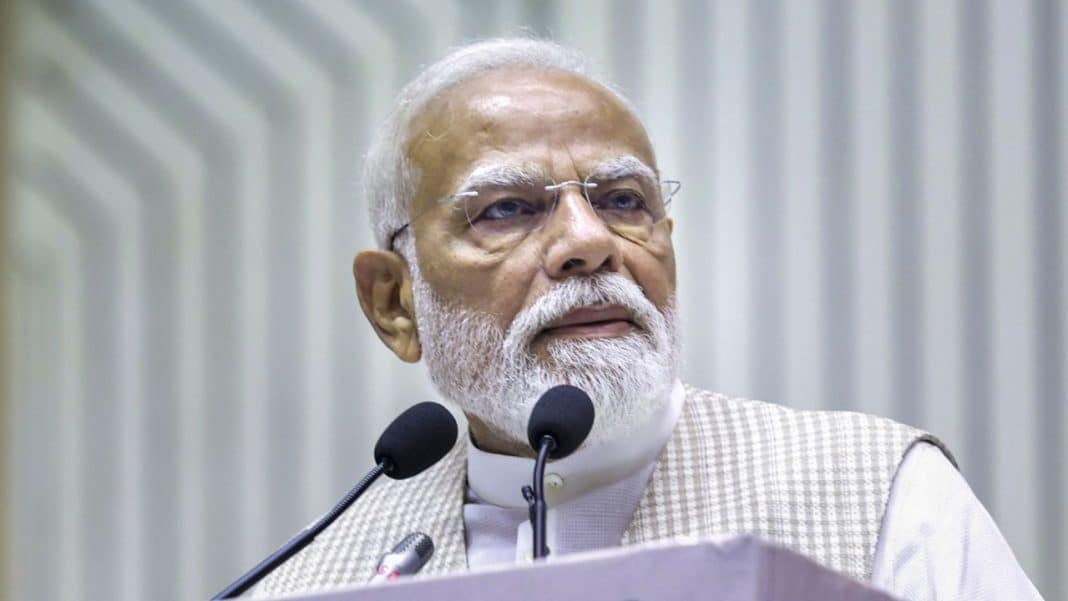

Integrated Refinery: Narendra Modi is scheduled to visit Rajasthan on Tuesday, where he will dedicate the country’s first large integrated refinery-cum-petrochemical complex to the nation.
Situated at Pachpadra in Balotra, the mega project is valued at over ₹79,450 crore and is expected to significantly strengthen India’s energy security while boosting self-reliance in the petrochemical sector.
Along with the inauguration, the Prime Minister will also address a public gathering. The refinery, with an annual processing capacity of 9 million tonnes, has been developed as a joint venture between Hindustan Petroleum Corporation Limited (HPCL) and the Rajasthan government.
This advanced facility combines crude oil refining with petrochemical production, featuring a petrochemical output capacity of 2.4 million tonnes per year.
With a Nelson Complexity Index of 17.0 and petrochemical intensity exceeding 26%, the plant meets global benchmarks.
It is expected to play a crucial role in enhancing energy security, promoting domestic production, and accelerating industrial growth.
Project Background
The foundation stone for the refinery was initially laid on September 22, 2013, by Sonia Gandhi during the tenure of then Chief Minister Ashok Gehlot, with an estimated cost of ₹37,230 crore.
Following a change in government, the project was revived by PM Modi on January 16, 2018, with a revised cost of ₹43,129 crore.
Economic and Industrial Boost
Apart from fuel production, the refinery is expected to generate a wide range of downstream petrochemical products.
These will act as key raw materials for upcoming industries in the region, helping build a strong industrial ecosystem.
Products such as polypropylene, polyethylene (HDPE/LLDPE), benzene, toluene, and butadiene are likely to attract multiple industries.
These materials are essential for manufacturing everyday goods like plastic furniture, agricultural pipes, packaging films, automobile parts, synthetic fibers, medical equipment, and chemicals including paints and detergents.
Overall, the project is poised to reduce import dependence, enhance domestic capabilities, and drive long-term industrial development in Rajasthan.