


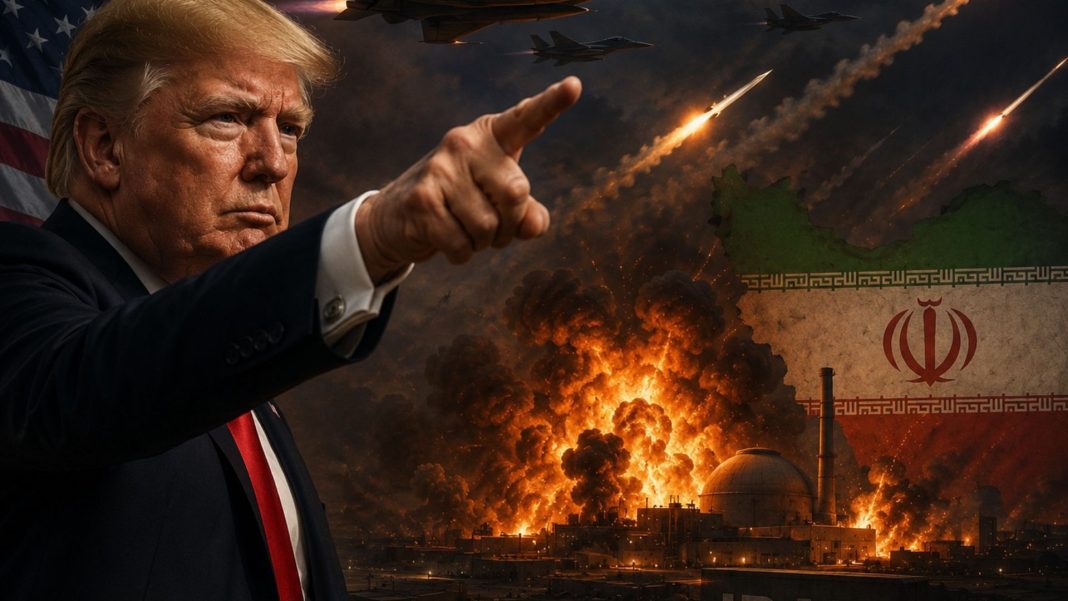

Strait of Hormuz Tensions Rise Again: Just when hopes of peace were growing, fresh military action has once again increased tensions between the United States and Iran. On Tuesday, the US military carried out “self-defense strikes” in southern Iran, targeting missile launch sites and boats near the Strait of Hormuz.
According to the US, the Iranian boats were trying to place naval mines in the sea, which could threaten international ships and American warships. The attack happened even as both countries were involved in ceasefire and peace discussions.
The latest strikes have raised fears that the fragile talks between Washington and Tehran could face fresh trouble.
Midnight Explosions Rock Iran’s Strategic Port
Strait of Hormuz Tensions Rise Again: Several loud explosions were reported in Bandar Abbas, a major port city in southern Iran, late at night. Residents reported hearing thunderous blasts near the local airport and naval base.
Air Defense Activated: Iran’s Islamic Revolutionary Guard Corps (IRGC) quickly activated its air defense systems to counter “hostile targets.”
Wider Blasts: Similar explosion sounds were also heard further along the coast near Sirik and Jask.
Damage Unknown: Iran has confirmed the explosions but has not yet officially revealed the extent of the damage or casualties.
Washington Defends Action: “Protecting Our Troops”
Strait of Hormuz Tensions Rise Again: CENTCOM spokesperson Captain Timothy Hawkins defended the military action, explaining that it was a necessary step to protect American personnel and international ships.
“US forces conducted self-defense strikes in southern Iran today to protect our troops from threats posed by Iranian forces. Targets included missile launch sites and Iranian boats attempting to emplace mines. US Central Command continues to defend our forces while using restraint during the ongoing ceasefire.”
, Capt. Timothy Hawkins, CENTCOM Spokesperson
Hawkins emphasized that the operation was limited and meant only for defense. He added that the US still wants the ceasefire talks to continue and does not see this strike as the end of negotiations.
Not the First Clash During the Ceasefire
This is not the first time the two nations have clashed while trying to negotiate peace. Earlier in May, the US also targeted Iranian military facilities. In that instance, Washington accused IRGC forces of preparing attacks on American warships using missiles, drones, and fast boats near the Strait of Hormuz.
Oil Prices Jump After the Attack
The renewed military friction immediately affected global energy markets, causing crude oil prices to rise sharply in Asian trading:
Brent Crude: Increased by nearly 2%, reaching around $97 per barrel.
WTI Crude: Climbed closely behind, touching nearly $91 per barrel.
This sudden jump reversed a previous downward trend. Oil prices had actually fallen in the days before because investors were hopeful that peace talks would succeed and reduce tensions.
Why is the Strait of Hormuz So Important?
The Strait of Hormuz is one of the world’s most critical oil shipping routes. It is a narrow waterway through which nearly 20% (one-fifth) of global oil passes every single day.
Because the global economy relies so heavily on this route, even small military clashes here can quickly disrupt global oil supplies and cause fuel prices to rise worldwide within hours.
Will the Peace Talks Survive?
The rising tensions in the Middle East are now being closely watched across the world. Any major conflict near the Strait of Hormuz could impact global trade, oil supplies, and financial markets within hours.
For now, both countries seem to be avoiding a direct large-scale war. But the latest strikes and growing military activity show that peace in the Gulf region remains extremely fragile.
Also Read : Crude Shock: Oil Prices Plunge Below 100 Dollar as US-Iran Peace Talks Ignite Hope