


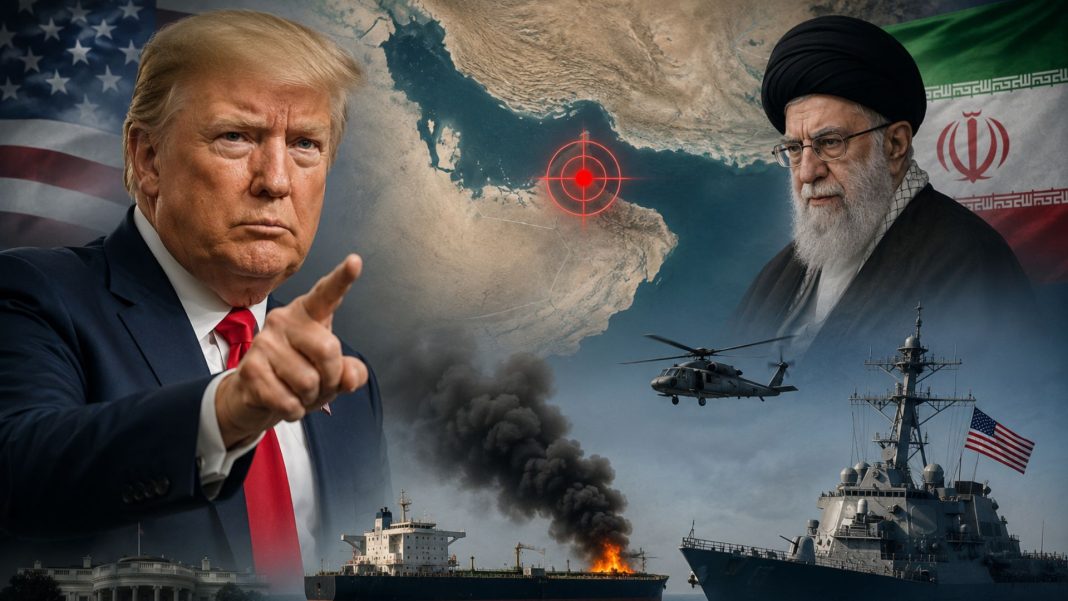

Strait of Hormuz Ultimatum: The Trump administration has delivered a high-stakes, 24-hour ultimatum to Iran, demanding that Tehran publicly pledge to halt all attacks on merchant vessels and guarantee unrestricted freedom of navigation through the Strait of Hormuz.
According to three senior US officials who briefed reporters on Friday, Washington has given Iran until Saturday to issue a public declaration. The demand is a last-ditch effort to salvage a fragile diplomatic understanding reached just three weeks ago, which now teeters on the brink of total collapse after a series of maritime clashes.
The immediate crisis stems from a Memorandum of Understanding (MoU) designed to de-escalate regional tensions. However, US officials accuse Iran of repeatedly violating the pact by targeting commercial ships operating in and around the strategic waterway.
Washington Sounds the Alarm: Can Tehran Be Trusted?
Strait of Hormuz Ultimatum: Speaking to journalists, US officials expressed deep skepticism over Tehran’s reliability. They noted that Iran’s failure to stick to what Washington considers a straightforward maritime commitment casts a dark shadow over larger diplomatic goals.
If Iran cannot be trusted to stop shooting at commercial ships, US officials argue, it cannot be trusted to implement a far more complex and legally binding nuclear agreement.
The focus of the crisis now shifts to Oman. Iranian Foreign Minister Abbas Araghchi arrived in Muscat for an emergency face-to-face meeting on Saturday with Omani Foreign Minister Sayyid Badr al-Busaidi.
“If it is not their position tomorrow, it is not gonna be a great day for them.”
A senior US official, warning of consequences if Iran fails to comply by Saturday.
The choice of venue is highly symbolic. Before the MoU was signed, Oman, acting in tight coordination with the US and Gulf allies, had opened a southern shipping channel near its coastline.
This safe route allowed global merchant ships to bypass Iranian-controlled waters. US officials reveal that Tehran fiercely opposed this move because it stripped Iran of its primary negotiating leverage over global energy supply lines.
Internal Fractures: “We Screwed Up,” Iran Reportedly Admits Privately
Strait of Hormuz Ultimatum: Behind closed doors, the situation is even more volatile. A senior US official claimed that following two days of direct military clashes at sea earlier this week, Iranian representatives quietly reached out to the Trump administration to prevent a full-scale war.
“They told us, ‘We screwed up. We made a mistake. Let’s keep talking,’” the US official claimed to reporters.
US intelligence suggests deep ideological divisions have broken out within the Iranian regime regarding how to handle the Trump administration:
The Negotiators: Moderate diplomats within the Iranian system who desperately want to secure a deal to lift crushing economic sanctions.
The Hardliners: Elements, including commanders of the Islamic Revolutionary Guard Corps (IRGC), who feel compromised by the diplomacy. US officials claim Iranian negotiators admitted that these hardline factions ordered the tanker attacks to forcibly regain leverage at the bargaining table.
Despite these reported private apologies, high-ranking IRGC commanders and state officials continue to broadcast an aggressive message at home, publicly insisting that Iran must retain absolute control over navigation through the Strait of Hormuz.
Iran Rejects Claims of Begging for Talks
In Tehran, the Iranian Foreign Ministry attempted to project control while keeping the door to diplomacy cracked open. Foreign Ministry spokesperson Esmail Baghaei confirmed that Foreign Minister Araghchi’s sudden trip to Oman would focus entirely on maritime security in the Strait.
“Iran accepted a clear responsibility regarding the establishment of normal arrangements and maritime services related to ship traffic in the Strait of Hormuz, and we have been very determined and resolute in fulfilling that responsibility,” Baghaei stated on Friday.
However, Baghaei strongly pushed back against Washington’s narrative that Iran was folding under pressure. He dismissed reports that Tehran had begged for fresh negotiations with the Trump team, clarifying that Iran was merely responding to a formal request from Qatari mediators to iron out misunderstandings.
The Saturday Deadline: What the US Expects to Hear
As global markets nervously watch the clock, the Trump administration has made its expectations explicit. Washington expects a clear, public statement to emerge immediately following the conclusion of the Oman meetings.
“We want them to publicly say that they will stop shooting at ships and explicitly, or at least implicitly, acknowledge that they screwed up,” a US official stated. “We expect the Iranians to say… that every channel in the strait will be open and that it will be toll-free.”
With the Saturday deadline expiring, the White House has left no room for ambiguity: if Iran refuses to make this public pledge, the fragile truce is over, and Washington is prepared to pivot from diplomacy to direct deterrence.