


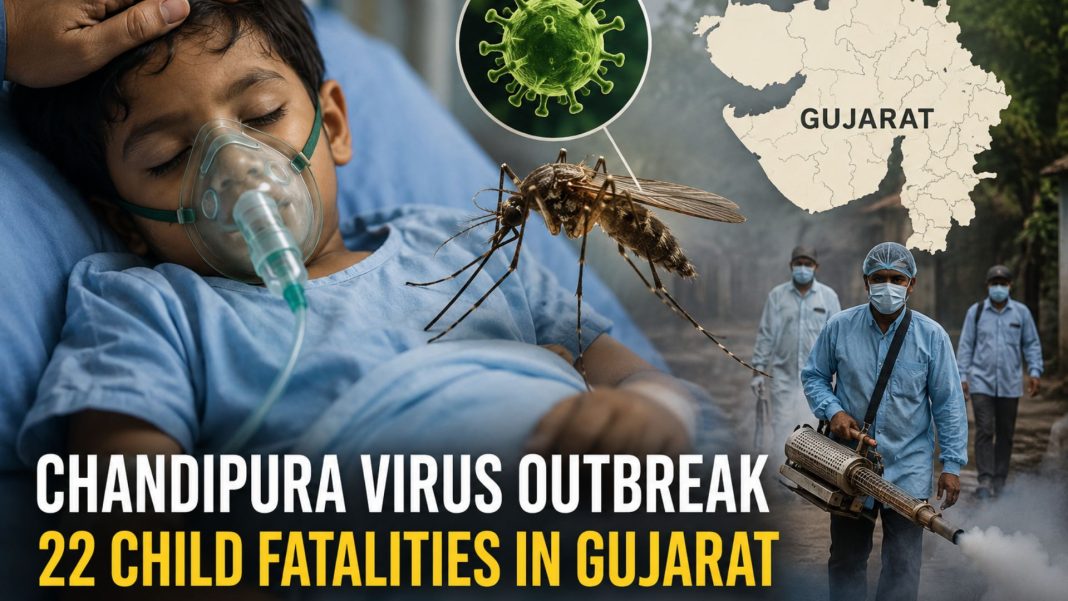

Chandipura Virus: The state of Gujarat is grappling with a severe health emergency following a sudden surge in cases of Acute Encephalitis Syndrome (AES) linked to the rare and deadly Chandipura Vesiculovirus (CHPV).
As reported by state health department officials, at least 22 children have succumbed to complications associated with the infection during the ongoing monsoon season.
The rapid rise in suspected and confirmed cases across multiple districts has prompted health machinery to step up vector control measures, door-to-door screenings, and specialized intensive care services.
Escalating Case Numbers: 35 Confirmed Out of 184 Suspected Cases
Chandipura virus symptoms: According to official updates provided by Gujarat State Health Minister Praful Pansheriya, medical authorities have registered 184 suspected AES cases across various civil and government health centers.
Comprehensive laboratory investigations have so far confirmed 35 of these cases to be Chandipura virus infections, while diagnostic test results for 11 additional blood samples remain awaited.
Tragically, all confirmed and suspected cases recorded during this seasonal outbreak involve pediatric patients below 15 years of age.
Health disclosures indicate that while 22 children have died due to severe neurological and systemic complications, six young patients have successfully recovered and been discharged from medical facilities.
Currently, seven patients with positive laboratory results are undergoing intensive treatment in dedicated pediatric ICUs.
Statewide Impact Across Rural and Semi-Urban Districts
Chandipura Virus: Medical updates emphasize that the current outbreak is not confined to a single localized region or village.
Instead, infections have surfaced in diverse pockets across rural and semi-urban belts of the state.
Affected pediatric patients are presently receiving specialized medical management in civil hospitals and maternal-child health hubs situated in districts including Gandhinagar, Sabarkantha (Himmatnagar), Patan, Rajkot, and Bhavnagar.
Chandipura virus latest News: To mitigate risks of rapid clinical deterioration, state authorities have issued strict directives to all public and private medical institutions.
Healthcare providers have been instructed to immediately admit any child presenting with warning signs into pediatric intensive care units (PICUs) equipped with continuous oxygen supply and advanced mechanical ventilation support.
Medical experts stress that early clinical intervention remains the primary defense against catastrophic outcomes such as brain inflammation and multiple organ failure.
Intensive Vector Control and Preventive Action on the Ground
The transmission of Chandipura virus is primarily driven by female phlebotomine sandflies, which thrive during the humid monsoon months.
These tiny vectors breed predominantly in organic debris, floor crevices, cattle sheds, and unpacked mud walls typical of rural dwellings.
As reported by administrative officials, multi-pronged field activities have been set in motion:
Insecticide Operations: Field units are executing extensive chemical fogging and malathion/gammaxene spraying, prioritizing livestock rearing facilities, cattle sheds, and animal shelters where sandflies congregate.
Housing Sanitation: Community health workers are educating rural households on plastering and sealing cracks in mud walls, maintaining clean livestock premises, and reducing vector resting places.
Door-to-Door Surveillance: Accredited Social Health Activist (ASHA) workers and community health teams are conducting door-to-door health checks to identify symptomatic children at the earliest stage.
Understanding the Chandipura Virus: Transmission and Symptoms
First isolated in 1965 from Chandipura village in Maharashtra’s Nagpur district, the Chandipura virus belongs to the Rhabdoviridae family.
Although sandflies serve as the chief vector, certain species of mosquitoes and ticks are also capable of transmitting the pathogen.
The virus typically presents with an extremely rapid onset. Initial clinical symptoms include sudden high-grade fever, recurrent vomiting, intense headache, and diarrhea.
As the virus targets the central nervous system, symptoms can swiftly escalate within hours to convulsions, severe lethargy, altered consciousness, and acute encephalitis (brain swelling).
Because children’s immune systems and blood-brain barriers are still developing, they remain significantly more vulnerable to rapid brain tissue damage.
Treatment Challenges and Public Safety Guidelines
At present, there is no approved antiviral drug or specific vaccine available globally to cure or prevent Chandipura virus infection.
Clinical management relies entirely on aggressive supportive care, fluid resuscitation, anticonvulsant therapy, and airway stabilization in intensive care settings.
Dedicated teams of medical researchers continue to explore prospective vaccine candidates and therapeutic strategies.
In light of the ongoing situation, health authorities have urged parents and caregivers to maintain vigilance without giving in to panic or unverified rumors.
Families are strongly advised to seek immediate medical attention at the nearest government civil hospital or district health center if a child displays unexplained high fever accompanied by extreme drowsiness, vomiting, or abnormal motor movements.
Public cooperation with visiting surveillance teams and vector control personnel remains critical to reining in the outbreak.
Also Read: NEET-PG 2026 Major Reforms: Single Shift Exam, Nearby Centres, and Revised Pattern Introduced