


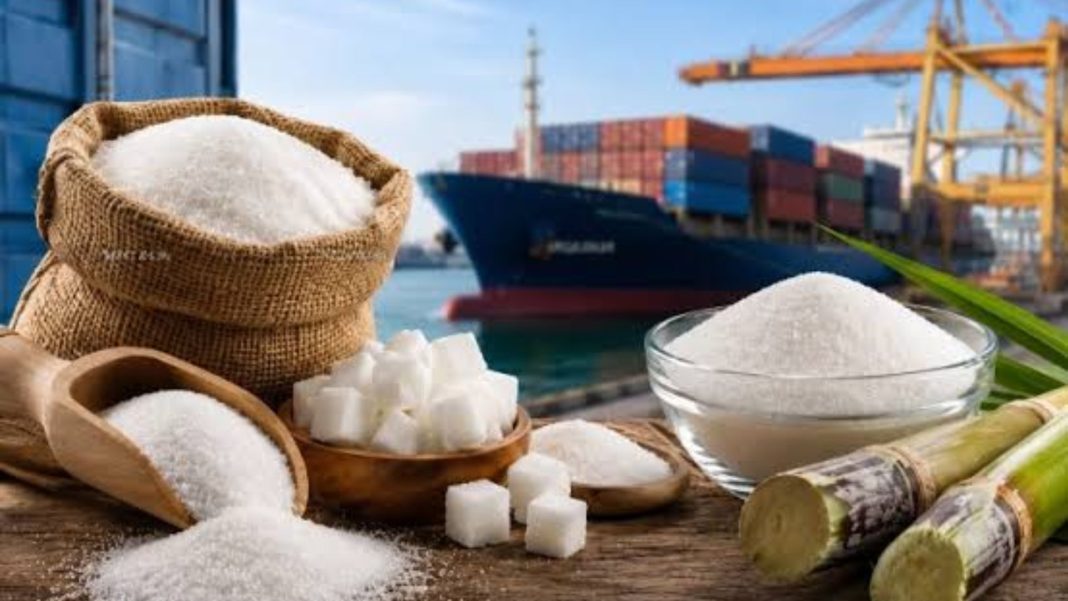

India Sugar Import Policy: After nearly ten years of keeping foreign sugar out of the country, India has opened its doors to overseas sugar shipments once again.
The central government recently issued a notification allowing up to 1 million metric tones of raw sugar to enter the country without any import tax until late October.
This major policy shift comes right before India’s main festive season a time when households and sweet makers consume massive amounts of sugar for celebrations like Ganesh Chaturthi, Dussehra, and Diwali.
Why Are Domestic Sugar Prices Spiking?
Over the past few weeks, kitchen budgets across India have felt the squeeze. According to media reports, local wholesale markets saw sugar rates jump sharply by 15% to 20%, hitting historic highs in key trading cities like Kolhapur.
In many local retail shops, prices moved up to ₹55–₹65 per kg.
Agriculture officials noted that bad weather disrupted crops in major growing states like Maharashtra, Karnataka, and Uttar Pradesh. On top of irregular rains, widespread crop diseases such as “Red Rot” damaged standing sugarcane fields, reducing the final sugar output.
Is the E20 Fuel Policy Responsible for the Shortage?
India Sugar Import Policy: A big topic of debate among market experts is whether India’s fuel blending goals caused this sudden local shortage.
To reduce pollution and cut down on crude oil imports, the government accelerated its E20 policy, which mandates blending 20% ethanol into petrol.
During the current season, sugar mills diverted roughly 3 million tonnes of sugar equivalent into producing ethanol instead of crystal table sugar.
| Policy Angle | What Media Reports & Official Data Show |
|---|---|
| The Food vs. Fuel Debate | Critics argue that diverting around 3 million tonnes of sugar toward ethanol reduced domestic sugar availability, contributing to the need for imports after a weaker-than-expected crop. |
| Government Standpoint | Government statements maintain that ethanol diversion was not the primary cause of the price spike, pointing instead to crop damage, lower production and possible trader hoarding as key factors. |
To ease the pressure moving forward, authorities are gradually encouraging distilleries to rely more on grains like maize rather than relying solely on sugarcane juice.
How the Import Process Will Work
To make sure these imported shipments quickly lower prices on store shelves, strict rules have been set up by the Directorate General of Foreign Trade (DGFT):
Mills Only: Only registered sugar mills and refineries that have active processing facilities are allowed to import raw sugar under this duty-free quota.
Strict October Deadline: Importers must bring in the raw shipments and refine them for local sale before October 31, right before the new domestic crushing season kicks off.
Stock Checks: The government has also capped how much inventory bulk buyers like soft drink brands and large sweet manufacturers can hold, preventing artificial shortages.
What This Means for Consumers
India Sugar Import Policy: While global sugar rates are also relatively high, bringing in 10 lakh tonnes of zero-duty raw sugar gives local refiners enough supply to keep sweet prices stable throughout the festival period.
Industry experts believe that these combined measures imports, inventory caps, and early crushing in October will stop further price hikes and bring everyday sugar prices back to normal.
Also Read: Mohali Sanitizer Attack Case: Minor Girl Critical with 80% Burns After Stalking Escalation