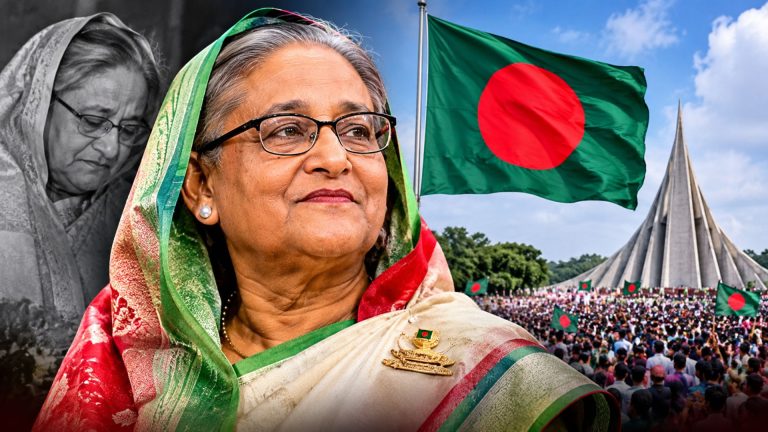
Sheikh Hasina Return: Ousted Bangladeshi Prime Minister Sheikh Hasina has announced plans to return to her homeland on December 16, marking the first time she has fixed a specific date since fleeing to India more than two years ago.
Speaking to news agencies on Tuesday, her spokesperson, Syed Mozammel Ali, revealed that the former leader wants the current government in Dhaka to arrange her travel from New Delhi aboard the national carrier, Biman Bangladesh Airlines.
The bold declaration sets the stage for a dramatic political and legal showdown. Hasina, who was sentenced to death in absentia by a domestic tribunal, is demanding state-sponsored transport back to a country where officials have vowed to put her in handcuffs the moment she lands.
The Symbolism of Victory Day
Sheikh Hasina Return: Hasina’s choice of December 16 is deeply calculated. The date is observed as Victory Day in Bangladesh, celebrating the 1971 surrender of Pakistani forces and the birth of an independent nation, a struggle led by Hasina’s late father and founding president, Sheikh Mujibur Rahman.
According to her aide, Abu Obaidha Arin, Hasina wishes to honor her father’s legacy among her people on this historic day. By framing her arrival around national pride, she aims to cast herself as the rightful heir to the liberation movement rather than a fugitive running from justice.
Political observers also note a deliberate historical echo: in May 1981, Hasina returned from years of exile in India following the 1975 assassination of her father and most of her family. Furthermore, naming Victory Day puts the ruling administration in a difficult spot, as blocking her flight or arresting her on such a sacred national holiday could spark intense emotional backlash.
From Longest-Serving Leader to Death Row
Sheikh Hasina Return: Hasina’s dramatic fall stands in stark contrast to her decades of dominance. Having ruled Bangladesh for over 20 years across two stints, from 1996 to 2001 and 2009 to 2024, she was forced out in August 2024 following a massive student-led uprising. According to United Nations estimates, up to 1,400 people lost their lives during the violent crackdown on those protests.
In November 2025, Bangladesh’s International Crimes Tribunal convicted her in absentia of crimes against humanity and handed down the death penalty. Hasina has repeatedly dismissed the charges as politically motivated, while her Awami League party remains banned from political activities.
Dhaka’s Hardline Stance and Rejected Passports
The path to Dhaka is blocked by severe legal hurdles. Earlier this month, Hasina’s London-based legal team wrote to the Bangladeshi High Commission in New Delhi requesting a new passport and national identity card, as her previous documents were revoked. Dhaka swiftly turned down the plea, with Chief Prosecutor Md Aminul Islam stating that she had missed the 30-day window to appeal her death sentence and that existing laws barred issuing her fresh travel papers.
Officials in Prime Minister Tarique Rahman’s government, which swept to power in the February 2026 general elections, have made it clear that Hasina will receive no special treatment. State Minister for Foreign Affairs Humaiun Kobir stated bluntly that she can only return as a prisoner in handcuffs under the 2013 bilateral extradition treaty.
New Delhi’s Delicate Balancing Act
Hasina’s fate rests heavily on India, where she has lived under shelter since fleeing on a Bangladeshi military aircraft on August 5, 2024. Dhaka has formally requested her extradition twice, but New Delhi has kept its cards close to its chest, stating only that the request is being examined through judicial channels.
The impasse has severely strained bilateral ties, leading to the postponement of consular talks. While Prime Minister Tarique Rahman has accused India of sheltering forces behind recent unrest, media reports indicate that New Delhi may be quietly seeking legal guarantees, such as a fair retrial and protection from execution, before making any move.
Fresh Violence Grips Bangladesh
The announcement of Hasina’s planned return comes as Bangladesh battles its worst wave of street violence in months. Over the past two weeks, crude bomb blasts and arson attacks have rattled 28 districts, claiming at least four lives, including political activists and a bus worker. Retaliatory clashes have seen homes of Awami League supporters torched, alongside arson attacks on the ancestral residence of former interim leader Muhammad Yunus and 22 branches of Grameen Bank.
Even the diaspora has not been spared, with media reports highlighting an attack on the entourage of student leader Nahid Islam in east London. In response to the escalating chaos and border alerts, authorities have deployed 90 additional platoons of the Border Guard Bangladesh nationwide.
Will the Homecoming Actually Happen?
Despite Hasina’s insistence that she is ready to face the courts, major practical roadblocks remain. Without a valid passport, a confirmed ticket, or cooperation from either New Delhi or Dhaka, her December 16 target remains a political statement rather than a confirmed itinerary. As human rights groups and international observers, including several British parliamentarians, watch closely, the coming weeks will test whether Hasina’s bold gamble leads to a dramatic courtroom showdown or remains an unfulfilled promise from exile.