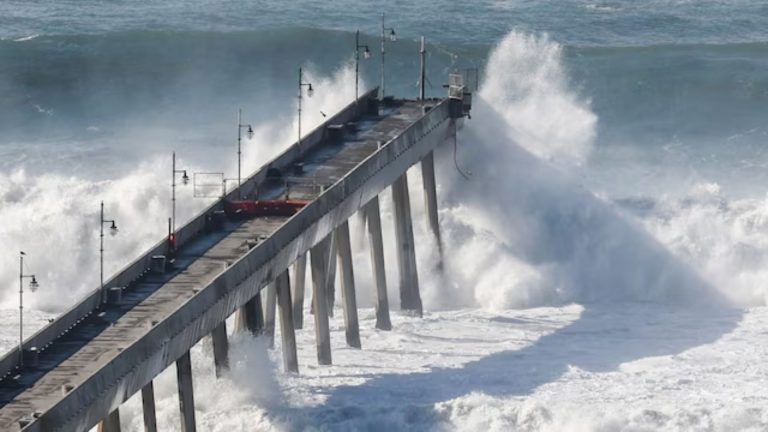
US Thanksgiving Storm 2026: Strong winds and heavy rain from a powerful storm system have knocked out power to more than 900,000 homes across the United States, while travel networks face severe disruptions. According to media reports, about 1,800 flights have been delayed and over 400 flights canceled as bad weather spreads across multiple regions.
Forecasters have warned that sea levels could reach their highest mark in 14 years, raising flood risks in coastal areas including New York, New Jersey, and Philadelphia.
The storm moving toward the East Coast is known as a nor’easter, a system notorious for fierce winds, heavy rainfall, and towering ocean waves.
Thanksgiving Travel Hits a Wall
US Thanksgiving Storm 2026: Millions of Americans traveling for Thanksgiving are dealing with major delays and cancellations. Thanksgiving is one of the biggest holidays in the US, when people travel across the country to spend time with family and friends, making widespread flight disruptions especially painful.
The bad weather has also disrupted major holiday celebrations. According to media reports, New York’s famous Thanksgiving Day parade has been postponed until Saturday. The event marks its 100th year, and postponing it is a first in its history.
New York Mayor Zohran Mamdani made the decision in view of the storm threat, while parade organizer Macy’s said public safety remains its top priority.
Coastal Structures Threatened by High Waves
US Thanksgiving Storm 2026: On the US West Coast, powerful ocean waves have damaged several structures along the shoreline. According to media reports, water levels near San Diego climbed past previous records, increasing the risk of flooding in nearby low-lying areas.
Along the East Coast, sea levels are projected to reach their highest point since Superstorm Sandy struck in 2012. In parts of Delaware and New Jersey, strong winds continue to pose a threat of downed power lines and extended outages.
Rain and Snow Forecast Across Central and Northwest Regions
The weather trouble is not limited to the coasts. According to media reports, rain and snow are forecast across central parts of the US from Wednesday through Friday, which could bring colder temperatures to several areas.
Meanwhile, another round of rain and gusty winds is expected in the Pacific Northwest starting Wednesday night. With different parts of the country facing harsh conditions, relief from the rough weather looks unlikely in the near term.
What Is a Nor’easter?
A nor’easter is a strong storm that strikes the US East Coast and gets its name from winds blowing out of the northeast. While it can form at any time of the year, it happens more often, and tends to be stronger, between September and April.
These storms form when cold air and warm air collide along the East Coast. In winter, cold Arctic air moves south across Canada and the US toward the Atlantic Ocean, while warm air from the Gulf of Mexico and the Atlantic pushes northward.
Thanks to the warm Gulf Stream ocean current, ocean water stays relatively warm even in winter, warming the air right above it. When warm air over the ocean meets cold air over land, a nor’easter can develop and intensify.
According to media reports citing meteorologist Brian Edwards, the US sees an average of three nor’easters each year. They frequently hit cities such as Washington, D.C., Philadelphia, New York, and Boston, bringing heavy rain or snow.