


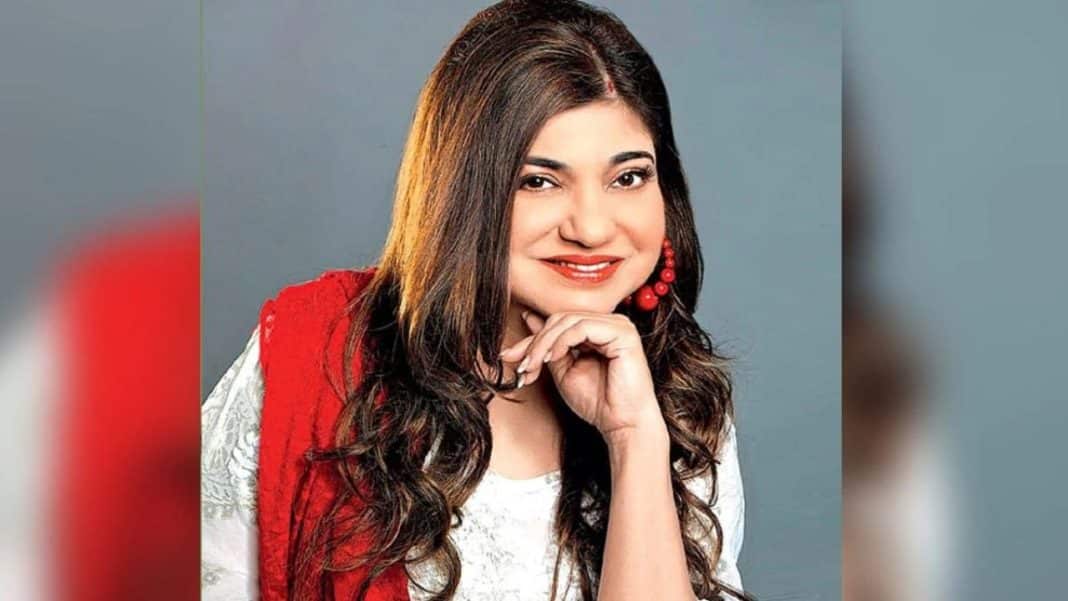

Alka Yagnik Biography: In an era of high-definition audio and digital autotune, there exists a voice so pure and resonant that it once dominated the airwaves of an entire subcontinent for three decades.
Before her name became a household staple, she was a young girl from the streets of Kolkata, carrying a letter of introduction to the legendary Raj Kapoor.
Today, she is the most-streamed artist in the world on YouTube, surpassing global icons like BTS and Taylor Swift with over 15 billion streams in a single year.
This is the journey of the “Queen of Playback,” the voice behind the 90s romance — Alka Yagnik.
Personal Overview
| Category | Details |
|---|---|
| Full Name | Alka Yagnik |
| Date of Birth | 20 March 1966 |
| Age | 59 (as of 2025) |
| Birthplace | Kolkata |
| Profession | Playback Singer |
| Languages Sung | Hindi, Bengali, Gujarati, Marathi, Tamil, Telugu, Malayalam, Punjabi |
| Years Active | 1979 – Present |
| Net Worth | ₹45–68 Crore (approx.) |
| Mother | Shubha Yagnik |
| Father | Dharmendra Shankar |
| Brother | Samir Yagnik |
| Marital Status | Married |
| Spouse | Neeraj Kapoor |
| Daughter | Syesha Kapoor |
| Nationality | Indian |
| Religion | Hinduism |
Roots and Cultural Foundation
Alka Yagnik’s identity is a beautiful blend of Gujarati heritage and Bengali culture. Born in Kolkata into a traditional Gujarati Brahmin family, she grew up at the crossroads of India’s most musical cities.
The Core Family Pillars
Mother (Shubha Yagnik): A trained Hindustani Classical singer and Alka’s first Guru. She was the visionary who recognized Alka’s “perfect pitch” at age four and moved the family to Mumbai to fuel her dreams.
Father (Dharmendra Shankar): A grounded man who worked at the Kolkata Port Trust, providing the stable foundation for his family’s artistic pursuits.
Brother (Samir Yagnik): Also shared the family’s musical DNA, later dabbling in independent music.
Cultural Identity
The Kolkata Influence: Growing up in the “Cultural Capital” gave her a deep appreciation for soul-stirring melodies and flawless diction.
Gujarati Values: At home, she was raised with traditional Sattvic values simplicity, spirituality, and a disciplined lifestyle which kept her grounded despite Bollywood’s glitz.
Linguistic Roots: Being fluent in Gujarati, Bengali, and Hindi from childhood is the secret behind her ability to sing in over 25 languages with perfect emotion.
Academic Education
Schooling: She attended the prestigious Modern High School for Girls in Kolkata.
The Student Profile: Alka has often mentioned in interviews that she was actually a bright student who grasped concepts quickly.
However, she candidly admits that she did not like studies. Her mind was always wandering toward melodies, even while sitting in a history or math class.
The Early Exit: Because her professional career began so early (singing for the radio at age 6 and moving to Mumbai at age 10), her formal higher education took a backseat to her meteoric rise in the music industry.
She prioritized her “Vocational Training” in music over traditional college degrees.
The “Real” Education: Musical Training
For a playback singer, the real “university” is the Gharana and the recording room. Alka’s musical education was elite:
Primary Guru: Her mother, Shubha Yagnik. She provided the foundation in Hindustani Classical Music starting at the age of four.
The Industry Mentors: Once she moved to Mumbai, her “higher education” was conducted by the legends themselves:
Kalyanji-Anandji: They mentored her during her teen years, refining her voice for the microphone.
Laxmikant-Pyarelal: They taught her the technicalities of playback how to breathe, how to emote, and how to maintain the “sur” (pitch) during long recording sessions.
The Radio School: Her stint at Akashvani (All India Radio) in Kolkata served as her practical training ground, where she learned to perform under pressure and manage her voice for live broadcasts.
The Career Beginning
When Alka started in 1980, the “Mangeshkar Era” was at its peak. Every music director wanted the established voices.
The Debut: At age 14, she recorded her first film song, “Thirkat Ang” for Payal Ki Jhankaar (1980).
It was a semi-classical track, a difficult start for a teenager, and while it showed her skill, it didn’t make her a star.
Initial Hits: In 1981, she sang the female version of “Mere Angne Mein” (Laawaris). While the song was a blockbuster, the limelight was stolen by Amitabh Bachchan’s version.
She continued singing in films like Hamari Bahu Alka and Coolie, but she was often relegated to “second lead” songs or duets.
The Breakthrough: “Ek Do Teen” (1988)
The year 1988 changed the history of Indian music. Before Tezaab, Alka was “just another singer.” After “Ek Do Teen”, she was the voice.
The Fever Incident: On the day of the recording, Alka had a 104°F fever. Despite being physically weak, she delivered a performance so high-energy that it defined Madhuri Dixit’s career.
The Shift: This song won her her first Filmfare Award, breaking the monopoly of senior singers and proving she could handle “peppy” numbers just as well as soulful ones.
The Rise and Stardom: The 90s Queen
If the 80s were about finding a footing, the 90s were about total domination.
Qayamat Se Qayamat Tak (1988): Along with Udit Narayan, she became the voice of young romance. This film established her as the go-to singer for every major heroine.
The Most Prolific Era: In the mid-90s, she was so in demand that she was reportedly recording 5 songs a day.
The Trinity: She formed a legendary trio with Kumar Sanu and Udit Narayan. Together, they voiced 90% of Bollywood’s hits for over a decade.
Struggles and Professional “Cold Wars”
Success brought its own set of challenges:
The Anuradha Paudwal Rivalry: In the early 90s, there was a massive professional “tug-of-war.” Anuradha Paudwal, backed by T-Series, was being heavily promoted.
Songs originally recorded by Alka were sometimes dubbed over by Anuradha. However, when Anuradha decided to sing exclusively for one label, the entire industry turned to Alka, making her the undisputed number one.
Replacing the Legends: She faced the immense pressure of being compared to Lata Mangeshkar.
Instead of imitating, she developed her own “honey-glazed” style a mix of classical precision and modern “pop” sensibility.
The Stardom Timeline:
1980-1987: The “Learning Phase” – Semi-classical songs and background duets.
1988-1992: The “Breakout” – Tezaab, QSQT, and Saajan.
1993-2005: The “Imperial Phase” – Every major award and global streaming record.
2006-Present: The “Legacy Phase” – Transitioning to judging and becoming a global YouTube phenomeno
The Major Controversies
The “Cold War” with Anuradha Paudwal: In the early 90s, the industry was split.
Alka famously accused Anuradha of re-recording (dubbing over) her songs behind her back, specifically for the movie Dil.
The rivalry only ended when Anuradha took a hiatus from mainstream playback.
The “Choli Ke Peeche” Scandal (1993): Her song from Khalnayak faced massive protests from 42 political parties.
It was labeled “vulgar,” banned from Doordarshan and All India Radio, and even landed her in a legal battle. Even her mother was upset, asking, “Yeh kya gaaya?”
The “Kaun AR Rahman?” Regret: Alka and Kumar Sanu initially rejected Roja (Rahman’s debut) because they didn’t know who he was.
She later called this the “biggest mistake of her career,” though she later sang iconic hits like Taal Se Taal Mila for him.
The Unconventional Marriage: Marrying businessman Neeraj Kapoor in 1989, she has lived in a “long-distance marriage” for over 28 years (she in Mumbai, he in Shillong).
This sparked decades of divorce rumors, which she always shut down by citing mutual trust.
The Osama Bin Laden Remark (2025/26): Recently, a video resurfaced of her reacting to her songs being found in Osama Bin Laden’s Abbottabad hideout.
Her comment that even a terrorist might have a “small artist” inside them sparked a fresh wave of social media backlash for being “unnecessary.”
The Hearing Loss Shock (2024): In a headline-grabbing health scare, she revealed she suffered sudden sensorineural hearing loss due to a viral attack.
She used the spotlight to warn the younger generation about the dangers of loud headphones.
Top 10 Famous Songs
- Agar Tum Saath Ho (Tamasha, 2015)
- Kuch Kuch Hota Hai (Title Track, 1998)
- Ek Do Teen (Tezaab, 1988)
- Taal Se Taal Mila (Taal, 1999)
- Mera Dil Bhi Kitna Pagal Hai (Saajan, 1991)
- Choli Ke Peeche (Khalnayak, 1993)
- Tip Tip Barsa Paani (Mohra, 1994)
- Suraj Hua Maddham (Kabhi Khushi Kabhie Gham, 2001)
- Gali Mein Aaj Chand Nikla (Zakhm, 1998)
- Dil Laga Liya Maine (Dil Hai Tumhaara, 2002)
Awards and Honors
Alka Yagnik holds records that may never be broken. She is the bridge between the old-world prestige and the new-world digital numbers.
🇮🇳 National Recognition
Padma Bhushan (2026): Conferred for her extraordinary contribution to the arts.
National Film Awards (2): Won for Hum Hain Rahi Pyar Ke (1993) and Kuch Kuch Hota Hai (1998).
Filmfare Awards (7): She holds a record 7 wins (tied only with Asha Bhosle) from an unmatched 36 nominations.
Fun Fact: In 1994, she had 4 out of the 5 nominations for Best Female Playback Singer, she was literally competing against herself.
International Recognition
Guinness World Record (2021, 2022, 2023): Recognized as the Most Streamed Artist Globally on YouTube. In 2022, she clocked 15.3 billion streams, beating global giants like Taylor Swift, BTS, and Drake.
BBC Recognition: 20 of her tracks were included in the BBC’s “Top 40 Bollywood Soundtracks of All Time.”
International Indian Film Academy (IIFA): Multiple wins, including for Taal and Kaho Naa… Pyaar Hai.
Connection with Peers
The 90s Trinity (Sanu & Udit): Kumar Sanu: Her closest friend and professional “soulmate.” They shared a playful camaraderie; Sanu often teased her perfectionism, and she recently praised him for being a protective friend during crowded public events.
Udit Narayan: Her “partner-in-crime.” Udit jokingly admitted on Superstar Singer that he used to “follow” her around in their early days, leading to a lifelong friendship full of laughter and iconic duets.
The “Mother Figure” to Juniors:
Sonu Nigam: Treats him like a younger brother. Sonu has been her biggest advocate, recently sparking a viral debate by publicly questioning why the government hadn’t awarded her a Padma Award sooner (which she finally received in 2026).
Shreya Ghoshal: Alka acts as a mentor to Shreya, who cites Alka as her primary inspiration. Alka often praises the “new generation” for maintaining the grace of playback singing.
Relationship with the Legends:
Lata Mangeshkar: Held a deep, respectful bond. Lata Ji often called Alka the true successor to her legacy because of her “shuddh” (pure) pronunciation and pitch.
The Reconciliations:
Anuradha Paudwal: Despite the legendary “Cold War” of the 90s over song dubbing, the two have since made peace, appearing together on reality shows and sharing stages at award ceremonies.
Net Worth and “The Business of Voice”
As of 2026, her estimated net worth stands between $8 Million – $12 Million (₹65–₹100 Crore).
Royalties: Unlike many older singers, she receives massive royalties from her 20,000+ song catalog on platforms like Spotify and YouTube.
Reality TV: As a “Maha Guru” on shows like Indian Idol and Superstar Singer, she commands a high per-episode fee.
World Tours: Her live concerts in the US, UK, and UAE remain sold-out events, catering to a massive global diaspora.
Public Image: The Grounded Legend
The “Anti-Diva”: Unlike the flashy stars of today, her image is built on grace and simplicity. She is the face of “traditional elegance,” proving you don’t need gimmicks when you have a once-in-a-generation voice.
Resilient Spirit: Her recent battle with hearing loss (2024) turned her into a symbol of courage.
By sharing her vulnerability, she shifted her image from “perfection” to “inspiration.”
Vision: The Melody Puris
Vocal Soul vs. AI: Her vision is a “Back to Basics” movement. She fights for music where the human soul outshines the autotune, believing that a song should touch your heart, not just your feet.
Clean Legacy: She has always championed “Family Music”—songs that don’t rely on vulgarity to go viral, ensuring her catalog remains timeless for all ages.
Impact: The Global Numbers Queen
Data Dominance: She shattered the myth that Western artists rule the world. By hitting 15 Billion+ streams (Guinness World Record), she proved that the “90s sound” is the world’s most resilient digital currency.
The Gold Standard: She is the bridge between eras. Every modern singer, from Shreya Ghoshal to Arijit Singh, looks at her “perfect pitch” as the ultimate technical benchmark for playback singing.
Lesser known facts
The Global Streaming Giant: Forget Taylor Swift, Alka has been the most-streamed artist on YouTube worldwide for multiple years (2021-2023), hitting over 15 billion streams annually.
The Feverish Hit: She recorded the high-energy anthem “Ek Do Teen” while suffering from a 104°F fever.
A “Shared” History: She and Ila Arun are among the few to share a Filmfare Award for the same song (Choli Ke Peeche).
Acting Cameo: She actually appeared on screen in the film “Sapne Sajan Ke” (1992) alongside Kumar Sanu.
Her Biggest Regret: She famously turned down A.R. Rahman for his debut film Roja because she didn’t know who he was at the time.
Linguistic Wonder: She has sung in over 25 languages, including 15 songs for Pakistani films.
The “Lata” Blessing: Lata Mangeshkar once publicly stated that Alka’s voice was the most technically perfect among her successors.
Health Advocacy: Since her 2024 hearing loss diagnosis, she has become a major advocate for “ear safety,” warning fans against the prolonged use of loud headphones.
By: Snigdha