
Mamata Banerjee Biography: A young girl from a modest family in Kolkata, growing up amid financial struggles yet dreaming far beyond her circumstances.
A leader who, with nothing but determination, courage, and an unshakable belief in herself, challenged one of the longest-serving political regimes in Indian history.
Who is the woman known for her simple white saree, powerful voice, and fearless spirit?
Who transformed the political landscape of West Bengal and became one of the most influential women in Indian politics? Yes, you’re right …. we are talking about Mamta Benerjee.
She’s a prominent Indian politician and the first woman Chief Minister of West Bengal, serving since 2011.
She began her political career with the Indian National Congress and later founded the All India Trinamool Congress (TMC) in 1998.
Known for her simplicity, fearless leadership, and strong grassroots connect, she is popularly called “Didi.”
During her tenure, she ended 34 years of Left Front rule in the state and introduced major welfare schemes such as Kanyashree, Sabooj Sathi, Swasthya Sathi, and Rupashree.
Recognized as one of India’s most influential women leaders, Mamata Banerjee continues to play a key role in shaping both state and national politics.
Personal overview
| Field | Details |
|---|---|
| Full Name | Mamata Banerjee |
| Date of Birth | 05 Jan 1955 (Age 71) |
| Place of Birth | Kolkata |
| Party Name | All India Trinamool Congress |
| Party Position | President |
| Education | Post Graduate |
| Profession | Politics & Social Works |
| Father’s Name | Promileswar Banerjee |
| Mother’s Name | Gayatri Banerjee |
| Religion | Hindu |
| Caste | Brahmin |
| Website | https://wb.gov.in/portal/web/guest/meet-the-chief-minister |
| Current Constituency | Bhabanipur |
Early Life and Background
Mamata Banerjee was born on 5 January 1955 in Kolkata, West Bengal, into a humble, lower-middle-class family.
Her father passed away when she was very young, and her family faced financial difficulties.
Despite these challenges, her mother ensured that Mamata received a good education and grew up with strong values.
Childhood and Upbringing
Mamata Banerjee Biography: As a child, Mamata was known for her courage, determination, and strong sense of justice.
She often stood up for what she believed was right, even at a young age.
Growing up in a modest home taught her the value of hard work, simplicity, and empathy for the struggles of ordinary people.
Early Influences
Mamata’s early life was shaped by her exposure to social and political issues around her.
Teachers, community leaders, and local activists inspired her to think about helping people and fighting for justice.
These experiences planted the seeds for her future political career and her lifelong dedication to public service.
Education
Mamata Banerjee is a highly educated leader who navigated significant financial struggles to build an impressive academic profile.
Her journey from a primary school teacher to a lawyer and a Chief Minister is a testament to her tenacity.
Academic Qualifications & Institutions
- Degree Subject Institution
- Bachelor of Arts (B.A.) History (Honours) Jogamaya Devi College
- Master of Arts (M.A.) Islamic History University of Calcutta
- Bachelor of Education (B.Ed) Education Shri Shikshayatan College
- Bachelor of Laws (LL.B.) Law Jogesh Chandra Chaudhuri Law College
Engaging Educational Highlights
The “Street Fighter” Origins: Her political life actually began on campus. At Jogamaya Devi College, she founded the Chhatra Parishad (the student wing of the Congress party).
In a major upset, she defeated the well-established socialist student unions, proving her leadership skills long before she entered Parliament.
The Working Student: Her education wasn’t a smooth ride.
After her father passed away when she was 17, she had to work as a stenographer and a private tutor to pay her own fees and support her family while studying for these multiple degrees.
Unique Academic Path: It is often noted as interesting that she chose to specialize in Islamic History for her Master’s degree, showcasing a broad and inclusive interest in India’s diverse cultural heritage.
Special Achievements & Honors:
Youngest Parliamentarian: Shortly after her university years, in 1984, she became one of the youngest people ever elected to the Lok Sabha at the age of 29.
Honorary Doctorates: She has been recognized globally for her social service:
D. Litt (Honoris Causa): Awarded by the University of Calcutta in 2018.
Honorary Doctorate: Awarded by the Kalinga Institute of Industrial Technology (KIIT).
Recent Honor (2025): She recently received an honorary D. Litt from Okayama University in Japan, making her the first woman from Asia to be so honored by the institution for her leadership in health and education.
First Citizen-Lawyer: She made history by being the first sitting Chief Minister to personally argue a case as a lawyer in the Supreme Court (occurring as recently as February 2026).
Entry into Politics:
Mamata Banerjee’s political journey is a classic “giant-killer” story. She rose from a student activist to a national leader through sheer grit and a fearless , often physical , protest style.
Initial Political Involvement:
The Teen Activist: She entered politics at just 15 while still in school.
The “Car Dance” Incident: In 1975, she gained national attention for a bold protest where she reportedly blocked the convoy of socialist leader Jayaprakash Narayan and jumped onto the hood of his car.
Grassroots Identity: From the start, she was known as a “street fighter,” focusing on the rights of workers, farmers, and the marginalized.
Early Leadership Roles
Student Leader: At Jogamaya Devi College, she founded the Chhatra Parishad (the student wing of the Congress party), successfully challenging established socialist unions.
Youngest MP (1984): Her biggest breakthrough came at age 29, when she defeated veteran Communist heavyweight Somnath Chatterjee. This win made her one of India’s youngest-ever Members of Parliament.
Youth & Women’s Wing: She served as General Secretary of the Mahila Congress (1976–80) and later the All India Youth Congress (1984).
Political Affiliations
Indian National Congress (1970s–1997): She began her career here and was a “rising star” under Rajiv Gandhi. However, she eventually felt the party was too “soft” on the ruling Communist government in West Bengal.
All India Trinamool Congress (1998–Present): In 1997, she broke away and founded her own party on January 1, 1998. The name “Trinamool” means “Grassroots,” symbolizing her connection to the common people.
Political Career Timeline (1970 – 2026)
Mamata Banerjee’s political career is one of the longest and most resilient in modern Indian history.
Below is a concise timeline of her journey from a young activist to her current role as Chief Minister.
Year/Period Role / Achievement Key Details
- 1970s Early Activism Joined Congress (I); served as General Secretary of Mahila Congress (1976–80).
- 1984 Giant Killer Moment Defeated veteran Somnath Chatterjee to become one of India’s youngest MPs (Jadavpur).
- 1991 – 1993 Union Minister Served as Union Minister of State for HRD, Youth Affairs, Sports, and Women & Child Development.
- 1998 Founded TMC Broke from Congress to form the All India Trinamool Congress on Jan 1, 1998.
- 1999 – 2001 Union Railway Minister First female Railway Minister (under the NDA ,government).
- 2004 Union Cabinet Served as Union Minister for Coal and Mines.
- 2007 – 2008 Singur & Nandigram Led historic land movements that eventually toppled the Left Front.
- 2009 – 2011 Return to Railways Served as Railway Minister for a second time under the UPA-2 government.
- 2011 – 2016 Chief Minister (Term 1) Ended 34 years of Communist rule; became the first woman CM of West Bengal.
- 2016 – 2021 Chief Minister (Term 2) Secured a massive landslide victory for a second consecutive term.
- 2021 – Present Chief Minister (Term 3) Won the 2021 elections despite campaigning in a wheelchair due to a leg injury.
- Feb 2026 Current Status Incumbent Chief Minister; preparing for the upcoming 2026 Assembly Elections.
Key Welfare Schemes and Programs
Mamata Banerjee’s governance is often called the “Bengal Model” a system where the government acts as a safety net for every stage of life. In early 2026, she further expanded these programs to ensure no one is left behind.
Social Welfare: The “Cradle-to-Grave” Care
Mamata’s primary focus has always been the empowerment of women and the protection of children.
Lakshmir Bhandar (Women’s Monthly Income): This is her flagship scheme. In February 2026, the monthly grant was increased by ₹500. Now, women in the General category receive ₹1,500/month, while SC/ST women get ₹1,700/month.
Kanyashree: A UN-awarded initiative that gives cash grants to girls to stay in school and prevent child marriage.
Banglar Yuva Sathi (New in 2026): To support the youth, she launched this scheme providing a ₹1,500 monthly allowance to unemployed people aged 21–40 until they find work (up to 5 years).
Swasthya Sathi: A universal health insurance card providing up to ₹5 lakh per year for hospital treatments. In 2026, this was extended to cover gig workers (like delivery and ride-share partners).
Economic Initiatives: Putting Money in Pockets
Her economic strategy focuses on direct benefit transfers and supporting small businesses.
MSME Powerhouse: West Bengal currently hosts the highest number of MSMEs in India. The 2026 budget allocated over ₹1,250 crore specifically for MSMEs and textiles to boost local employment.
DA & Wage Hikes (2026): To help with the cost of living, she recently announced a 4% hike in Dearness Allowance for state employees and a ₹1,000 monthly raise for ASHA and Anganwadi workers.
Mahatmasree (formerly Karmashree): A state-funded 100-day work guarantee scheme for rural residents, ensuring local jobs regardless of central funding status.
Infrastructure: Connecting the Grassroots
She believes that “roads bring development,” leading to massive connectivity projects.
Pathashree-Rastashree: A monumental project that has built or repaired over 2.2 lakh km of roads. In late 2025, she launched a new phase to add 20,000 km more across rural and urban areas.
Gangasagar Setu (2026 Project): In January 2026, she laid the foundation for a 5-km, four-lane bridge connecting Sagar Island to the mainland. This ₹1,670 crore project is a dream come true for millions of pilgrims and locals.
Jal Swapno: A mission to provide clean tap water to every household. By 2026, the state has made record progress in connecting rural schools and hospitals to the water grid.
Why it’s interesting: Mamata often says, “What Bengal thinks today, India thinks tomorrow.” Many of her schemes, like Kanyashree and Swasthya Sathi, have served as blueprints for national and even international welfare programs.
Leadership Style and Vision
Mamata Banerjee’s leadership is a unique blend of “street-fighter” grit and maternal compassion.
Her vision for West Bengal is built on the idea that the government should be a personal protector of its people, especially the poor.
Governance Approach: “Government at the Grassroots”
Mamata’s style of ruling is highly “hands-on” and unbureaucratic.
Administrative Outreach: She is famous for her Administrative Review Meetings, which she holds in the districts rather than just in the capital. She often pulls up officials in public if projects are delayed, showing people that she is monitoring things personally.
Direct Delivery: Her “Duare Sarkar” (Government at your Doorstep) initiative reflects her belief that people shouldn’t have to chase the government; the government should come to them.
Personal Involvement: In early 2026, she made history by personally appearing in the Supreme Court as a lawyer to argue for the state’s rights, reinforcing her image as a leader who fights her own battles.
Public Image: The “Didi” Persona
Her image is carefully built around simplicity and accessibility, making her feel like a member of the family to millions.
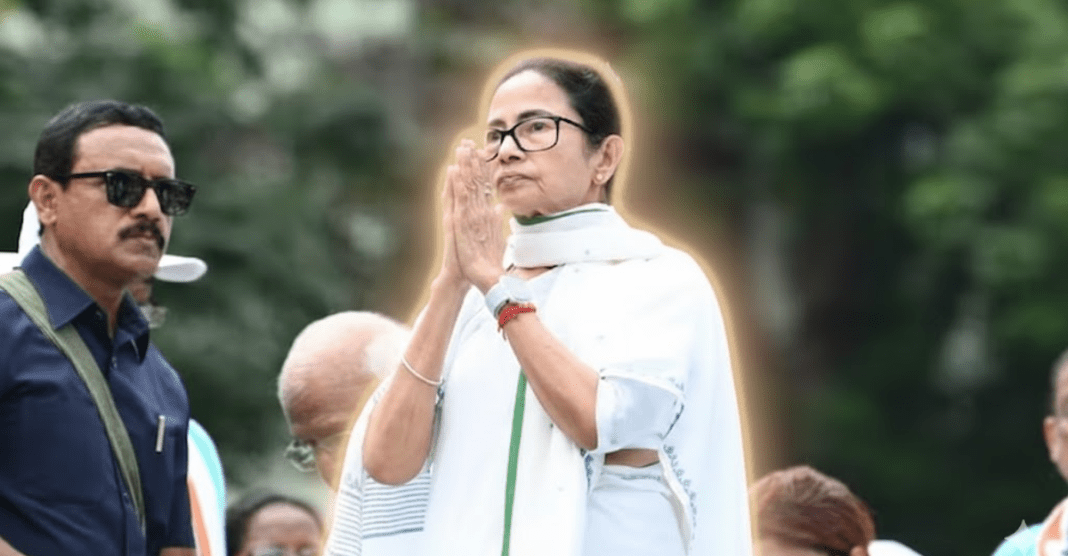
The Look: She is known worldwide for her signature white cotton sari and rubber slippers. This “declassed” look signals that she hasn’t forgotten her humble roots despite being a Chief Minister for 15 years.
The “Elder Sister”: By being called “Didi” (Elder Sister), she moves beyond the role of a politician to a family guardian. To her supporters, she is a protector; to her critics, she is a tough, uncompromising “street fighter.”
Creative Leader: She uses her poetry, paintings, and songs to connect emotionally with the Bengali identity. At the 2026 Kolkata Book Fair, she released a book of poems titled “SIR: 26 in 26” to protest electoral changes, showing that she uses art as a political tool.
Core Political Ideology, “Maa, Maati, Manush”
Her ideology isn’t found in thick textbooks but in her simple three-word slogan:* Mother, Land, and People*.
Maa (Mother): Represents the protection of women and the nurturing role of the state. It explains her focus on schemes like Kanyashree and Lakshmir Bhandar.
Maati (Land/Soil): Represents her roots in the farmer movements of Singur and Nandigram. It stands for the protection of farmers’ rights and the physical territory of Bengal.
Manush (People): Focuses on the “common man.” Her ideology is Populist Welfarism. she believes the state’s primary job is to provide direct financial and social support (doles and grants) to the marginalized.
Secularism & Regionalism: She champions a “Bengali Identity” (Sub-nationalism) and remains a fierce defender of secularism, often positioning herself as a “lone warrior” against the central government to protect Bengal’s unique culture.
Awards and Recognition
- Global Health & Edu Honorary D.Litt (First Asian Woman) Okayama University, Japan Nov 2025
- Digital Governance Excellence in e-Learning (BanglaSiksha 3.0) Digital Transformation Summit Jan 2026
- Public Service UN Public Service Award (First Prize) United Nations 2017
- Global Influence 100 Most Influential People TIME Magazine2012, 2021
- Political Leadership Indian of the Year (Politics) CNN-IBN 2011
- Skill Development World Summit on Information Society (WSIS) United Nations 2019
- Literature Special Bangla Academy Award Bangla Academy 2022
Net Worth Overview (2025–2026)
- Total Assets Approximately ₹15.38 Lakh
- Immovable Property Nil (She owns no land, house, or apartment)
- Vehicles Nil (She does not own a car)
- Liabilities Nil
- Annual Income Approx. ₹15.47 Lakh (primarily from royalties)
Legacy and Impact
Mamata Banerjee’s legacy is defined by her transformation of West Bengal into a modern “welfare state” and her role as a symbol of regional resistance in Indian democracy.
- Contribution to the State
A New Economic Path: Under her leadership, West Bengal’s economy (GSDP) has grown nearly 5.4 times since 2011, reaching over ₹21.48 lakh crore in the 2026-27 budget.
Poverty Alleviation: Her government reports that 1.72 crore people were lifted out of poverty during her tenure, driven by direct cash transfer schemes.
Infrastructure Transformation: She has shifted the focus to rural connectivity, building over 2.2 lakh km of roads and launching massive projects like the ₹1,670 crore Gangasagar Setu bridge in 2026.
- Long-Term Influence
The “Bengal Model” of Welfare: Her “cradle-to-grave” schemes, such as Kanyashree and Lakshmir Bhandar, have been studied by the UN and adapted by other Indian states.
The “Street Fighter” Archetype: She has redefined Indian political leadership by maintaining a “declassed” image white sari and rubber slippers proving that a leader can wield immense power without losing a grassroots, “ordinary person” persona.
End of an Era: Her most historic impact remains ending 34 years of Communist rule in 2011, a feat that permanently shifted the political DNA of Eastern India.
- Political Significance in 2026
A Lone Warrior: As of February 2026, she remains the most prominent regional leader to successfully hold her ground against the central government for over a decade.
Defending Federalism: Her recent personal appearance as a lawyer in the Supreme Court (Feb 2026) to fight for the state’s voter rights has cemented her legacy as a fierce protector of state sovereignty and “Bengali Identity.”
Inclusive Populism: By launching the Yuva Sathi (₹1,500 monthly youth allowance) in early 2026, she continues to use “Welfare Populism” to maintain a direct emotional bond with her voters, independent of national political waves.
Mamata Banerjee’s legacy is that of a disruptor. She replaced an entrenched ideological regime with a personality-driven, welfare-centric model that prioritizes the “Maa, Maati, Manush” (Mother, Land, and People) above all else.
Controversies
1. Clashes with Law Enforcement and Opposition Parties
Mamata Banerjee has often been criticized for her confrontational political style.
Several incidents of clashes between TMC supporters and opposition parties have drawn national attention, sometimes leading to accusations of political intolerance.
2. Allegations of Corruption
Her government has faced allegations of irregularities in projects and contracts, including issues related to land allocation and welfare schemes.
While no major convictions have been made, opposition parties frequently raise these issues in political debates.
3. Handling of Protests and Strikes
Certain strikes, especially related to student protests or labor movements, have led to criticism of the state government’s handling of law and order.
4. Central Government Conflicts
Mamata has often been at odds with the central government, leading to high-profile verbal disputes, accusations of political vendetta, and conflicts over funding and administrative control.
5. Media and Public Criticism
She has faced criticism for her direct and sometimes abrupt statements against political rivals and the media, which some perceive as confrontational.
Top 5 Intresting Facts About Mamata Benerjee :
- Mamata Banerjee became the first ever woman Chief Minister of West Bengal.
- She is popularly known as ‘Didi’, which translates into elder sister.
- She writes poems and has sold almost 300 works of paintings.
- She introduced Rabindra Sangeet, songs of Tagore, at traffic lights in Kolkata.
- Before joining politics full-time, Banerjee worked as a stenographer, a primary school teacher, a private tutor, and even as a salesgirl.
Also Read: Himanta Biswa Sarma Biography: Assam’s Visionary Leader and Chief Minister