

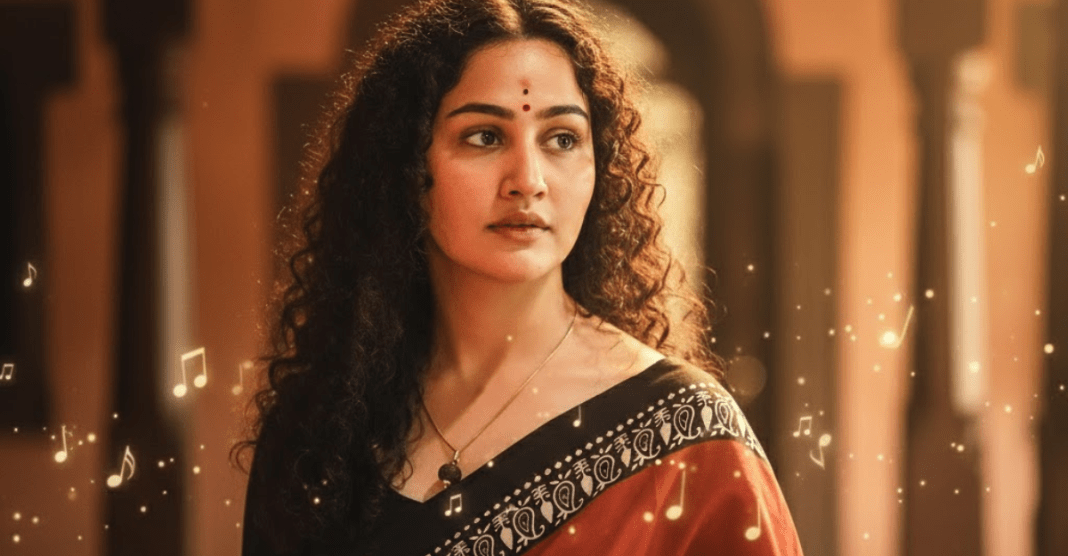

Meenakshi Sehrawat Biography: In an era where success is often measured by corporate jobs and material milestones, choosing ideology over income is rare.
Emerging from India’s contemporary cultural discourse is a young socio-spiritual activist who has consciously prioritized civilizational identity over conventional career paths.
Meenakshi Sehrawat has garnered national attention for her unapologetic advocacy of Sanatana Dharma, deep engagement with Indian youth, and her widely discussed claim of rejecting a lucrative corporate opportunity to dedicate herself to cultural and spiritual awakening.
Trained in classical Kathak and theatre, spiritually inclined, and deeply rooted in Hindu philosophy, she does not function as a politician or religious leader.
Instead, she operates as a cultural orator and ideological voice, using public debates, speeches, and digital platforms to influence contemporary narratives.
Her rise has been largely shaped by social media visibility and viral discourse, making her both polarizing and influential in India’s cultural landscape.
Meenakshi Sehrawat, preserving Sanatana Dharma
Meenakshi Sehrawat is an Indian socio-spiritual activist, cultural orator, and Krishna devotee, dedicated to promoting Sanatana Dharma and preserving Indian culture.
She is the President and Co-Founder of Sanatan Mahasangh and a PhD scholar, blending academic reasoning with spiritual discourse.
A trained Kathak dancer and theatre artist, she prefers theatre for its cultural depth and expressive power.
Meenakshi Sehrawat Biography: Her talks often focus on Hindu philosophy, the Bhagavad Gita, Vedic traditions, and Indian civilizational history, aiming to reconnect youth with traditional values.
Active on Instagram and YouTube, she has built a substantial following, often sparking debates over culture, religion, and societal issues.
Personal Overview
| Full Name | Meenakshi Sehrawat |
| Known As | “Krishnabhakt” (Devotee of Krishna) |
| Base | Dehradun, Uttarakhand |
| Age | 27 years |
| Primary Identity | Cultural activist & ideological speaker |
| Domains | Culture, spirituality, history, nationalism, youth discourse |
| Key Associations | Co-founder of Sanatan Mahasangh |
| Advocacy | Gurukul education, Yoga, Ayurveda |
| Artistic Background | Trained Kathak dancer and theatre artist |
| Nationality | Indian |
| Religion | Hinduism |
Early Life & Education
Meenakshi hails from Dehradun, where her upbringing was rooted in traditional values.
She balanced her academic pursuits with a deep passion for the performing arts, specifically Kathak and theatre.
Academic Background: She holds advanced degrees, including a Master’s and a Ph.D., which she often references to provide a logical framework for her spiritual arguments.
Transition to Activism: While she initially found success in theatre, she chose to pivot toward spiritual activism, feeling that mainstream acting lacked the “cultural depth” required to serve society.
Artistic & Cultural Roots
- Trained in Kathak, a classical Indian dance form
- Experienced in theatre and stage performance
- Rejects mainstream cinema for prioritizing commercial interests over cultural depth
- Her artistic training enhances her public presence through:
- Expressive speaking style
- Storytelling and metaphors
- Dramatic pauses and emotional engagement
Professional Path & Ideological Turn
Rather than following a conventional corporate or entertainment career, she consciously aligned herself with:
- Cultural activism
- Ideological discourse
- Youth awareness initiatives
Rise to Fame & Contribution
Meenakshi Sehrawat Biography: She rose to prominence by bridging the gap between ancient scriptures and modern digital platforms.
The “Yagyopavit” Reform: She famously performed the Yagyopavit Sanskar (sacred thread ceremony), a ritual historically reserved for men, to prove that women have an equal right to Vedic traditions.
Educational Advocacy: She is a fierce proponent of replacing Westernized schooling with the Gurukul system, focusing on character building and Sanskrit.
Public Speaking: She is a regular at high-profile events like the National Yuva Conclave and the Surat Literary Foundation, where her speeches often go viral for their unapologetic stance on Hindu identity.
Notable Focus Areas
- Advocacy of Sanatana Dharma
- Challenging colonial and post-colonial narratives
- Promoting cultural self-confidence among youth
- Prioritizing ideology over financial success
- Fearless, unapologetic speaking style
Controversies and Legal Issues
- The “Gandhi” Scandal (Jan 2025)
This is her biggest legal hurdle. During a speech in Udupi titled “Bangla Patha,” she made several explosive claims:
–The Reject: Stated she does not accept Mahatma Gandhi as the “Father of the Nation.”
–The Accusation: Alleged Gandhi supported Jinnah to create Pakistan and used Ahimsa (non-violence) to “weaken Hindus.”
–The Consequence: Booked by Karnataka Police under the Bharatiya Nyaya Sanhita (BNS) for provocative speech and inciting communal hatred.
- The “Asif to Asifa” Remark
In the same Udupi speech, she warned that if children aren’t taught “real history,” Hindu girls would be trapped by “Asifs” and converted into “Asifas.”
Critics blasted this as inflammatory “Love Jihad” rhetoric designed to create communal fear.
- The “Sacred Thread” Backlash
She triggered a civil war within the Hindu community by performing the Yagyopavit Sanskar (wearing the sacred thread).
The Heat: Traditionalists trolled her for breaking “Vedic rules” reserved for men.
Her Response: She doubled down, calling it “Vedic Feminism” and citing ancient female scholars like Gargi to justify her right to the ritual.
- National Symbol Row
She has repeatedly claimed that Vande Mataram was “banned” or suppressed by past leaders to “appease minorities.”
Historians have often called her out for “distorting facts” to fit a specific political narrative.
- Anti-Western Feminism
She frequently clashes with modern activists by labeling Western feminism as “destructive” to the Indian family structure, advocating instead for a return to the Manusmriti (though she interprets it through her own lens) and the Gurukul system.
Public Image & Response to Critics
Meenakshi Sehrawat maintains a defiant public persona. Her typical response to controversies includes:
The “Double Standard” Argument: She frequently points out that while she is booked for criticizing Gandhi, individuals who insult Hindu deities (like Rama or Krishna) or freedom fighters like Veer Savarkar often face no legal consequences.
The “Truth-Teller” Identity: She frames her legal issues as “persecution for speaking historical facts,” often using the hashtag #SanatanDharma to mobilize her followers.
Fun Facts
-Prefers theatre over cinema for its soulful connection
-Dedicated Yoga practitioner; promotes Ayurveda as lifestyle
-Combines traditional philosophy with tech-savvy digital outreach to reach global youth
Impact and Awards
Impact: She has successfully mobilized a “New-Age Sanatani” youth movement that emphasizes Shastra (knowledge) alongside physical and mental strength.
Awards: While she hasn’t pursued mainstream civilian awards, she is frequently honored by Hindu organizations and literary foundations for her contribution to “Dharmic awakening”.