



Middle East conflict 2026: The geopolitical landscape of the Middle East on Saturday, March 28, 2026, has become a study in jarring contradictions.
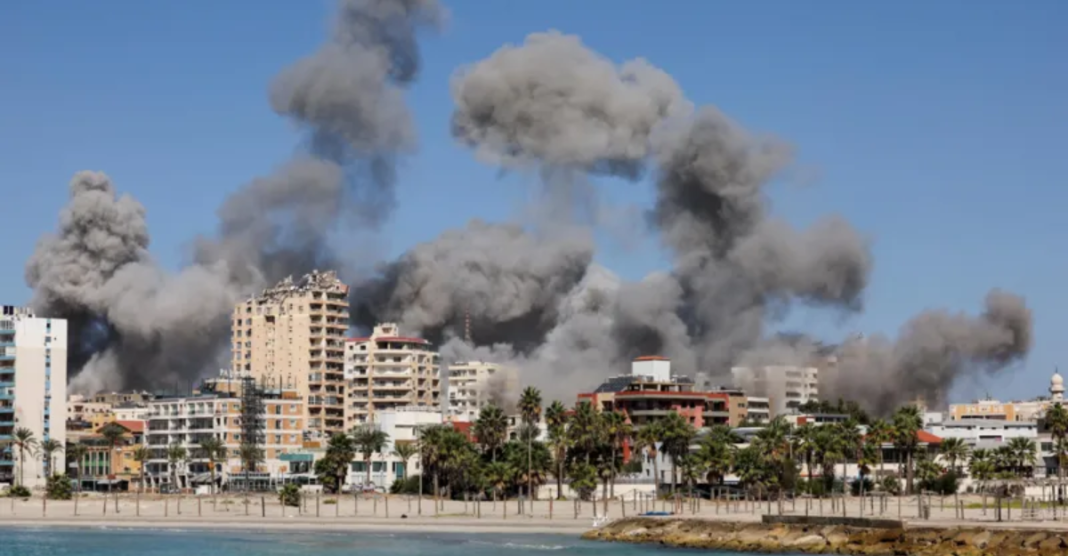
While the high-ceilinged halls of Islamabad host a desperate diplomatic gamble to weave a “net of trust” between Washington and Tehran, the soil of Southern Lebanon is being scorched by a rapidly expanding military geography that leaves no room for civilian life.
As the clock ticks toward a self-imposed ten-day diplomatic deadline set by the United States, the region finds itself caught between a sophisticated 15-point peace plan and the raw, kinetic reality of a war that has already displaced over a million people.
The Islamabad Gambit: A Bridge Built on “Trust”
In what historians may one day compare to the secret 1971 opening between the U.S. and China, Pakistan has emerged as the indispensable “post office” for two rivals on the brink of total catastrophe.
A high-stakes telephone call on Saturday between Iranian President Masoud Pezeshkian and Pakistani Prime Minister Shehbaz Sharif underscored the fragile nature of this backchannel.
The “Trust” Deficit
Middle East conflict 2026: President Pezeshkian’s message was singular and sharp: Mediation is impossible without trust. For Tehran, the “trust deficit” is not mere rhetoric; it is a survival concern.
As the U.S. and Israel continue Operation Epic Fury, a campaign that has systematically targeted Iran’s industrial backbone, from the Khuzestan steel plants to research facilities in Tehran, Iran argues it cannot negotiate while under fire.
Prime Minister Sharif briefed Pezeshkian on Pakistan’s intense diplomatic outreach, involving not just the civilian government but also the Chief of Army Staff, Field Marshal Asim Munir, who has reportedly been in contact with the Trump administration.
The Pakistani side is essentially trying to sell a “conducive environment” for talks, even as sirens wail across the Gulf.
The 15-Point Ultimatum
Middle East conflict 2026: The “carrot” on the table is a 15-point U.S.-backed peace proposal delivered via Islamabad. Research into this document reveals it is a comprehensive “grand bargain” designed to end the month-long war. Key pillars include:
Nuclear and Missile Rollback: Strict caps on enrichment and long-range ballistic technology.
Sanctions Relief: The lifting of economic “suffocation” that has paralyzed the Iranian Rial.
Maritime Guarantees: Reopening the Strait of Hormuz to international shipping without the “transit fees” Iran’s Parliament recently proposed.
To the hardliners in Tehran, this looks less like a treaty and more like a demand for conditional surrender.
However, with the Iranian economy at a breaking point, the Pezeshkian administration is at least entertaining the deliberation, provided “legal guarantees” are met.
The Humanitarian Crisis: Shifting the “Zahrani Line”
While the elite debate semantics in Pakistan, the people of Southern Lebanon are engaged in a desperate race against time.
The Israeli Defense Forces (IDF), through spokesperson Avichay Adraee, have redrawn the boundaries of the war, ordering the immediate evacuation of several key communities.
The Villages Under Fire
Today’s “urgent warning” targeted residents of seven specific communities near the city of Tyre
- Maashouq
- Burj Shemali
- Rashidieh
- Deir Kifa
- Qaaqaait al-Jisr
- Wadi Jilo
- El-Buss
The decree is chillingly specific: residents must move north of the Zahrani River. By pushing the “safety line” to the Zahrani, nearly 25 kilometers north of the traditional Israeli border, the IDF is signaling a massive expansion of its “buffer zone.”
This move effectively places 14% of Lebanon’s total landmass under active combat status.
A Nation of Nomads
Middle East conflict 2026: The human cost is staggering. Since the escalation began on March 2, 2026, research indicates that over 1.1 million people , roughly 20% of Lebanon’s population, have become internally displaced.
With the IDF targeting bridges and petrol stations, the trek north has become a gauntlet of fire.
Human rights groups, including Human Rights Watch, have warned that these blanket evacuation orders may constitute “forced displacement.”
For the elderly, the sick, and the thousands sleeping in cars along Beirut’s seafront, the Zahrani River is not just a geographical marker, it is the latest boundary in a vanishing homeland.
A Regional Firestorm: Metastasizing Conflict
The events of March 28 confirm that the fire is no longer contained to the borders of Israel and Lebanon.
The conflict has officially metastasized across the Gulf and the Red Sea
The Houthi Entry: For the first time in this 2026 cycle, Yemen’s Houthi rebels confirmed launching a barrage of missiles at Israel on Saturday morning.
This marks a dangerous new front, fulfilling their promise to join the fray if “aggression” against Iran continued.
Gulf Instability: Drone strikes have crippled radar systems at Kuwait International Airport, while an IRGC strike reportedly targeted a U.S. support vessel off the coast of Oman.
The Toll on U.S. Forces: At least 12 American soldiers were wounded today in an Iranian missile attack on a military base in Saudi Arabia, a stark reminder that regional alliances provide no immunity from the reach of Tehran’s remaining arsenal.
The Bottom Line: Pakistan is performing a diplomatic miracle by keeping both sides talking, but trust is a rare commodity in a landscape dominated by falling missiles.
President Trump has signaled a window of opportunity until April 6. If the Islamabad talks do not produce a concrete ceasefire by then, the “limited” conflict of 2026 will likely be remembered as the opening chapter of a Great Regional War that changed the world forever.
BY – Arushi Sharma
Also Read: The Silicon Siege: Why AI is the Deadliest National Security Frontier of 2026