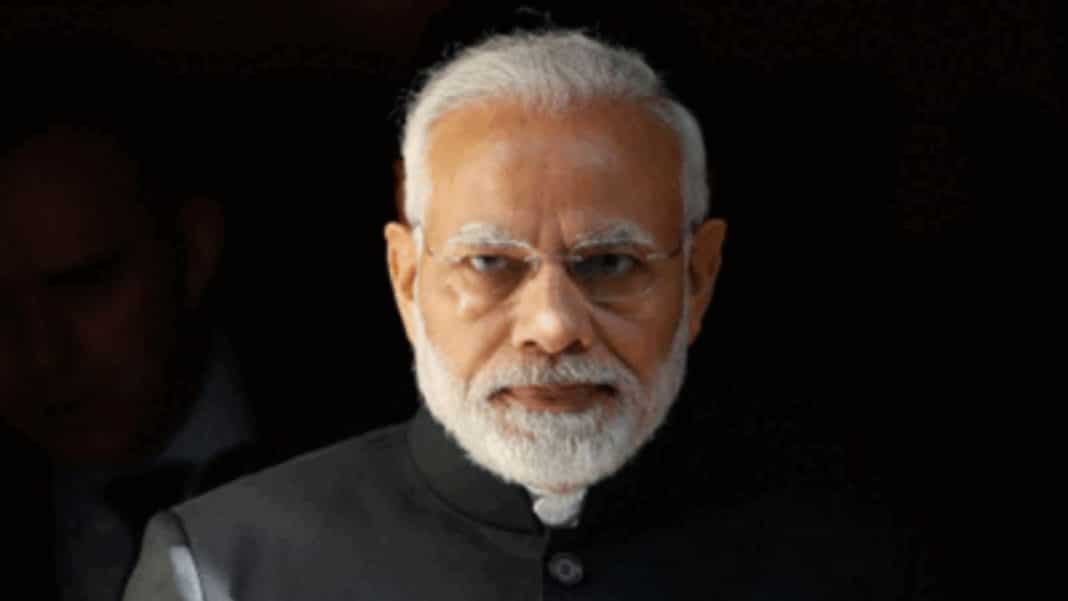

Narendra Damodardas Modi is an Indian politician who has served as the current Prime Minister of India since May 26, 2014.
He was born on September 17, 1950, in Vadnagar, Gujarat. His association with the RSS and later with the BJP played a key role in shaping his political ideology.
As the Chief Minister of Gujarat and later as the Prime Minister of India, Narendra Modi implemented a wide range of reforms to boost economic growth, improve governance, and enhance India’s global standing.
A Quick Overview
| Full Name | Narendra Damodardas Modi |
| Date of Birth | September 17, 1950 |
| Place of Birth | Vadnagar, Gujarat, India |
| Parents | Damodardas Mulchand Modi (Father), Heeraben Modi (Mother) |
| Education | Bachelor’s in Political Science, University of Delhi;Master's in Political Science, Gujarat University |
| Political Party | Bharatiya Janata Party (BJP) |
| Political Career | Joined Rashtriya Swayamsevak Sangh (RSS) , at a young age; Joined BJP in 1987 |
| Chief Minister of Gujarat | 2001 – 2014 |
| Prime Minister of India | Took office on May 26, 2014; Re-elected in May 2019 and June 2024 |
| Major Initiative | Swachh Bharat Abhiyan, Digital India, Make in India, Ayushman Bharat, GST implementation |
| Foreign Policy | Focus on strong international ties, Act East Policy, Neighbourhood First policy |
| Books Authored | “Jyotipunj,” “A Journey: Poems by Narendra Modi” |
| Awards & Recognition | UN Champions of the Earth Award (2018), Seoul Peace Prize (2018), Global G |
| Personal Interests | Yoga, Reading, Writing |
Narendra Modi Age Of 2026
Narendra Modi, born on September 17, 1950, has charted one of the most remarkable political journeys in modern India. As he marks his 76th birthday in 2026, his legacy as a leader, is a complex tapestry of transformative policies and enduring controversy.
From a young age, Modi’s path was set on a trajectory of public service, first with the Rashtriya Swayamsevak Sangh (RSS) and later within the Bharatiya Janata Party (BJP)
Educational Qualification
Narendra Modi comes from a humble background. He grew up in a lower-middle-class family of grocers, where financial struggles were part of daily life.
His early years instilled in him the values of hard work, perseverance, and discipline.
Primary and Secondary Education: Modi completed his primary and higher secondary schooling in Vadnagar. Teachers recall him
as a bright and curious student with a deep interest in debates and theatre.
Narendra Modi Family
Father: Damodardas Mulchand Modi (1915–1989)
A small-time grocer and tea seller who ran a tea stall at Vadnagar railway station.
Mother: Hiraben Modi (1923–2022)
A homemaker known for her simplicity and strong values. She passed away in December 2022.
Soma Modi: Information about her profession is limited.
Amritbhai Modi: Information about his profession is limited.
Prahlad Modi: Runs a fair price shop in Ahmedabad.
Pankaj Modi: Works in the Information Department of the Gujarat government.
Vasantiben Hasmukhlal Modi: Information about her profession is limited.
Marital Status
Spouse: Jashodaben Chimanlal Modi
Narendra Modi and Jashodaben were married in their youth, following traditional customs. However, they have lived separately for decades.
Narendra Modi Political Carrer
Years and events
2024
After another strong electoral performance, Narendra Modi was sworn in for a third consecutive term as Prime Minister on June 9, 2024.
2019
Narendra Modi, the prime minister of India, has been elected for a second five-year term.
2014
The 14th and current Prime Minister of India is Narendra Modi. On May 26, 2014, Modi took the oath of office as India’s prime minister.
After India gained its independence from the British Empire, he became the country’s first prime minister.
2012
Modi won re-election in Maninagar. This time, he won by 34097 votes over Bhatt Shweta Sanjiv.
In his fourth stint as chief minister, he again took the oath. Later, in 2014, he left the assembly.
2007
The third term of Modi’s leadership as CM began on December 23, 2007, and it ended on December 20, 2012.
Once more, he prevailed over Maninagar. Dinsha Patel of Congress lost to him.
2002
The assembly election was won by him, who ran from Maninagar. By 38256 votes, he defeated Congressman Oza Yatinbhai Narendrakumar. He continued to serve as Gujarat’s chief minister (his second term).
2001
Keshubhai Patel’s health was deteriorating, and the BJP suffered a couple of losses in by-elections for state assembly seats.
Modi took over as Gujarat’s Chief Minister after Patel was ousted by the BJP’s national leadership.
Modi took his oath as Gujarat’s chief executive on October 7, 2001. He won the Rajkot II constituency’s by-election on February 24, 2002.
By 14,728 votes, he defeated Ashwin Mehta of the INC. This was his first and only temporary position.
1995
He moved to New Delhi after being appointed the BJP national secretary. He oversaw the Himachal Pradesh and Haryana electoral campaigns.
In 1996, Modi was allowed to become the BJP’s general secretary.
1990
Modi participated in the planning of L. K. Advani’s 1990 Ram Rath Yatra and Murli Manohar Joshi’s 1991–1992 Ekta Yatra.
1987
Modi was chosen to serve as the Gujarat branch of the BJP’s organising secretary.
1986
Modi succeeded L. K. Advani as BJP president. At that time, the RSS decided to give its members key posts within the BJP.
1985
Modi was given to the BJP by RSS. Modi assisted in planning the BJP’s campaign for the Ahmedabad municipal election later in 1987. The BJP won that election.
1979
He relocated to Delhi and started working with the RSS, where he was assigned to write and do research for the RSS’s account of the Emergency.
1978
He became an “RSS sambhag pracharak,” associated with RSS activity in the Surat and Vadodara regions.
1975
The RSS chose Narendra Modi to be the organisation’s general secretary, or “Gujarat Lok Sangharsh Samiti”. In order to avoid being arrested during the Emergency, Modi was compelled to hide. Printing pamphlets critical of the government was something he did.
Books Written By Narendra Modi
Narendra Modi has authored several books, primarily focusing on inspirational themes, governance, and personal reflections.
1 Exam warriors – A guide for students on handling exam stress, originally in Gujarati and translated into English and other languages.
2 Jyotipunj – A collection of inspirational biographical sketches, paying tribute to influential Gujarati leaders.
3 Premtirth – Short stories originally in Gujarati, focusing on the theme of mother’s love.
4 Sakshi bhav {Letters to Mothers} – A collection of writings and reflections.
5 A Journey: Poems – A collection of his poems.
6 Social Harmony – Explores building a developed India through social unity.
7 Naye Bharat Ka Samved – Explores constitutional values and governance in modern India (in Hindi).
Narendra Modi Major Achievements
PM Narendra Modi has received many national and international awards for his leadership and contributions to governance.
He was awarded the Order of Zayed by the UAE, the Legion of Merit by the U.S., and the Champions of the Earth by the UN.
He is also the first Indian to win the Seoul Peace Prize award in 2018.
UN Champion of the Earth Award (2018) – United Nations
Order of Zayed (2019) – United Arab Emirates
Legion of Merit (2020) – United States
Order of the Dragon King (2021) – Bhutan
Grand Cross of the Legion of Honour (2023) – France
Narendra Modi Net Worth :
Annual: ₹19,92,000.00
Monthly: ₹1,66,000.00
Weekly: ₹38,307.69
Daily: ₹7,661.54
Top 5 Quotes Of Narendra Modi
1 Aatmanirbhar Bharat” (Self-Reliant India) – A rallying cry urging the nation to become self-sufficient, boosting local manufacturing and reducing dependency.
2 On Self-Reliance & Youth (2025/2026):
“I dream of Yuva Shakti that is filled with self-belief, has the power to think big, and is hardworking to realize that aspiration.”
3 On Unity & Peace (Jan 1, 2026):
“May the year ahead bring good health and prosperity, with success in your efforts and fulfillment in all that you do. I pray for peace and happiness in society.”
4 On National Duty & Development (2025/2026):
“Amrit Kaal is Kartavya Kaal—an era of duty. Our goal is a developed India by 2047, and that requires every citizen to prioritize their responsibility to the nation.”
5 On Governance & Technology (2025):
“We are bringing a new simplified income tax code towards Ease of Living… Everyone’s progress is linked to India’s progress.”