
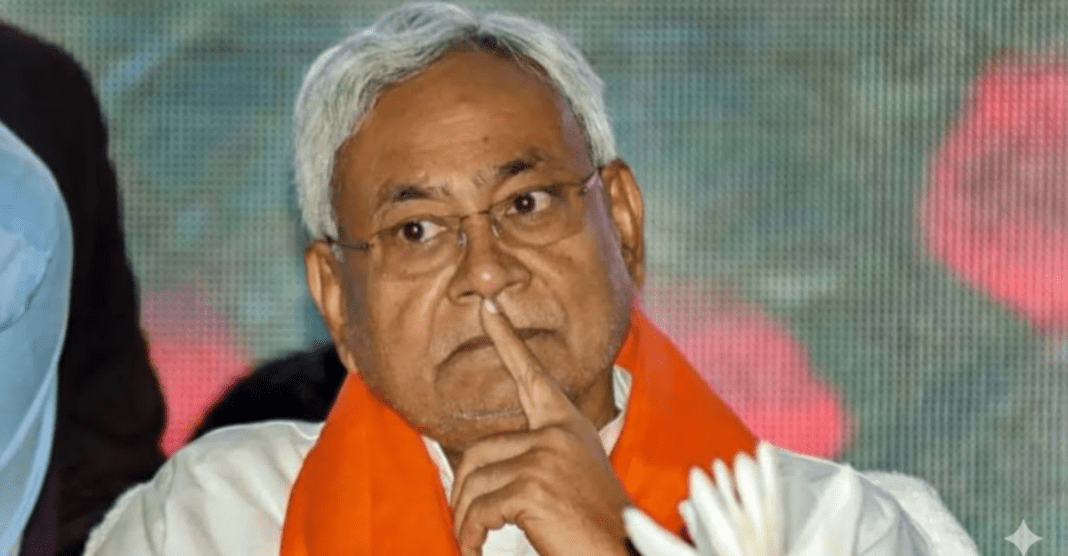

Nitish Kumar Biography: In the complex and often turbulent landscape of Indian politics, few leaders have mastered the art of survival and administration as effectively as the man often called “Chanakya of Modern Bihar.“
Before he became the face of a state’s transformation, he was a young electrical engineer who once contemplated leaving politics entirely after two consecutive electoral defeats.
He is a leader who can bridge the gap between socialist roots and high-tech governance, a man who famously prioritizes “Development with Justice.“
This is the story of the longest-serving Chief Minister of Bihar Nitish Kumar. He is also the present CM of Bihar.
Personal Overview
| Full Name | Nitish Kumar |
| Date of Birth | 01 March 1951 (Age 75) |
| Place of Birth | Bakhtiarpur, Distt. Patna, Bihar |
| Party Name | Janata Dal (United) |
| Current Designation | Chief Minister of Bihar |
| Position in Party | National President |
| Education | Graduate |
| Profession | Social Worker, Agriculturist, Engineer |
| Father’s Name | Late Kaviraj Ram Lakhan Singh |
| Mother’s Name | Late Parmeshwari Devi |
| Spouse’s Name | Late Manju Kumari Sinha |
| Children | 1 Son – Nishant Kumar |
| Caste | Kurmi |
| Religion | Hindu |
Family Background and Roots
Nitish Kumar Biography: Born on March 1, 1951, in the historic town of Bakhtiarpur, the “Chanakya of Bihar” was raised in a household where the air was thick with patriotism and social consciousness.
His father, Kaviraj Ram Lakhan Singh, was not only a respected Ayurvedic practitioner but also a fearless freedom fighter who was imprisoned multiple times during the 1942 Quit India Movement.
His mother, Parmeshwari Devi, a homemaker originally from Nepal, instilled in him the grounded values of rural Bihar.
Nitish Kumar Biography: Growing up as “Munna” in his ancestral village of Kalyan Bigha, he was profoundly influenced by his father’s transition from the Congress party to the socialist ideology after being denied an election ticket, a move that sowed the early seeds of political defiance in the young boy.
He married Manju Kumari Sinha, a teacher, in 1973. She was his silent pillar of support, even funding his 1985 election campaign with her savings.
Sadly, she passed away in 2007. They have one son, Nishant Kumar, who has largely stayed away from the political limelight.
Early Life & Education
Early Discipline: Nitish attended Shree Ganesh High School in Bakhtiarpur. Teachers from that era remember him as a “bright but quiet” student who preferred the company of books over the chaos of the playground.
The Academic Prodigy: He matriculated with high marks, showing a particular aptitude for mathematics and logic skills that would later help him navigate the complex “caste arithmetic” of Bihar politics.
The Engineering Journey: Patna to the Grid
Science & Ambition: He moved to the capital to study at the prestigious Patna Science College, a hub for the state’s intellectual elite.
Electrical Engineering: In 1972, he earned his degree in Electrical Engineering from the Bihar College of Engineering (now known as NIT Patna).
A Brief Professional Stint: After graduation, he joined the Bihar State Electricity Board. However, he felt like a “misfit” in a desk job. ]
His heart was already in the streets, fueled by the revolutionary speeches of Ram Manohar Lohia and the rising tide of the JP Movement.
Personal Life
His personal life is marked by simplicity and a touch of tragedy that he rarely speaks about in public.
The Marriage (1973): He married Manju Kumari Sinha on February 22, 1973. While Nitish was often in jail during the Emergency or busy organizing rallies, Manju worked as a teacher in a government school.
The Secret Funder: It is a well-known local fact that for many years, Nitish had no personal income. His first successful assembly election in 1985 was largely funded by his wife’s modest savings and salary.
The Son (Nishant Kumar): Their son, Nishant, is a graduate of BIT Mesra. Unlike other political dynasties, Nitish has famously kept his son away from politics. Nishant is known for his spiritual leaning and leads a very private life, often seen only during family ceremonies in their ancestral village.
Political Timeline
2025: Sworn in as Chief Minister of Bihar for the tenth time.
2024: He was sworn in as Chief Minister for the ninth time in the Bihar BJP-JD(U) government.
2022: Nitish Kumar was sworn in as the Bihar CM for the record 8th time as he switched the side again and went back to the RJD led grand alliance aka Mahagath bandhan.
2020: NDA led by Nitish Kumar in Bihar election pulled a marginal victory and Mr. Kumar was sworn in as the chief minister tough his party JDU could clinched only 43 seats.
2017: Following corruption charges on then Deputy CM Tejaswee Yadav, Nitish Kumar broke up the alliance with the RJD, came back to NDA fold and appointed CM again
.
2015: On 22 February 2015, he again elected as chief minister of Bihar. He is incumbent on this post.
2014: On 20 May 2014, he stepped down as CM and Jitan Ram Manjhi was appointed as CM.
2005: Elected Chief Minister of Bihar (24 November 2005 – 17 May 2014), a position served in an intermittent capacity following few political glitches However scrambled back up into a position of power. Also, he became a member of the Legislative Council of Bihar.
2004: Re-elected to 14th Lok Sabha for a sixth term from Nalanda. He became a Member of Committee on Coal & Steel, General Purposes Committee and Committee of Privileges. Also, he became a Leader of Janata Dal (U) Parliamentary Party, Lok Sabha.
2001: Union Cabinet Minister, Agriculture with an additional charge of Railways and Union Cabinet Minister, Railways
.
2000: He was sworn in as Chief Minister, Bihar and subsequently inducted into the cabinet as Union Cabinet Minister, Agriculture.
1999: Union Cabinet Minister, Surface Transport and Union Cabinet Minister, Agriculture.
1999: Re-elected to 13th Lok Sabha from Barh where he defeated Vijay Krishna of RJD by a margin of 15,000 votes.
1998: Union Cabinet Minister, Railways and Union Cabinet Minister, Surface Transport.
1998: Re-elected to 12th Lok Sabha from Barh where he defeated Vijoy Krishna of RJD.
1996: Member, Committee on Defense. 1996: Re-elected to 11th Lok Sabha (3rd term) where he defeated Vijay Krishna of JD by a margin of 60,000 votes.
1993: Chairman, Committee on Agriculture.
1991: Member, Railway Convention Committee. 1991: General-Secretary, Janata Dal.
1991: Re-elected to 10th Lok Sabha for a second term from Barh where he defeated Sidheshwar Prasad of INC.
1990: Union Minister of State, Agriculture and Co-operation.
1989: Elected to 9th Lok Sabha from Barh constituency where he defeated Ramlakhan Singh Yadav by a margin of more than one lakh votes.
1989: Secretary-General, Janata Dal, Bihar.
1987: Member, Committee on Public Undertakings, Bihar Legislative Assembly.
1986: Member, Committee on Petitions, Bihar Legislative Assembly.
Initiatives & Development of Bihar
Nitish Kumar earned the title “Sushasan Babu” (Mr. Good Governance) for pulling Bihar out of the “Jungle Raj” era.
Bicycle Scheme (Mukhyamantri Balika Cycle Yojana): Perhaps his most iconic move. By providing free bicycles to schoolgirls, he drastically reduced female school dropout rates and changed the social fabric of rural Bihar.
Roads & Infrastructure: He transformed Bihar’s connectivity, ensuring that the remotest village could reach the state capital within 5–6 hours.
Liquor Prohibition (2016): Despite massive revenue loss, he banned alcohol to curb domestic violence and poverty, fulfilling a promise made to rural women.
Women’s Reservation: He was the first CM to grant 50% reservation for women in Panchayati Raj institutions.
Electricity: He famously vowed not to seek votes in 2015 if he failed to bring electricity to every village ,a promise he largely fulfilled.
Connection with PM Modi & BJP
The relationship between Nitish Kumar and the BJP is one of the most significant “frenemy” dynamics in Indian history.
The Early Bond: He was a trusted lieutenant of Atal Bihari Vajpayee.
The Rift (2013): He broke a 17-year alliance with BJP when Narendra Modi was named the PM candidate, citing secular concerns.
The Reunion (2017 & 2024): Despite personal barbs, the duo has repeatedly united for “the interest of Bihar’s development.” In 2025, Modi and Nitish led the NDA to a historic seat tally of over 200 in the 243-member assembly.
Law and Order Reform
The “Speedy Trial” Revolution
Upon taking office in 2005, Nitish realized that criminals didn’t fear the police because cases dragged on for decades.
Fast-Track Convictions: He introduced a unique system of “Speedy Trials” where the police and judiciary collaborated to ensure daily hearings.
The Result: Within the first few years, over 50,000 criminals (including powerful “Bahubalis” or strongmen politicians) were convicted.
This was unheard of in Bihar’s history and immediately broke the backbone of organized crime.
Impact: Kidnapping for ransom, which had become a flourishing “industry” in Bihar, dropped drastically as the state ensured that kidnappers were sentenced to life or death within months, not decades.
Police Modernization & Recruitment
Increasing the Force: In 2005, the Bihar police was severely understaffed with only 35,000 personnel. By 2026, the force has grown to over 1,31,000 personnel.
Women in Khaki: Nitish made Bihar a leader in gender-inclusive policing by providing 35% reservation for women in the police force. Today, Bihar has the highest number of female police officers in any Indian state.
Ending Political Interference: He famously gave the Director General of Police (DGP) a free hand to act against anyone, regardless of their political affiliation even if they were from his own party.
Anti-Corruption Measures
Confiscating Property: He passed the Bihar Special Courts Act (2009), which allows the state to seize the palatial houses and properties of corrupt officials even while the trial is ongoing.
Schools in Bungalows: In a symbolic move, the government turned the seized houses of corrupt bureaucrats into primary schools for poor children.
Recent Innovations (2025–2026)
As of early 2026, his government has shifted focus toward modern challenges:
POCSO Support Persons: In February 2026, his cabinet approved the nomination of “Support Persons” for child victims in POCSO cases to provide legal and psychological aid, ensuring high conviction rates in crimes against children.
Digital Policing: Integration of the “New Age Economy” and digital monitoring of every FIR to ensure that charge sheets are filed within the mandatory 60 or 90-day window.
Awards & Recognition
- Anuvrat Puraskar (2017)
- JP Memorial Award (2013)
- Ranked 77th in Foreign Policy’s Top 100 Global Thinkers (2012)
- Sir Jehangir Ghandy Medal (2011)
- NDTV Indian of the Year – Politics (2009, 2010)
- CNN-IBN Indian of the Year – Politics (2008, 2010)
- Forbes India Person of the Year (2010)
- Krishi Karman Awards for agricultural achievements
- Recognized as “Best Chief Minister” in national polls (2007)
Controversies & Challenges
The “Paltu Ram” Image: His frequent switching of alliances (U-turns) has led critics to nickname him “Paltu Ram,” questioning his political consistency.
2023 Assembly Remarks: He faced severe backlash for “crude” remarks regarding women’s education and population control, for which he later apologized in the House.
Special Category Status: A long-standing challenge has been his struggle to get “Special Category Status” for Bihar from the Central Government.
Key Successes & Impact
Economic Turnaround: Bihar’s GDP growth consistently stayed in double digits (often above 10-12%) during his peak years, outperforming the national average.
Education Revolution: He shifted the focus from just literacy to higher education. In 2025, he inaugurated the APJ Abdul Kalam Science City and initiated degree colleges in 213 underserved blocks.
Agricultural Growth: Promoted “Agriculture Roadmaps” that led to Bihar winning multiple Krishi Karman Awards for rice and wheat production.
Net Worth
- Net Worth ₹1.65 CRORE
- ASSETS ₹1.65 CRORE
- Liabilities N/A
Famous Lines & Vision
- “I will prefer to perish but will never align with the BJP again.” (A 2013 quote he famously “took back” later).
- “Nyay ke saath vikas”(Development with Justice) — His core governing philosophy.
- “Bihar ka matlab Nitish Kumar” (Bihar means Nitish Kumar) — A popular slogan during the 2025 elections.
Lesser Known Facts
Film Buff: His favorite film is the 1963 classic Mere Mehboob, which he has watched numerous times.
Tech Savvy: He personally monitors the “CM Dashboard” to track the real-time progress of various district-level schemes.
Simple Diet: He prefers simple vegetarian meals and often eats while sitting on the floor, reflecting his socialist upbringing.