


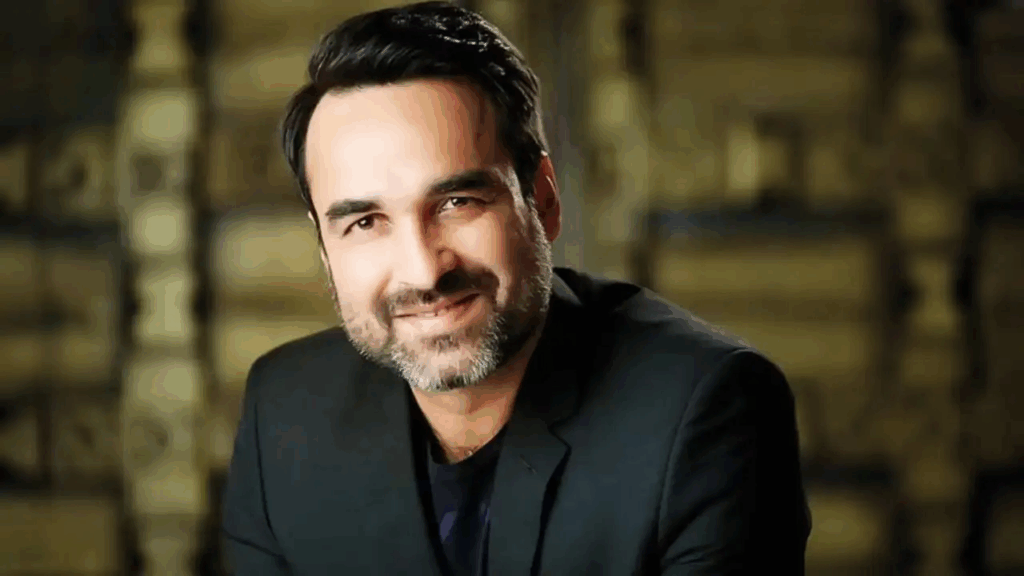

Pankaj Tripathi Biography
He is a man who arrived in Mumbai not with a portfolio of glamorous photos, but with a sack of rice and dal from his village to ensure he wouldn’t go hungry while waiting for his turn.
Before the world knew the name that would redefine “effortless acting,” there was a young boy in the small village of Belsand in Bihar who used to play the role of a girl in village nukkad nataks because the local girls weren’t allowed to perform. He once spent seven days in prison during a student protest, where he discovered the power of silence and literature.
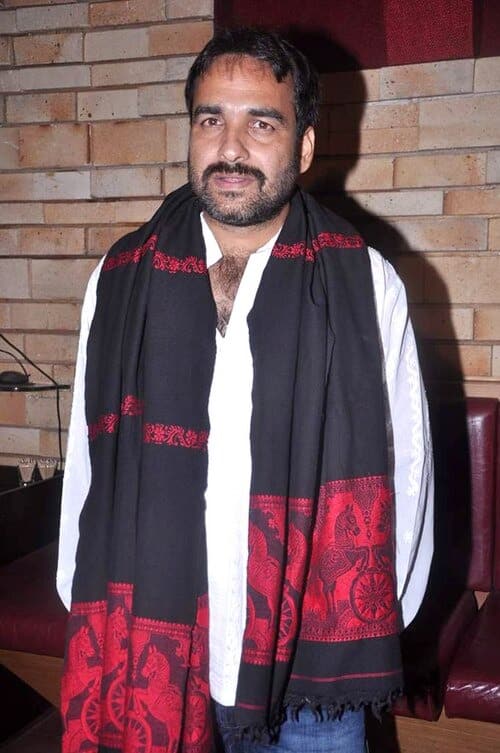
No electricity. No film background. No connections in Bollywood. Yet, he became one of India’s most respected actors.
This is the story of Pankaj Tripathi.
Personal Overview
Full Name Pankaj Tripathi
Date of Birth September 5, 1976
Age 49 years ( in 2025)
Birthplace Belsand, Gopalganj District, Bihar, India
Education Graduation in drama from National School of Drama (NSD) 2004
Profession Actor
Year Active 2002 – Present
Net Worth approximately ₹40 crore to ₹48 crore
Height 5 feet 10 inches
Weight 70 kg
Father Pandit Benaras Tiwari
Mother Hemwanti Devi
Sibling 3 brothers 2 sisters
Spouse Mridula Tripathi
Children Aashi Tripathi
Nationality Indian
Caste Brahmin
Religion Hinduism
Family Background & Culture
Pankaj was born on September 5, 1976, into a humble Hindu Brahmin family of farmers. His father, Pandit Banaras Tiwari, was both a farmer and a priest, while his mother, Hemwanti, was a homemaker.
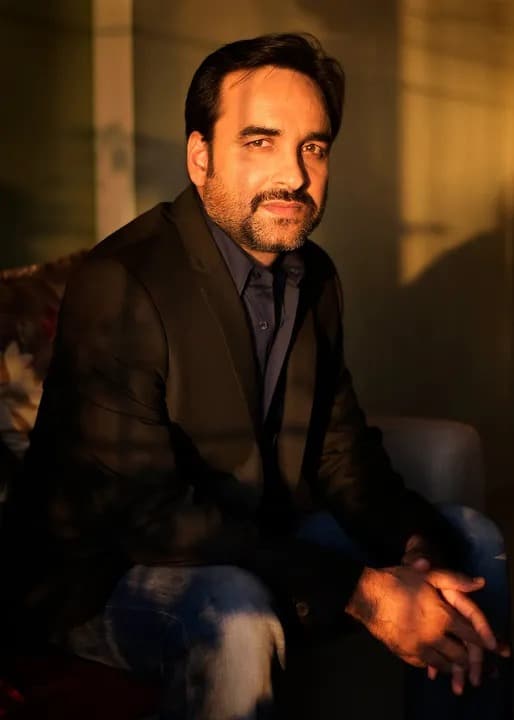
Growing up in a village without electricity or a television until he was well into his teens, his world was shaped by the soil, the seasons, and the oral storytelling traditions of rural Bihar.
Education and Early Life
Village Schooling : He spent his early years studying under a tree, as his village lacked a proper school building.
Patna Days : His father wanted him to be a doctor, but Pankaj failed the medical entrance exams. He eventually did a course in Hotel Management from the Food Craft Institute, Patna.
The National School of Drama (NSD) : After being rejected twice, he finally cleared the entrance on his third attempt and graduated from the prestigious NSD in 2004.
The “Internal” Struggle: A Team Effort
While many actors speak of starvation, Pankaj often clarifies that his struggle was different. He had a roof over his head and food on his table, but he lacked identity and opportunity.
The Breadwinner: For the first decade in Mumbai, his wife, Mridula, was the sole earner. She worked as a teacher to sustain the family while Pankaj made the rounds of casting offices. He famously says, “My wife didn’t just support me; she ran the house so I could keep my self-respect intact.”
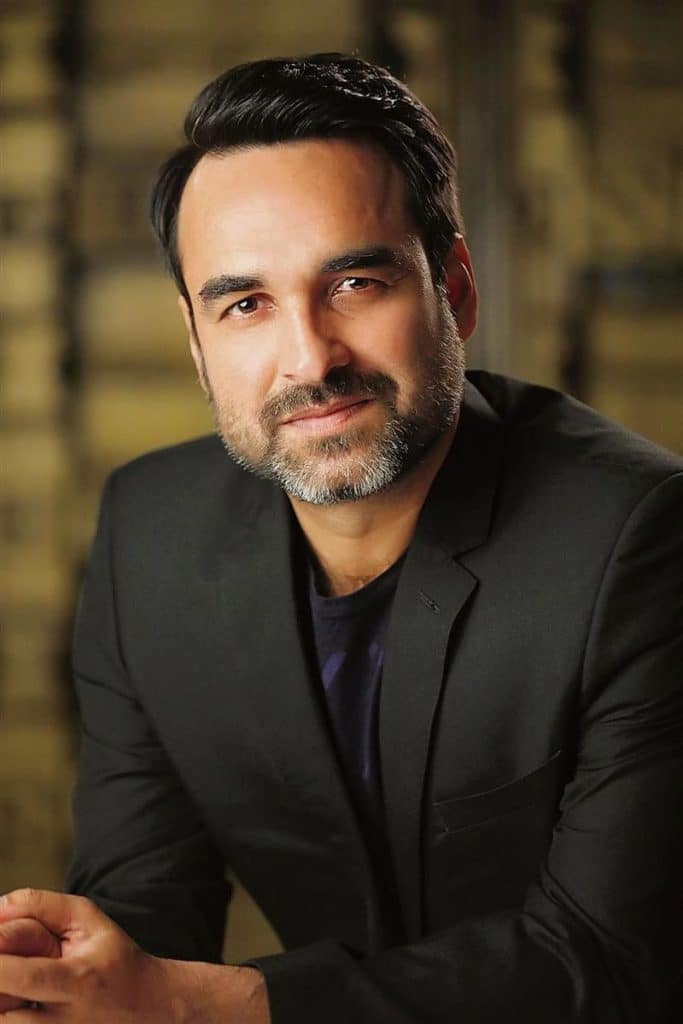
The “Hero” Stereotype: In the early 2000s, Bollywood was obsessed with “Greek God” looks, muscles, fair skin, and towering heights. Pankaj, with his slender frame, rural Bihar accent, and “common man” face, was told he didn’t fit the mold of a protagonist. He was constantly relegated to the background, fighting the industry’s narrow definition of a “Hero.”
The 7-Day Prison Stint: During his college days in Patna, his involvement in student politics led to a week in jail. Far from being a deterrent, he credits this time for his growth—he read books, observed people, and realized that real life is far more complex than the movies he saw.
Life Before Fame: The Night Shift
Before the National School of Drama, Pankaj lived a double life in Patna to fund his dreams.
Hotel Maurya, Patna: He worked as a Kitchen Supervisor/Assistant Chef during the night shift.
The Daily Grind: He would work the 11 PM to 7 AM shift at the hotel, sleep for a few hours, and spend his afternoons rehearsing for nukkad nataks (street plays) and theater.
The “Slipper” Anecdote: During his time at the hotel, superstar Manoj Bajpayee stayed there. Pankaj, a huge fan, found a pair of Bajpayee’s discarded slippers and kept them as a “memento,” hoping some of that acting magic would rub off on him. Years later, they worked together as peers.
Early Contributions: The “Uncredited” Era (2004–2011)
For eight years, Pankaj was the “ghost” of Bollywood , present in major films but invisible to the audience.
The Debut: His first appearance was an uncredited role in Run (2004), where he played a local hoodlum in a comedy sequence.
The “Background” List: He played minor, often nameless roles in:
-Bunty Aur Babli (2005): A small appearance as a protestor.
-Omkara (2006): Played the character ‘Kichlu.’
-Shaurya (2008): A brief role as a Major.
-Raavan (2010): Played ‘Gulabiya.’
-Agneepath (2012): Played Surya, a henchman who dies early in the film.
The Turning Point: He did a TV series called Powder (2010) where he played a drug kingpin, Naved Ansari. Though the show wasn’t a commercial hit, it caught the eye of casting directors who realized this “small-time actor” had terrifying range.
The Breakthrough & Fame Rise
Everything changed with a single audition that lasted 8 hours.
Gangs of Wasseypur (2012): Anurag Kashyap cast him as Sultan Qureshi. His portrayal of a butcher with a cold, silent intensity became the film’s backbone.
The “Meme” King: His transition from a terrifying villain to a lovable, witty character in Fukrey (as Pandit Ji) and Stree (as Rudra) turned him into an internet sensation.
Digital Dominance: With the advent of OTT, he became the undisputed King. Mirzapur’s Kaleen Bhaiya didn’t just give him fame; it gave him a cult following that transcended borders.
Love Story and Marriage
Pankaj Tripathi and his wife, Mridula, share a love story that dates back to their teenage years. They first met when Mridula was in class nine and Pankaj was in class eleven. Their bond grew stronger over time, despite the challenges of long-distance communication.
Their relationship spanned 12 years before they finally got married on January 15, 2004. The couple later moved to Mumbai, where they built their lives together. In 2006, they welcomed their daughter, Aashi Tripathi.
National & International Recognition
Awards: Apart from his National Film Award, he has won multiple Filmfare and IIFA trophies.
Global Impact: He was honored with the Diversity in Cinema Award at the Indian Film Festival of Melbourne.
Hollywood Debut: He played a pivotal role in the Netflix global hit Extraction (2020), sharing the screen with Chris Hemsworth.
Pankaj Tripathi Bollywood Film
Year Movie Name
2004 Run
2012 Gangs of Wasseypur
2013 Fukrey
2017 Newton
2018 Stree
2019 Luka Chuppi
2020 Gunjan Saxena: The Kargil Girl
2021 Mimi
2023 OMG 2
OTT & Web Series
Year Web Series Name
2018 Mirzapur
2020 Criminal Justice
2021 Criminal Justice: Behind Closed Doors
2023 Mirzapur 3
Awards and Recognitions
2022 – IIFA Award for Best Supporting Actor (Ludo)
2022 – Filmfare Award for Best Supporting Actor (Mimi)
2021 – Indian Television Academy Award for Best Actor in a Web Series (Mirzapur)
2018 – National Film Award (Special Mention) for Newton
2019 – Screen Award for Best Supporting Actor (Stree)
Controversies and Navigating the “New India”
Pankaj Tripathi is known for his calm, but even he hasn’t been entirely immune to the friction of the modern entertainment industry.
The OTT Censorship Debate (2023–2025): As the face of the streaming revolution (Mirzapur, Criminal Justice), Pankaj became a focal point when debates regarding “vulgarity” and “violence” in web series reached the courts. While he remained diplomatic, he stood firm on creative freedom, arguing that “an artist’s improvisation shouldn’t be stifled by a legal department’s fear.”
The “Regional Stereotype” Pushback: Early in his career, he was often asked to exaggerate his Bihari accent for “comic relief.” He famously refused several high-paying roles because they mocked his culture. He once said, “My accent is my identity, not a punchline.”
Mirzapur Legal Hurdles: In 2021, a FIR was lodged against the makers of Mirzapur for allegedly “hurting regional sentiments.” As the lead, Pankaj handled the media with extreme grace, de-escalating the situation by focusing on the “fictional nature” of the art.
The “Tripathi Method”: Unique Acting Style
Pankaj doesn’t follow “Method Acting” in the Western sense; he follows what he calls “Mitti ki Sugandh” (Scent of the Soil).
The Power of the Pause: Most actors fear silence. Pankaj embraces it. He uses long, blinking stares and mid-sentence pauses to build tension.
Neck Movements & Gestures: Have you noticed his slight neck tilt or the way he adjusts his towel/gamcha? These aren’t in the script. He observes villagers, postmen, and farmers, then “steals” their physical tics to make a character feel real.
Minimalist Dialogue: He often asks directors to cut his lines. He believes if he can say it with his eyes, the words are just “noise.”
Cooking as Preparation: He often cooks for himself and sometimes the crew on set. He claims the patience required for slow-cooking a meal is the same patience required to “simmer” into a character.
Relations with Peers: The “Actor’s Actor”
In a cut-throat industry, Pankaj is uniquely loved by both veterans and newcomers.
Manoj Bajpayee: His idol turned peer. Their bond is legendary; Manoj often praises Pankaj for carrying the “Bihar torch” forward in global cinema.
Nawazuddin Siddiqui: Both rose from the “Gangs of Wasseypur” stable. While the media tries to create a rivalry, they share a deep mutual respect rooted in their shared NSD (National School of Drama) struggle.
The “New Gen” Mentor: Actresses like Janhvi Kapoor (Gunjan Saxena) and Kriti Sanon (Mimi) have spoken about how he creates a “safe space” on set, often guiding them through complex emotional scenes with fatherly patience.
Vision & Impact
Pankaj Tripathi’s legacy isn’t just his movies; it’s the normalization of the common man. He has paved the way for actors who don’t look like “models” to lead ₹100-crore franchises. His vision is a cinema that is “Global in reach, but Local in soul.”
He remains a man who, despite reaching the peak of Bollywood, still talks about the taste of the water in his village and the smell of fresh rain on Bihar’s soil.
Facts & Lesser-Known Nuggets
The 3rd Attempt: He was rejected from NSD twice. Most people would have quit, but he used those years to perform in Patna’s local theaters until his craft was undeniable.
Non-Materialistic: Despite his ₹45 Crore+ net worth, he still prefers a simple dhoti-kurta at home and avoids the high-society parties of Bandra.
The “Stree” Improvisation: The famous line “Sab jaanti hai, woh Stree hai” was largely refined by his input on how a small-town “expert” would sound.
Prison Library: During his 7-day jail stint in his youth, he didn’t complain; he spent the entire time in the prison library, which he says “widened his horizon more than any college.”