
Ravi Gupta Biography
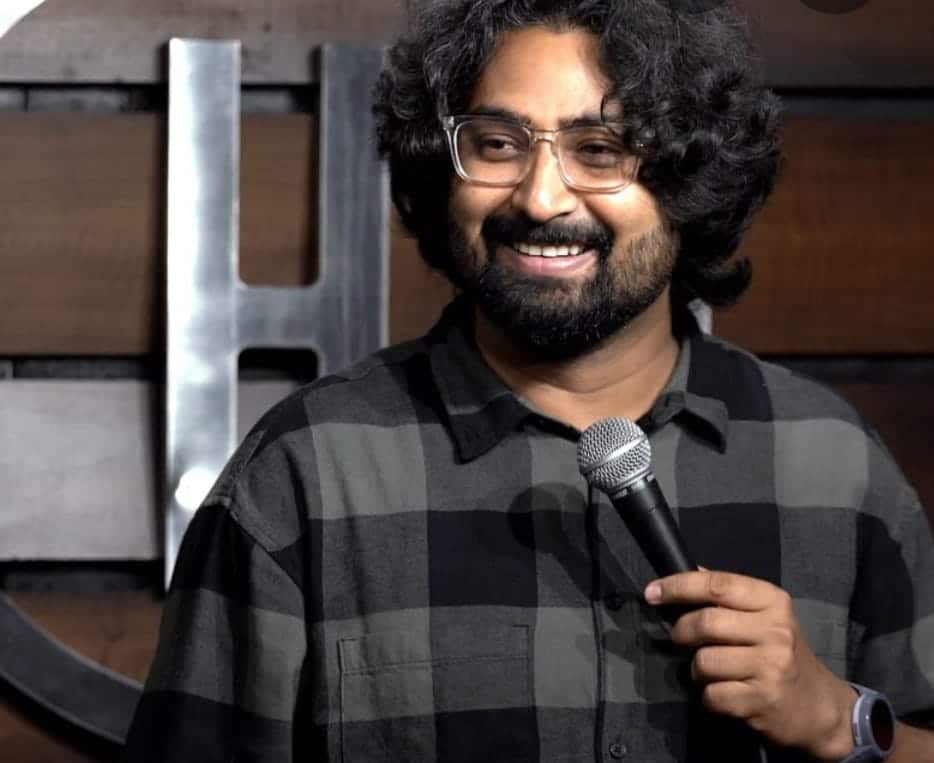
Born in a small town with big dreams, raised in a modest household, and armed with nothing but wit and observation, this comedian turned everyday middle-class struggles into nationwide laughter.
From performing at local gatherings to becoming a recognizable face on Indian television and digital platforms, his journey reflects resilience, timing, and sharp humor rooted in reality.
Known as the “Shuddh Desi Comic,” he first took the internet by storm with the viral philosophy, “Main kal ki chinta nahi karta” (I don’t worry about tomorrow). This grounded, relatable storytelling is the signature of Ravi Gupta.
From the gullies of Uttar Pradesh to global stages, Ravi Gupta has redefined “clean humor” by finding the extraordinary in the mundane.
Personal Overview
Full Name Ravi Gupta
Date of Birth September 18, 1990
Age 35 years old (as of 2024)
Birth Place Pratapgarh, Uttar Pradesh, India
Education Graduate in Applied Arts & Illustration (BHU)
Profession Stand-Up Comedian, Illustrator, Content Creator
Known For Observational comedy, middle-class humor, relatable storytelling
Signature Line “Itni savings hai mere paas ki main kal ki chinta nahi karta…”
Height 5feet 10 inches
Weight 80 kg
Mother Sushila Gupta
Siblings One elder sister – Poonam Gupta
Relationship Married
Spouse Prerna Srivastava
Net Worth ₹70–90 Lakhs
Nationality Indian
Religion Hinduism
Net Worth Est. ₹1–3 Crore
Roots and Early Life
Ravi Gupta’s journey began in the culturally rich town of Pratapgarh, Uttar Pradesh, where he was born on September 18, 1990.
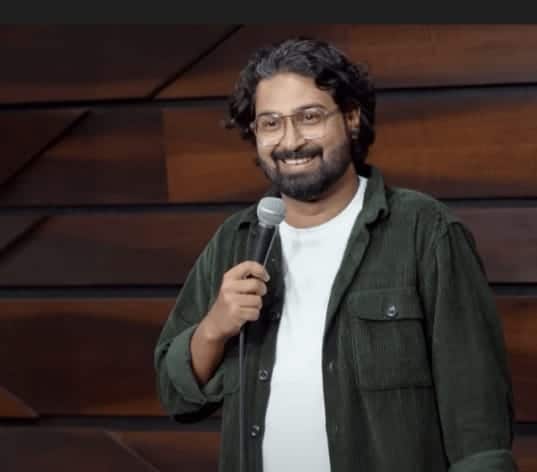
Growing up in a close-knit household with his mother, Sushila, and sister, Poonam, his early years were defined by a quiet observation of small-town life. This environment fostered a deep-rooted “Desi” sensibility that would later become his comedic trademark.
Before conquering the stage, Ravi was a dedicated student of the arts, honing his creative eye at Banaras Hindu University (BHU) where he studied Applied Arts and Illustration. This academic foundation led him to a professional career in Delhi as a cartoonist and content manager for three years.
It was during this “9-to-5” chapter that he learned to distill complex human emotions into simple, sharp caricatures a skill that seamlessly transitioned into his stand-up, allowing him to “paint” hilarious mental pictures for his audience through words rather than ink.
Corporate world to his first open mic experience
The Leap of Faith: Trading the Pen for the Mic
The transition from a stable desk job to the unpredictable spotlight of the stage was a quiet, inevitable evolution.
While working his corporate job in Delhi, Ravi found himself drawn to the city’s burgeoning open-mic circuit. Initially, he entered these spaces as an observer, using his cartoonist’s eye to study how audiences reacted to timing, tone, and the structure of a joke.
Finding a Voice in the “Small-Town” Rhythm
His first time on stage was fueled by a mix of “small-town nerves” and a desire to see if his mental sketches of life could work without the paper. Unlike many newcomers who tried to mimic high-energy Western styles, Ravi stayed true to his roots.
He spoke with the slow, rhythmic cadence of a man sitting on a porch in Uttar Pradesh, sharing the absurdities of office life and middle-class struggles.
From Observations to Ovations
The audience’s immediate connection to his “everyman” persona provided the validation he needed. He realized that while his cartoons could make people smile, his voice could make them roar.
This realization eventually led him to leave the security of his 9-to-5 life to become a full-time “storyteller of the common man,” proving that you don’t need to be loud to be heard you just need to be relatable.
Timeline of Fame
2012: Launched his YouTube channel, initially focusing on his creative interests.
2015: Began performing at open mics in Delhi, inspired by the rising stand-up scene.
2018: Released his debut viral act, “Japan vs. India,” which garnered millions of views and established his “Desi vs. World” comedic trope.
The Turning Point: His set “Job and Passion” introduced the iconic line, “Itni savings hai mere paas ki main kal ki chinta nahi karta” (I have enough savings that I don’t worry about tomorrow), which became a massive meme and a cultural catchphrase.
Famous Shows and TV Appearances
India’s Laughter Champion: A prominent contestant on Sony TV’s reality show.
Good Night India: Featured as a lead performer on SAB TV, hosted by Amit Tandon.
Live Tours: His solo special, “Kal Ki Chinta Nahi Karta,” has toured extensively across India and internationally, including cities like Dubai and Chennai.
Specific challenges or “struggle days”
The Grind: Navigating the “Struggle Days” of Delhi
The early days in the Delhi comedy circuit were far from glamorous. Before the viral clips and sold-out auditoriums, Ravi faced the harsh reality of being an “unknown” in a competitive scene.
He spent many evenings traveling across the NCR (National Capital Region), often performing for audiences of fewer than five people in cramped basement bars. These shows often paid nothing or worse, required the performers to pay a “cover charge” just to get five minutes of stage time.
The Dual Life: Humor vs. Hunger
One of his greatest challenges was balancing his creative soul with financial survival. In the beginning, the income from comedy was non-existent. Ravi had to juggle freelance illustration gigs and content management roles during the day to fund his passion at night.
There were moments of profound self-doubt where the stability of a corporate “9-to-5” felt tempting, especially when a set didn’t land or a joke was met with silence. Yet, it was this very struggle the exhaustion of the commute and the quirks of office politics that provided the raw material for his most relatable material.
Defying the “Cool” Comedy Stereotype
Another hurdle was the industry’s obsession with “urban” or “edgy” humor. Early on, some critics and peers felt that Ravi’s clean, Hindi-centric, small-town storytelling might not “fit” the sophisticated vibe of elite comedy clubs.
He faced the pressure to change his dialect or use cruder language to get a quick laugh. However, Ravi stood his ground, betting on the idea that authenticity is universal.
He chose to wait for the audience to come to his world rather than chasing a persona that wasn’t his, a gamble that eventually turned him into a pioneer of the “Shuddh Desi” comedy movement.
“Big Break” and how the “Kal Ki Chinta” meme changed his life overnight
The “Big Break”: When a Single Line Changed Everything
While Ravi had been building a steady reputation in the Delhi circuit, the digital explosion that turned him into a national sensation happened almost overnight.
It wasn’t just a funny story; it was a cultural moment that resonated with millions of middle-class Indians who were tired of the “hustle culture” narrative.
The Viral Catalyst: “Job and Passion”
The turning point came with his stand-up set titled “Job and Passion.” In this video, Ravi masterfully dissected the struggle of balancing a soul-crushing job with a creative dream. The climax of the set featured his now-legendary philosophy:
“Itni savings hai mere paas ki main kal ki chinta nahi karta… par parson ki bahut hai.” > (I have enough savings that I don’t worry about tomorrow… but I’m very worried about the day after.)
This punchline didn’t just get laughs; it became a viral anthem.
Within days, the clip was everywhere ,WhatsApp groups, Instagram Reels, and Twitter threads. Ravi’s deadpan delivery and relatable financial anxiety turned him into the “Voice of the Common Man.”
From Viral Meme to Household Name
The impact of this “Big Break” was transformative:
Digital Explosion: His YouTube subscribers skyrocketed from a few thousand to hundreds of thousands in a matter of weeks.
The “Meme” Effect: Brands began using his dialogue in their marketing, and he suddenly found himself being recognized not just by comedy fans, but by office-goers and families alike.
Sold-Out Stages: Almost instantly, Ravi transitioned from performing in small basement bars to selling out large auditoriums across India.
The “Kal Ki Chinta” persona became his calling card, proving that vulnerability paired with wit is the ultimate formula for stardom.
Artistic Style and Public Image
Shuddh Desi Persona: Unlike many contemporaries who rely on slang, Ravi is celebrated for “Veg Comedy” ,clean, family-friendly humor that resonates with both Gen Z and older generations.
The “Witty Neighbor”: His stage presence is that of a “witty neighborhood guy” rather than a high-energy performer. He uses a calm, patient delivery and a distinct Uttar Pradesh dialect.
Brand Value: His mass appeal led to high-profile collaborations with brands like boAt, where he helped challenge “Made in China” perceptions with his sharp wit.
The 2026 Tour: “Kal Ki Chinta Nahi Karta”
Ravi is currently on a massive domestic and international leg of his solo special. If you’re looking to catch him live, here are some key dates on his 2026 calendar:
India Leg:
February 17, 2026: The Laugh Store (DLF Cyberhub), Gurugram (7:00 PM & 9:30 PM)
February 21, 2026: Birla Matushri Hall, Mumbai (7:30 PM)
March 7, 2026: New Delhi (Venue TBD)
April 12, 2026: Grand Finale of the Spring Tour, Mumbai
Australia Leg (March 2026):
March 22, 2026: Acacia Ridge, Brisbane
March 28, 2026: The Parks Theatre, Adelaide
The “Worldwide” Impact
In 2026, Ravi’s image has shifted from “the guy with the viral clip” to a Global Desi Icon.
The Bridge: He is now the bridge between the rural heartland of India and the NRI diaspora. To an Indian in Melbourne, he isn’t just a comedian; he is a piece of home.
Audience Growth: He recently crossed 2.04 million subscribers on YouTube, with his content being used as “stress relief” in corporate workshops and even university psychology lectures to explain the concept of acceptance.
Vision, Impact, and Awards
Ravi’s vision is Inclusivity through Cleanliness. He aims to create a space where a 15-year-old and an 80-year-old can sit in the same auditorium and laugh together without a hint of discomfort.
YouTube Golden Play Button: For surpassing 1 million (and now 2 million) subscribers.
Best Stand-Up Comedian (2021): Indian Comedy Awards.
Popular Comic of the Year (2020): Comedy Central India Awards.
Net Worth
₹1–3 Crore INR (approximate estimate)
Lesser-Known Facts
Hidden Talent: He is still an active cartoonist and illustrator. Many of his fans are surprised to learn that he views comedy as an extension of his art.
In his descriptions, he often adds quirky personal philosophies, like “never hate the place that pays your bills, and never hate raccoons.”
Educational Foundation: While known for his rustic humor, he is highly educated, holding a degree in Finance/Arts from BHU.