


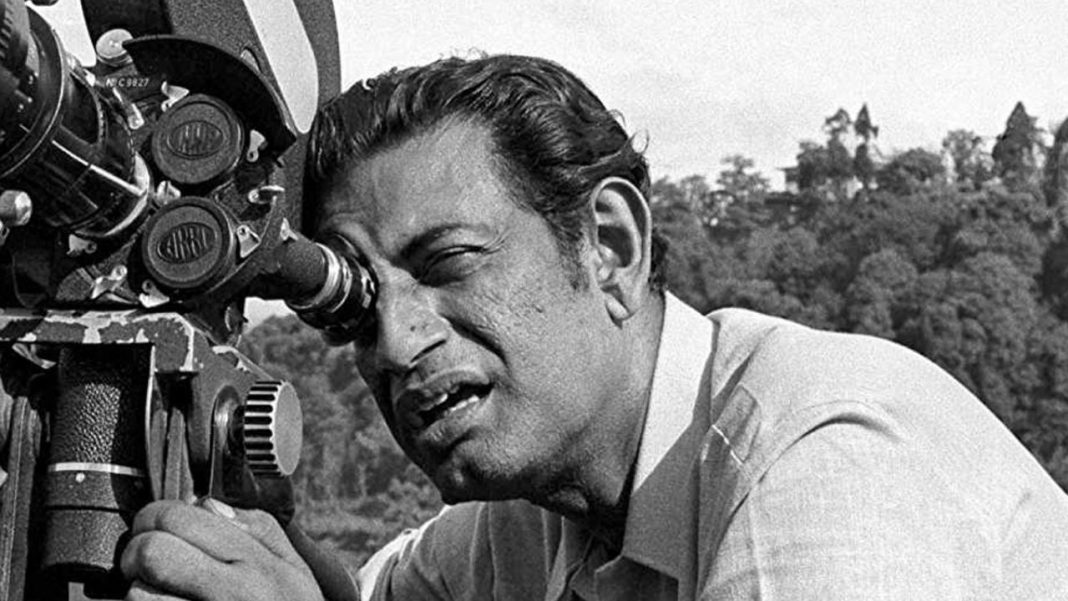

Satyajit Ray Biography: Was he a magician who could control the camera, the pen, and music all at the same time?
Could one person really be a great filmmaker, a brilliant artist, and the writer who gave millions of children their favorite detective, ‘Feluda’?
Who was this man, whose name made the greatest directors from Hollywood to Japan bow their heads in respect?
He was someone who dreamed of changing the world while working in a simple office. He pawned his wife’s jewelry and struggled for years to finish his first movie.
And when that movie finally hit the screen, the whole world said, “This is the real India.”
He was a giant of a man, standing 6 feet 4 inches tall, whose talent made the rest of the film world look small.
He turned a simple train moving through dusty fields into a beautiful poem on screen. He found deep truths in simple stories that the entire world honored.
His journey started in the narrow streets of Kolkata and went all the way to the Oscar stage, making India proud forever.
Yes, we are talking about the peak of world cinema, Satyajit Ray.
Personal Overview :
| Category | Details |
| Full Name | Satyajit Ray |
| Date of Birth | 2 May 1921 |
| Birthplace | Kolkata |
| Date of Death | 23 April 1992 |
| Place of Death | Kolkata |
| Nationality | Indian |
| Profession | Film Director, Screenwriter, Author, Music Composer |
| Known For | Pioneering realistic cinema and global influence |
| Notable Trilogy | Apu Trilogy |
| Famous Films | Pather Panchali, Aparajito, Apur Sansar, Charulata |
| Father | Sukumar Ray |
| Mother | Suprabha Ray |
| Education | Presidency College; Visva-Bharati University |
| Awards | Academy Honorary Award, Bharat Ratna, Dadasaheb Phalke Award |
| Style | Realism, human emotions, social themes |
| Other Work | Children’s literature (Feluda stories), illustration, music composition |
| Active Years | 1950s – 1990s |
| Legacy | One of the greatest filmmakers who brought Indian cinema to the global stage |
Early Life and Background :
Satyajit Ray was born on May 2, 1921, in Calcutta (now Kolkata), into a family that was famous for art and literature.
- A Family of Geniuses :
Ray’s family was full of brilliant minds
His Grandfather: Upendrakishore Ray Chowdhury was a famous writer, painter, and scientist.
His Father: Sukumar Ray was a legendary poet and the king of “nonsense rhyme” in Bengali literature.
The Loss: Sadly, Satyajit lost his father when he was only two years old. He was raised by his brave and strong mother, Suprabha Ray, in his uncle’s house.
- School and College ::
Ray was a quiet student but very observant.
He studied at the famous Ballygunge Government High School.
Later, he went to Presidency College to study Economics. However, his heart was always in the arts, not in numbers or graphs.
- Shantiniketan: The Turning Point :
At his mother’s wish, he went to Visva-Bharati University in Shantiniketan, founded by the great Rabindranath Tagore.
Initially, Ray didn’t want to go because he loved the city life of Calcutta.
But Shantiniketan changed him. He learned to appreciate Indian Art and nature. He realized that a great artist must understand both the East and the West.
- His First Job (The Artist) :
In 1943, Ray started working at a British advertising agency called D.J. Keymer.
He was a “Visualizer” (a graphic designer).
He was very good at his job and designed many famous book covers.
It was during this time that he was asked to illustrate a children’s version of the book Pather Panchali. Little did he know, this book would one day become his first movie!
Education and Early Interests :
Satyajit Ray was a quiet boy, but he was always watching and learning. Even as a child, he was fascinated by world culture, films, and music.
- School Days :
Ray attended Ballygunge Government High School in Calcutta. He wasn’t the loudest student in class, but he was very bright. While other kids were playing, Ray was often busy
Watching Movies: He loved Hollywood films and started keeping a notebook of the movies he saw.
Listening to Music: He became a huge fan of Western Classical music (like Beethoven and Mozart) at a very young age.
- College and Economics :
For his higher studies, he went to the famous Presidency College in Calcutta.
He chose to study Economics, but he didn’t really enjoy it.
His heart was in the arts, but he finished his degree because his mother wanted him to have a good education.
- Shantiniketan: Discovering India :
After college, his mother sent him to Visva-Bharati University in Shantiniketan. This school was started by the great poet Rabindranath Tagore.
At first, Ray didn’t want to go because he loved the city and modern things.
However, Shantiniketan opened his eyes. He learned about Indian Classical Art, calligraphy, and how to find beauty in nature.
This is where he realized that to be a great artist, he needed to blend Western ideas with Indian roots.
- Early Interests (The “Hobbyist”) :
Before he became a filmmaker, Ray had many hobbies that later helped him in his career
Graphic Design: He loved drawing and looking at fonts (the style of letters).
Photography: He was fascinated by how light and shadows worked.
Reading: He read everything from Sherlock Holmes to books on world history.
Artistic Beginnings :
Before he ever held a movie camera, Ray was a brilliant professional artist and designer.
The Advertising World: In 1943, Ray started working as a “Visualizer” (a graphic designer) at a British advertising agency called D.J. Keymer. He was very talented and quickly became one of the top designers in the company.
Designing Books: He was famous for designing beautiful book covers. He even created his own styles of lettering (fonts) that people still use today.
The Spark for Cinema: While working for a publisher, he was asked to draw pictures for a children’s version of the book Pather Panchali.
As he drew the characters of Apu and Durga, he started imagining the story as a movie.
He began to see exactly how the characters would move and how the scenes would look on a big screen.
Entry into Filmmaking :
The story of how Satyajit Ray became a filmmaker is as inspiring as a movie itself. It is a story of a life-changing trip and a struggle against all odds.
- The London Trip (1950)
In 1950, Ray’s advertising agency sent him to London for six months. This trip changed his life forever.
Movie Marathon: In just 3 months, Ray watched 95 movies! He spent all his free time in cinemas, studying how stories were told on screen.
The Inspiration: He watched a famous Italian movie called Bicycle Thieves. It showed him that a great film didn’t need famous actors or expensive studios. You could make a masterpiece with real people in real locations.
The Decision: On the ship journey back to India, Ray sat down and wrote the entire script for his first movie, “Pather Panchali.”
- The Struggle to Start :
When Ray returned to Calcutta (Kolkata), he didn’t have any money to make a movie.
No Producers: Professional producers laughed at his idea. They asked, “Where are the songs? Where is the hero?” Ray refused to change his vision.
A New Team: He gathered a group of friends who had never made a movie before. His lead actors were also non-professionals who had never acted in front of a camera.
- Making “Pather Panchali” (1952–1955) :
This is where Ray’s real struggle began.
Pawning Jewelry: To pay for the film, Ray sold his precious LP records. His wife, Bijoya Ray, even pawned her wedding jewelry to help him.
Stopping and Starting: The shooting lasted for three years. Whenever Ray ran out of money, he would stop filming and go back to his advertising job to earn more.
Government Help: Finally, the West Bengal government gave him some money to finish the film. They thought it was a documentary about roads (because the title meant “Song of the Little Road”)!
- Global Success :
When Pather Panchali was finally released in 1955, it changed everything.
It went to the Cannes Film Festival in France and won a major award.
Critics were amazed by its beauty and honesty. Overnight, the man from the advertising agency became a world-famous director.
Initial Struggles :
Making his first movie, Pather Panchali, was perhaps the hardest thing Ray ever did. He faced many problems that would have made anyone else give up.
No Money: Ray had no big producers to help him. To pay for the film, he used all his savings. He even sold his beloved collection of music records, and his wife, Bijoya Ray, pawned her wedding jewelry to get the money they needed.
The “No Hero” Problem: In those days, Indian movies had famous stars and lots of songs. Ray wanted to use real people who had never acted before and no songs. Because of this, many people thought his movie would be a failure.
Stopping and Starting: Because of the money problems, the filming lasted for three long years. Ray would shoot for a few days, run out of money, go back to his office job to earn more, and then start shooting again months later.
Nature and Time: Since the film took so long, Ray was always worried that his child actors (Apu and Durga) would grow up too fast and look different in the next scene!
Breakthrough Opportunity :
Just when it looked like the movie might never be finished, a few big things happened that changed everything.
The Government Stepped In: Finally, the West Bengal government gave Ray the money to finish the film. Interestingly, they gave the money because the title Pather Panchali (Song of the Little Road) made them think it was a documentary about building roads!
The Museum of Modern Art (MoMA): An American art expert saw some of Ray’s unfinished work and was amazed.
He invited Ray to show the film at the Museum of Modern Art in New York. This was the big break Ray needed.
Cannes Film Festival: In 1956, the movie was sent to the famous Cannes Film Festival in France.
It was shown late at night, but the judges loved it so much that they gave it a special award for being a “Best Human Document.”
Instant Fame: Almost overnight, Satyajit Ray went from a struggling artist in Calcutta to one of the most respected directors in the world.
He proved that you don’t need a huge budget to tell a story that touches people’s hearts.
Satyajit Ray Biography : The Man Who Put India on the Global Stage, How One Visionary Transformed the World of Cinema
Was he a magician who could control the camera, the pen, and music all at the same time? Could one person really be a great filmmaker, a brilliant artist, and the writer who gave millions of children their favorite detective, ‘Feluda’?
Who was this man, whose name made the greatest directors from Hollywood to Japan bow their heads in respect? He was someone who dreamed of changing the world while working in a simple office. He pawned his wife’s jewelry and struggled for years to finish his first movie. And when that movie finally hit the screen, the whole world said, “This is the real India.”
He was a giant of a man, standing 6 feet 4 inches tall, whose talent made the rest of the film world look small. He turned a simple train moving through dusty fields into a beautiful poem on screen. He found deep truths in simple stories that the entire world honored. His journey started in the narrow streets of Kolkata and went all the way to the Oscar stage, making India proud forever.
Yes, we are talking about the peak of world cinema, Satyajit Ray.
Personal Overview :
Category Details
Full Name Satyajit Ray
Date of Birth 2 May 1921
Birthplace Kolkata
Date of Death 23 April 1992
Place of Death Kolkata
Nationality Indian
Profession Film Director, Screenwriter, Author, Music Composer
Known For Pioneering realistic cinema and global influence
Famous Films Pather Panchali, Aparajito, Apur Sansar, Charulata
Notable Trilogy Apu Trilogy
Father Sukumar Ray
Mother Suprabha Ray
Education Presidency College; Visva-Bharati University
Awards Academy Honorary Award, Bharat Ratna, Dadasaheb Phalke Award
Style Realism, human emotions, social themes
Other Work Children’s literature (Feluda stories), illustration, music composition
Active Years 1950s – 1990s
Legacy One of the greatest filmmakers who brought Indian cinema to the global stage
Early Life and Background :
Satyajit Ray was born on May 2, 1921, in Calcutta (now Kolkata), into a family that was famous for art and literature.
- A Family of Geniuses :
Ray’s family was full of brilliant minds
His Grandfather: Upendrakishore Ray Chowdhury was a famous writer, painter, and scientist.
His Father: Sukumar Ray was a legendary poet and the king of “nonsense rhyme” in Bengali literature.
The Loss: Sadly, Satyajit lost his father when he was only two years old. He was raised by his brave and strong mother, Suprabha Ray, in his uncle’s house.
- School and College ::
Ray was a quiet student but very observant.
He studied at the famous Ballygunge Government High School.
Later, he went to Presidency College to study Economics. However, his heart was always in the arts, not in numbers or graphs.
- Shantiniketan: The Turning Point :
At his mother’s wish, he went to Visva-Bharati University in Shantiniketan, founded by the great Rabindranath Tagore.
Initially, Ray didn’t want to go because he loved the city life of Calcutta.
But Shantiniketan changed him. He learned to appreciate Indian Art and nature. He realized that a great artist must understand both the East and the West.
- His First Job (The Artist) :
In 1943, Ray started working at a British advertising agency called D.J. Keymer.
He was a “Visualizer” (a graphic designer).
He was very good at his job and designed many famous book covers.
It was during this time that he was asked to illustrate a children’s version of the book Pather Panchali. Little did he know, this book would one day become his first movie!
Education and Early Interests :
Satyajit Ray was a quiet boy, but he was always watching and learning. Even as a child, he was fascinated by world culture, films, and music.
- School Days :
Ray attended Ballygunge Government High School in Calcutta. He wasn’t the loudest student in class, but he was very bright. While other kids were playing, Ray was often busy
Watching Movies: He loved Hollywood films and started keeping a notebook of the movies he saw.
Listening to Music: He became a huge fan of Western Classical music (like Beethoven and Mozart) at a very young age.
- College and Economics :
For his higher studies, he went to the famous Presidency College in Calcutta.
He chose to study Economics, but he didn’t really enjoy it.
His heart was in the arts, but he finished his degree because his mother wanted him to have a good education.
- Shantiniketan: Discovering India :
After college, his mother sent him to Visva-Bharati University in Shantiniketan. This school was started by the great poet Rabindranath Tagore.
At first, Ray didn’t want to go because he loved the city and modern things.
However, Shantiniketan opened his eyes. He learned about Indian Classical Art, calligraphy, and how to find beauty in nature.
This is where he realized that to be a great artist, he needed to blend Western ideas with Indian roots.
- Early Interests (The “Hobbyist”) :
Before he became a filmmaker, Ray had many hobbies that later helped him in his career
Graphic Design: He loved drawing and looking at fonts (the style of letters).
Photography: He was fascinated by how light and shadows worked.
Reading: He read everything from Sherlock Holmes to books on world history.
Artistic Beginnings :
Before he ever held a movie camera, Ray was a brilliant professional artist and designer.
The Advertising World: In 1943, Ray started working as a “Visualizer” (a graphic designer) at a British advertising agency called D.J. Keymer. He was very talented and quickly became one of the top designers in the company.
Designing Books: He was famous for designing beautiful book covers. He even created his own styles of lettering (fonts) that people still use today.
The Spark for Cinema: While working for a publisher, he was asked to draw pictures for a children’s version of the book Pather Panchali.
As he drew the characters of Apu and Durga, he started imagining the story as a movie.
He began to see exactly how the characters would move and how the scenes would look on a big screen.
Entry into Filmmaking :
The story of how Satyajit Ray became a filmmaker is as inspiring as a movie itself. It is a story of a life-changing trip and a struggle against all odds.
- The London Trip (1950)
In 1950, Ray’s advertising agency sent him to London for six months. This trip changed his life forever.
Movie Marathon: In just 3 months, Ray watched 95 movies! He spent all his free time in cinemas, studying how stories were told on screen.
The Inspiration: He watched a famous Italian movie called Bicycle Thieves. It showed him that a great film didn’t need famous actors or expensive studios. You could make a masterpiece with real people in real locations.
The Decision: On the ship journey back to India, Ray sat down and wrote the entire script for his first movie, “Pather Panchali.”
- The Struggle to Start :
When Ray returned to Calcutta (Kolkata), he didn’t have any money to make a movie.
No Producers: Professional producers laughed at his idea. They asked, “Where are the songs? Where is the hero?” Ray refused to change his vision.
A New Team: He gathered a group of friends who had never made a movie before. His lead actors were also non-professionals who had never acted in front of a camera.
- Making “Pather Panchali” (1952–1955) :
This is where Ray’s real struggle began.
Pawning Jewelry: To pay for the film, Ray sold his precious LP records. His wife, Bijoya Ray, even pawned her wedding jewelry to help him.
Stopping and Starting: The shooting lasted for three years. Whenever Ray ran out of money, he would stop filming and go back to his advertising job to earn more.
Government Help: Finally, the West Bengal government gave him some money to finish the film. They thought it was a documentary about roads (because the title meant “Song of the Little Road”)!
- Global Success :
When Pather Panchali was finally released in 1955, it changed everything.
It went to the Cannes Film Festival in France and won a major award.
Critics were amazed by its beauty and honesty. Overnight, the man from the advertising agency became a world-famous director.
Initial Struggles :
Making his first movie, Pather Panchali, was perhaps the hardest thing Ray ever did. He faced many problems that would have made anyone else give up.
No Money: Ray had no big producers to help him. To pay for the film, he used all his savings. He even sold his beloved collection of music records, and his wife, Bijoya Ray, pawned her wedding jewelry to get the money they needed.
The “No Hero” Problem: In those days, Indian movies had famous stars and lots of songs. Ray wanted to use real people who had never acted before and no songs. Because of this, many people thought his movie would be a failure.
Stopping and Starting: Because of the money problems, the filming lasted for three long years. Ray would shoot for a few days, run out of money, go back to his office job to earn more, and then start shooting again months later.
Nature and Time: Since the film took so long, Ray was always worried that his child actors (Apu and Durga) would grow up too fast and look different in the next scene!
Breakthrough Opportunity :
Just when it looked like the movie might never be finished, a few big things happened that changed everything.
The Government Stepped In: Finally, the West Bengal government gave Ray the money to finish the film. Interestingly, they gave the money because the title Pather Panchali (Song of the Little Road) made them think it was a documentary about building roads!
The Museum of Modern Art (MoMA): An American art expert saw some of Ray’s unfinished work and was amazed. He invited Ray to show the film at the Museum of Modern Art in New York. This was the big break Ray needed.
Cannes Film Festival: In 1956, the movie was sent to the famous Cannes Film Festival in France. It was shown late at night, but the judges loved it so much that they gave it a special award for being a “Best Human Document.”
Instant Fame: Almost overnight, Satyajit Ray went from a struggling artist in Calcutta to one of the most respected directors in the world. He proved that you don’t need a huge budget to tell a story that touches people’s hearts.
Career and Major Works :
After the huge success of his first film, Satyajit Ray didn’t stop. He spent the next forty years creating some of the most beautiful movies, books, and music the world has ever seen.
The Famous Apu Trilogy :
Ray’s most famous work is a series of three movies that follow the life of a boy named Apu. These films are considered some of the best ever made in history.
Pather Panchali (1955): Shows Apu’s childhood in a poor village.
Aparajito (1956): Shows Apu growing up and moving to the city for school.
Apu Sansar (1959): Shows Apu as an adult, getting married and facing the struggles of life.
Why they matter: These movies were so real and emotional that they made world-famous directors cry. They showed that even a simple life can be a great story.
Master of Different Genres :
Ray wasn’t just a “serious” filmmaker. He made movies for everyone
Musicals: He made Goopy Gyne Bagha Byne, a funny and magical musical for children about two musicians who get boons from a Ghost King. It is still one of the most loved movies in Bengal.
Detective Films: He brought his own famous detective, Feluda, to the big screen in movies like Sonar Kella (The Golden Fortress).
Women’s Stories: In movies like Charulata and Mahanagar, he showed the inner lives and strengths of Indian women in a way no one else had done before.
Writing and Music :
Ray was a “one-man army.” He did almost everything himself
The Writer: He wrote over 30 mystery books about Feluda and many science fiction stories about Professor Shonku. Even today, millions of children and adults read his books.
The Composer: Starting in 1961, Ray stopped hiring other people to make music. He started composing the background music for his own films using a piano and Indian instruments.
The Designer: He continued to design his own movie posters and book covers, making them look like modern pieces of art.
Awards and Honors
Because of his incredible career, Ray received the highest honors
32 National Awards in India.
The Oscar (1992): Just weeks before he passed away, the Academy Awards gave him an Honorary Oscar for his life’s work.
Bharat Ratna: India’s highest prize for any citizen.
Debut Film :
Satyajit Ray’s first movie, Pather Panchali (Song of the Little Road), released in 1955, changed Indian cinema forever.
A Simple Story: It tells the story of a young boy named Apu and his sister Durga growing up in a poor village in Bengal.
Realism: Unlike other movies of that time, there were no dancing stars or loud fights. It showed life exactly as it was, beautiful, sad, and real.
World Fame: The movie was a massive hit at the Cannes Film Festival in France. Critics around the world realized that India could make world-class cinema. It was the first part of what became the famous Apu Trilogy.
Landmark Films :
After his first success, Ray made many movies that are now considered “landmarks” (very important historical works) in cinema.
The Apu Trilogy: Following his debut, he made Aparajito and Apu Sansar. These three films together are called the greatest trilogy in film history.
Charulata (The Lonely Wife): Many people, including Ray himself, considered this his best work. It is a beautiful story about a woman’s feelings and her love for literature.
Goopy Gyne Bagha Byne: This was a fantasy musical for children. It featured ghosts, magic, and funny songs. It became so popular in Bengal that it ran in theaters for many months.
Shatranj Ke Khilari (The Chess Players): This was his first movie in Hindi. It featured big stars like Sanjeev Kumar and Amjad Khan and showed how kings lost their kingdoms because they were too busy playing chess.
Collaborations :
Ray was famous for working with a special “team” of talented people. He liked to work with the same people because they understood his vision perfectly.
Soumitra Chatterjee: He was Ray’s favorite actor. Ray “discovered” him and cast him in 14 movies. Soumitra played everything from the adult Apu to the famous detective Feluda.
Subrata Mitra: He was Ray’s cameraman (cinematographer). Even though he had never used a movie camera before Pather Panchali, he became a genius. He invented “Bounce Lighting,” a technique now used by Hollywood directors.
Ravi Shankar: The world-famous Sitar player composed the music for Ray’s first few films. Later, Ray started composing the music himself!
Bansi Chandragupta: He was the art director. He was a master at building sets that looked so real you couldn’t tell they were made of wood and paint.
Style and Themes :
Satyajit Ray’s films didn’t look like the typical “Bollywood” movies of his time. He had a very special way of telling stories that made him famous all over the world.
Style: How He Made His Films :
Satyajit Ray was a “one-man army.” He didn’t just stand behind the camera; he controlled every little detail.
Realism (Looking Real): Ray liked to shoot in real locations, like actual villages or busy streets, instead of painted sets in a studio. He wanted his movies to look like real life, not a fairy tale.
The “Eye” for Detail: Because he was a great artist, every frame of his movie looked like a painting. He would spend hours making sure the lighting and the objects in the room were just right.
Simple Language: He didn’t use big, dramatic dialogues. His characters talked like normal people. Sometimes, he let the silence or a character’s expression tell the story instead of words.
Beautiful Music: Ray composed his own music. He mixed Indian instruments like the Sitar with Western instruments like the Violin to create a mood that felt both Indian and international.
Themes: What His Stories Were About :
Ray’s stories were usually about “the human condition”, which is a fancy way of saying he made movies about how people feel, struggle, and love.
Changes in Society: Many of his films showed the conflict between old traditions and modern ideas. He showed how India was changing from a land of villages to a land of big cities.
The Strength of Women: At a time when most movies showed women only as housewives, Ray created strong, intelligent female characters.
In movies like Charulata and Mahanagar, he showed women who had their own dreams and voices.
The Magic of Childhood: Ray never forgot what it was like to be a child. Whether it was the curiosity of young Apu or the adventures of Goopy and Bagha, he captured the innocence and wonder of growing up.
Human Relationships: Most of his movies were about the small, delicate bonds between people, like the love between a brother and sister, the friendship between two strangers, or the quiet tension between a husband and wife.
Major Honors and Awards :
| Level | Award / Honor | Significance |
|---|---|---|
| International (USA) | Honorary Oscar (1992) | Lifetime Achievement Award from the Academy; the team flew to Kolkata to present it to him in his hospital bed. |
| National (India) | Bharat Ratna (1992) | The highest civilian award in India; Ray is one of the few filmmakers to receive it. |
| International (France) | Legion of Honour (1987) | The highest decoration in France, presented by the French President. |
| National (India) | 32 National Film Awards | A record-breaking number of Indian government awards for directing, music, and screenwriting. |
| International (Italy) | Golden Lion (1956) | Top prize at the Venice Film Festival for his film Aparajito. |
| International (Germany) | Golden Bear (1964/1965) | Top prize at the Berlin International Film Festival for Mahanagar and Charulata. |
| National (India) | Dadasaheb Phalke Award (1984) | India’s highest award in the field of cinema for his lifetime contribution. |
| International (France) | Best Human Document (1956) | A special award at the Cannes Film Festival for his debut film Pather Panchali. |
Personal Life :
Satyajit Ray was a man of simple habits who loved his family and his home in Kolkata. Even though he was a world-famous star, he lived a very quiet and disciplined life.
- Family and Marriage :
In 1949, Satyajit Ray married Bijoya Das. Their story was very special
A Long Romance: They were cousins and had been in love for many years before they got married.
His Greatest Support: Bijoya was his biggest strength. When he had no money to finish his first film, Pather Panchali, she gave him her wedding jewelry to sell. She was also the first person to read his scripts and give him advice.
His Son: They had one son, Sandip Ray, who also grew up to become a well-known filmmaker and continues his father’s legacy today.
- A Simple Lifestyle :
Despite his fame, Ray did not live like a “movie star.”
The Kolkata Home: He lived in a large, old house on Bishop Lefroy Road in Kolkata. His study was filled from floor to ceiling with thousands of books and music records.
Daily Routine: He was a very hardworking man. He woke up early, sat in his favorite red chair, and spent hours writing, sketching, or composing music.
Approachability: He was known to be very kind. His phone number was listed in the public telephone directory, and fans or aspiring artists could often call him directly to talk.
- His Personality :
The Towering Giant: Standing at 6 feet 4 inches, he had a very powerful presence and a deep, booming voice.
Man of Few Words: He was a serious and quiet person, but he had a great sense of humor that showed in his children’s books.
A Workaholic: For Ray, work was worship. He didn’t care about parties or fancy events; he only cared about his art, his books, and his films.
Challenges and Struggles :
- The Financial Crisis
The biggest challenge Ray faced was money. In the 1950s, nobody believed that a film without songs, fights, or famous stars could be successful.
No Producers: Professional film producers in Kolkata refused to give him money. They thought his idea for Pather Panchali was too “boring” and “sad.”
Personal Sacrifices: To keep the cameras rolling, Ray had to use his own life savings. He sold his precious collection of rare music records.
His Wife’s Jewelry: When they were completely out of cash, his wife, Bijoya Ray, pawned her wedding jewelry. This was a huge sacrifice to help her husband’s dream come true.
- A “Part-Time” Movie :
Because of the lack of funds, the filming of Pather Panchali was not done all at once.
The Long Gap: The shooting lasted for three long years (1952 to 1955).
Working Two Jobs: Ray did not quit his advertising job. He would work in the office during the week, save money, and then go to the village to shoot the film on weekends or holidays.
Uncertainty: There were many times when the crew thought the movie would never be finished. The film literally sat in a box for months because they couldn’t afford to buy more raw film rolls.
- Working with Non-Professionals :
Ray took a big risk by choosing people who were not actors.
The Lead Actors: The boy who played Apu and the girl who played Durga had never seen a movie camera before. Ray had to spend a lot of time teaching them how to act naturally.
The Crew: Most of his technical team, including his cameraman Subrata Mitra, were also beginners. They had to learn everything on the job by experimenting.
- Health and Later Struggles :
In his later years, Ray faced physical challenges that made it hard for him to work.
Heart Problems: In 1983, while filming Ghare Baire, he suffered a serious heart attack.
Restricted Directing: After his surgery, doctors told him he couldn’t go out to locations. This was a huge blow to a man who loved shooting outdoors.
Indoors Only: He didn’t give up. He started making movies entirely inside studios (like Ganashatru and Shakha Proshakha), directing from a chair while his health was failing.
Legacy and Influence :
Even after he passed away in 1992, Satyajit Ray’s influence on the world has only grown. He didn’t just make movies; he changed the way people look at India and the art of storytelling.
- A Global Inspiration
Ray proved that you don’t need a huge Hollywood budget to make a masterpiece. His “simple and honest” style inspired many famous directors :
Martin Scorsese (Director of Taxi Driver): He called Ray a “treasure” and said his films are a must-watch for everyone.
Christopher Nolan (Director of Oppenheimer): He visited India and spoke about how Ray’s work continues to inspire modern filmmakers.
Wes Anderson: He actually dedicated his movie The Darjeeling Limited to Satyajit Ray because he loved Ray’s style so much.
- The Father of Modern Indian Cinema :
Before Ray, most Indian movies were like stage plays with lots of songs and dancing. Ray introduced “Realism”:
He showed that everyday life in an Indian village or a city apartment could be as exciting as an action movie.
He taught future Indian directors that “less is more”, that a quiet look can say more than a long speech.
- A Literary Hero for Children :
In his home state of West Bengal, Ray is a hero to every child because of his books
Feluda: His stories about the sharp-minded detective Feluda made generations of children fall in love with reading and mystery.
Professor Shonku: He created this brilliant scientist character, introducing many young readers to the world of Science Fiction.
Sandesh Magazine: He revived this famous children’s magazine, filling it with his own drawings and stories.
- Technical Inventions :
Ray’s team invented things that are now used worldwide:
Bounce Lighting: His cameraman, Subrata Mitra, figured out how to make studio lights look like natural sunlight by “bouncing” them off a cloth. This changed how movies were lit forever.
Ray Roman: He was so good at graphic design that he created his own English font called “Ray Roman.”
Death and Tribute :
Failing Health: In the 1980s, Ray began having heart problems. After a major heart attack in 1983, his health never fully recovered. However, he never stopped working. He directed his last few films from a chair, often inside a studio.
The Final Days: In early 1992, he was admitted to a hospital in Kolkata due to heart and lung complications.
Passing Away: Satyajit Ray passed away on April 23, 1992, at the age of 70.
A City in Mourning: On the day of his funeral, thousands of people walked through the streets of Kolkata to say goodbye to their hero. It was one of the biggest gatherings the city had ever seen for an artist.
Tributes: How the World Honored Him :
When Ray died, the world lost a giant, and the tributes poured in from every corner of the globe.
The Hollywood Tribute: Just 24 days before he died, the Academy Awards (Oscars) gave him a Lifetime Achievement Award. Since he was too sick to travel, they filmed him in his hospital bed. He held the golden statue and said it was the “best achievement” of his career.
Akira Kurosawa’s Words: The legendary Japanese director Akira Kurosawa once said:
“Not to have seen the cinema of Ray means existing in the world without seeing the sun or the moon.”
Government of India: India honored him with the Bharat Ratna, the nation’s highest award, while he was still in the hospital.
Global Recognition: Major newspapers like The New York Times and The Guardian wrote that the world had lost one of its greatest poets of the screen.
A Living Tribute :
Satyajit Ray’s tribute isn’t just in awards; it is in how he is remembered today:
The “Ray” Style: New filmmakers still study his movies to learn how to tell stories simply and beautifully.
Birth Centenary: In 2021, the world celebrated his 100th birthday with film festivals, books, and exhibitions.
Restored Films: Organizations like the Academy in Hollywood have spent years “restoring” his old film prints so that future generations can watch them in high quality.
5 Intresting Facts about Satyajit Ray :
- The “Tall” Genius
Satyajit Ray was a very tall man, standing 6 feet 4 inches (193 cm). His towering height and deep, booming voice made him a very commanding figure on film sets. Many people said that his personality was as big as his talent!
- He Invented His Own Fonts :
Before he became a director, Ray was a brilliant graphic designer. He loved playing with the shapes of letters so much that he designed four completely new English typefaces (fonts). One of the most famous ones is called “Ray Roman.”
- A One-Man Film Crew :
In most movies, different people do different jobs. But Ray was different. For many of his films, he was the Director, Scriptwriter, Music Composer, Set Designer, and Costume Designer. He even sketched his own movie posters by hand!
- He Never Used a “Viewfinder” :
Most directors look through a small lens called a viewfinder to see what the camera sees. Ray was so good at imagining the scene in his head that he often didn’t use one. He could tell exactly how a shot would look just by looking at the actors with his own eyes.
- His “Red Notebooks” (Kheror Khata) :
Ray carried a famous red notebook to every film set. In these books, he didn’t just write lines; he drew detailed sketches of every single scene. He drew exactly where the actors should stand and how the light should fall, almost like a comic book version of the movie.
BY – Arushi Sharma
Also Read: Ajinkya Rahane Biography: The Calm Leader Who Let His Bat Do the Talking