


Shubhankar Mishra Biography: In the high-octane world of Indian journalism, where narratives shift as fast as a scrolling feed, one individual has managed to capture the pulse of both the traditional television viewer and the digital-native youth.
Imagine a young engineering student who, inspired by a single film, decides to walk away from a stable technical career to stand on the frontlines of flood-ravaged villages and heated political arenas.
This is the story of Shubhankar Mishra, a man who transitioned from being a face on the national news to a digital phenomenon with a following of over 30 million.
Personal Overview
| Name | Shubhankar Mishra |
| Date of Birth | April 10, 1993 |
| Age (2025) | 32 Years |
| Place of Birth | Gonda, Uttar Pradesh, India |
| Hometown | Gonda, Uttar Pradesh |
| Profession | Journalist, Anchor, YouTuber, Digital Creator |
| Major Channels | TV9 Bharatvarsh, Aaj Tak, News24 |
| Awards | Recognized for youth-centric anchoring and digital influence |
| Father | Harihar Mishra |
| Mother | Anupam Mishra (Principal in Government School) |
| Brother | Saurabh Mishra (Flute Player) |
| Spouse | Poornima Mishra |
| Net Worth (2025) | ₹4–5 Crore (Approx.) |
| Annual Salary | ₹25–30 Lakh (Estimated) |
| Major Achievements | Popular youth anchor, strong social media presence, known for creative reels and news explainers |
| Religion | Hindu |
| Nationality | Indian |
Family Background and Roots
Shubhankar Mishra was born on April 10, 1993, in the historic city of Gonda, Uttar Pradesh. His upbringing was rooted in the values of the Hindi heartland, which later became his signature reporting style.
Father:Harihar Mishra (An inspiration for his entry into public service/media).
Mother: Anupam Mishra (A Headmistress at Prathmik Vidyalaya, Gonda).
Brother: Saurabh Mishra (A talented flute player).
Hometown: Gonda, Uttar Pradesh.
Early Life & Education
Shubhankar’s journey didn’t start in a media school. Following his father’s aspirations, he pursued a technical path:
Schooling: St. Xavier’s Senior Secondary School, Gonda.
College: He earned a degree in Mechanical Engineering from Galgotias University, Greater Noida.
The Turning Point: Much like the plot of the movie 3 Idiots, Shubhankar realized his heart lay in storytelling rather than machines.
He decided to pivot to journalism, starting his professional life with a meager salary of ₹5,000, driven purely by passion.
The ₹10,000 Beginning
Shubhankar Mishra Biography: After completing his Mechanical Engineering, Shubhankar decided to follow his passion for journalism against the traditional career path.
The Loan from Father: He arrived in the media hub of Noida with just ₹10,000 in his pocket money he had borrowed from his father to sustain himself.
The “Survival” Phase: In the early days, he lived in humble accommodations, often skipping luxuries to make that initial amount last as long as possible while he hunted for his first break.
The Initial Salary Struggle
When he finally entered the industry in 2015, the reality was far from the glamour of television:
Starting Salary: His first professional roles in regional news (like India News) paid him a meager amount, often cited between ₹5,000 to ₹10,000 per month.
Managing Ends: For a young man in an expensive city like Noida, this was barely enough to cover rent and food. He has often shared in interviews how he had to be extremely disciplined, sometimes traveling via local transport or walking to save every rupee for his next meal.
The “Graveyard Shift” Grind
His struggle wasn’t just financial; it was physical:
The Night Shifts: As a newcomer, he didn’t get the prime-time slots. He worked the “graveyard shifts,” staying awake all night to report on news when the rest of the world was asleep.
Engineering to Anchoring: Coming from a technical background, he had to work twice as hard to master the nuances of Hindi journalism and teleprompter reading. He spent hours practicing his “pitch” and “delivery” in front of mirrors after his shifts ended.
Field-First Mentality
Shubhankar Mishra Biography: Even when he had very little, he refused to sit in the office. He would take the bus or ride a bike to the most remote locations to get a “ground report.”
He believed that if he didn’t have money, he would use his energy as his currency. This “hunger” is what eventually caught the eyes of big networks like Zee News and TV9.
Career Journey: The Newsroom Era
Shubhankar’s career is a masterclass in steady vertical growth. He worked his way through the biggest news networks in India:
| Period | Organization | Role & Impact |
|---|---|---|
| 2015 – 2017 | India News | Started with regional bulletins (Haryana, UP, Rajasthan). |
| 2017 | India News | Continued regional bulletin anchoring (Haryana, UP, Rajasthan). |
| 2017 – 2019 | Zee News | Gained national visibility as a sharp, young anchor. |
| 2019 – 2022 | TV9 Bharatvarsh | Part of the core team during the channel’s meteoric rise. |
| 2022 – 2024 | Aaj Tak | Reached peak mainstream TV visibility as a prominent news anchor. |
| 2025 – Present | NDTV India | Returned to TV as a Prime-Time Anchor, blending digital and legacy media presence. |
Digital Revolution & Independent Career
In 2023, at the absolute peak of his TV career, Shubhankar did the unthinkable. He quit mainstream television. He felt the “echo chamber” of the studio was disconnecting him from the people.
The Birth of “NewsBook”
He launched NewsBook and CricketBook, digital platforms designed to simplify complex news for the common man. His goal was to move away from “panel theatrics” and return to “on-ground authenticity.”
Social Impact: During the pandemic, he was one of the few journalists reporting from forgotten hamlets in Assam.
Fame: His Instagram following exploded to over 11 million, and his total digital footprint crossed 30 million, making him more influential than many news channels themselves.
The “Team NewsBook” Culture
People should know that Shubhankar isn’t just a “one-man army.” He has built a dedicated team of young researchers and editors.
Journalistic Integrity: At NewsBook, his team prioritizes “Fact-Checking” over “First-to-Report.” In an age of fake news, he has invested in a team that spends hours verifying a single clip before it goes live.
Mentorship: He treats his digital startup like a training ground, often hiring fresh graduates and training them in the “New Age” of journalism.
The Podcast Journey: “Unplugged”
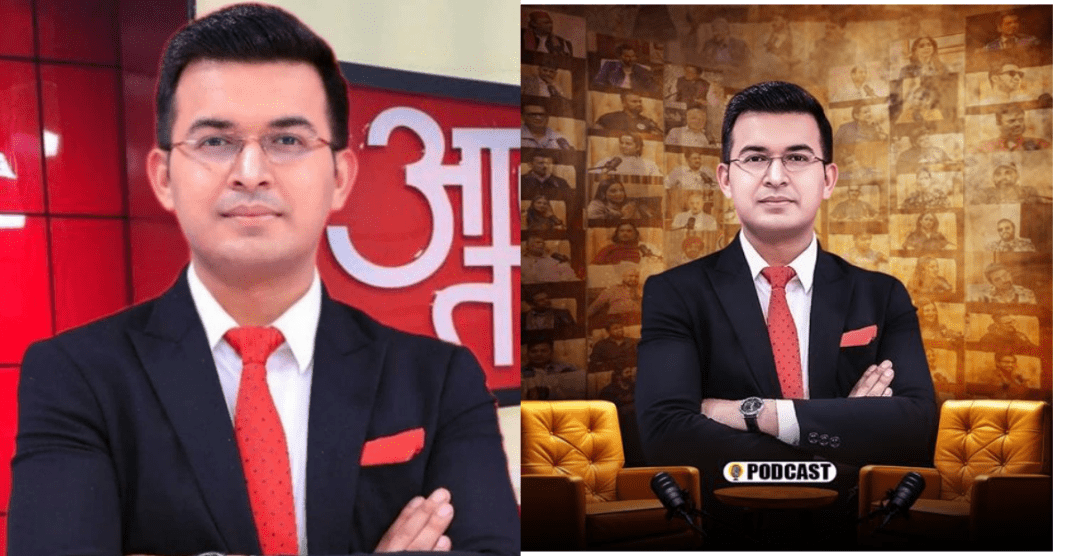
Shubhankar’s podcast has become a cultural staple for the youth. He has a unique “Calm se Kaam” (work with calm) approach that gets guests to reveal their vulnerable sides.
Guests: From Bollywood stars like Sanjay Mishra and Anu Malik to political heavyweights and spiritual leaders.
Impact: His podcasts don’t just trend; they humanize public figures, focusing on struggles and life lessons rather than just controversies.
Leaving Aaj Tak: The Timing & The “Ram Mandir” Context
Shubhankar Mishra officially left Aaj Tak in early 2024.
The Ram Mandir Connection: His departure happened around the time of the Ram Mandir Pran Pratishtha (January 2024). This was a massive period for Indian news, and Shubhankar was at the forefront of the coverage.
The “Why”: While many thought it was a conflict, it was actually a calculated leap of faith. He realized that while TV gives you fame, the “Digital Era” gives you ownership. He wanted to talk to his audience directly without the filters or “agendas” of big media houses.
The Struggle of Night Shows: Before leaving, he was the face of late-night journalism. He often hosted high-energy shows and debates that required him to stay in the studio until 2:00 AM or 3:00 AM. This grueling schedule, combined with the desire to do “on-ground” reporting rather than “studio shouting,” led him to quit at the height of his career.
The Prachi Parashar Angle
There was a lot of speculation regarding Prachi Parashar, a fellow popular anchor at Aaj Tak.
Did she leave with him? Yes, Prachi Parashar also moved away from the traditional TV setup around the same time.
The Collaboration: They didn’t just leave; they teamed up to build a digital empire. They recognized that as a duo, they could cover a wider range of topics from hard news and politics to lifestyle and podcasts.
The “Independent” Move: Prachi was an integral part of the transition. Together, they showcased that high-profile anchors don’t need a channel’s logo to be relevant. They started appearing in joint digital projects and podcasts, which gave them more freedom than the strict “teleprompter” culture of TV news.
The “Night Show” Struggle & Work Ethic
Shubhankar’s journey at Aaj Tak wasn’t all glamour; it was a test of endurance:
The Late-Night Grind: For years, he worked the “Graveyard Shift.” While the world slept, he was analyzing election data or breaking late-night news. This meant sacrificing personal life and sleep for professional growth.
Pressure of Prime Time: Even when he moved to more prominent slots, the pressure to maintain TRPs (Television Rating Points) was immense. He often spoke about how the “Race for 1st Place” sometimes kills the soul of real journalism.
The Shift to Digital: His struggle at night fueled his vision for NewsBook. He wanted to create content that people could watch at their own convenience, not just when a channel decided to broadcast it.
The Fame Shift
Before: He was “Shubhankar from Aaj Tak.” His identity was tied to the red and white logo.
After: He became “Shubhankar Mishra, The Brand.” By leaving at the peak (during the Ram Mandir era), he took a massive chunk of the TV audience with him to YouTube and Instagram.
His return to NDTV in 2025 was on his own terms not as a traditional employee, but as a digital titan who now brings his own multi-million audience back to the TV screen.
Writing & Publications
Shubhankar uses his pen to inspire the youth and preserve Indian heritage.
His key works include:
The Next Entrepreneur: A strategic guide for young aspirants looking to navigate the startup ecosystem and build independent brands.
Bharat Ke Mahan Vaigyanik: A book dedicated to the great scientists of India, aiming to ignite a scientific temper in school children.
Ghadi Hai Bade Kaam Ki Cheez: An educational book for children that simplifies complex concepts like time and mechanics.
Digital Columnist: He has authored numerous editorial pieces for major news portals focusing on media ethics and grassroots politics.
NGO Work & Social Impact
He leverages his massive digital “tribe” to create real-world change:
Empowering the Marginalized: He works closely with the NGO Kat-Katha, focusing on the rehabilitation, dignity, and skill-development of women and children in red-light districts.
Ground-Level Relief: During the Assam floods and the pandemic, he moved beyond the studio to ensure government resources reached remote, “last-mile” villages.
Educational Mentorship: He frequently conducts seminars at premier institutes (like IITs and IIMs) to mentor students on career transitions and the importance of digital literacy.
The Bottom Line: Whether through his books or his social initiatives, Shubhankar’s goal is to empower “Bharat” by providing both knowledge and a helping hand.
Controversies & Challenges
No meteoric rise is without friction. Shubhankar has faced his share of hurdles:
The Puri Temple Incident: In late 2025, he faced backlash for certain remarks regarding the Puri Temple. Demonstrating accountability, he issued a public apology to respect the sentiments of devotees.
The “Independent” Risk: Leaving a high-paying job at Aaj Tak was seen as a professional gamble. He faced skepticism from industry veterans who believed a journalist couldn’t survive without a “big logo” behind them.
Networth
| Year | Net Worth (Approx.) |
|---|---|
| 2020 | ₹50–60 Lakhs |
| 2021 | ₹70–80 Lakhs |
| 2022 | ₹1 Crore+ |
| 2023 | ₹1.5 Crore+ |
| 2024 (Est.) | ₹2–2.5 Crore |
| 2025 | ₹4–5 Crore |
Social Media Handles (Official Links)
Shubhankar is very active on social platforms. His content reaches millions.
YouTube: Shubhankar Mishra Official
Fun Facts
Maths Lover: Despite being a journalist, he is a huge fan of Mathematics and often uses data and statistics to back his arguments.
The “Calm” Trademark: He officially adopted the slogan “A Common Man Doing Calm Se Kaam” to distance himself from the toxic “noise” of traditional news debates.
Certified in Psychology: He holds certifications in Positive Psychology, which he uses to handle the high-pressure environment of the media industry.
Achievements & Public Image
Known For: Hard work, “field-first” journalism, and his signature crisp Hindi oratory.
Vision: To “Connect Bharat to itself” by using simple language that a farmer and a CEO can both understand.
Public Image: He is seen as a “Common Man’s Journalist.” His image is that of a bridge between the old guard (TV) and the new age (Reels/Podcasts).
Impact on Youth: He has inspired thousands of engineering and non-media students to follow their passion, proving that skills are more valuable than a specific degree.
Also Read: Nitish Kumar Biography: The Engineer Who Rewired the Destiny of Bihar