


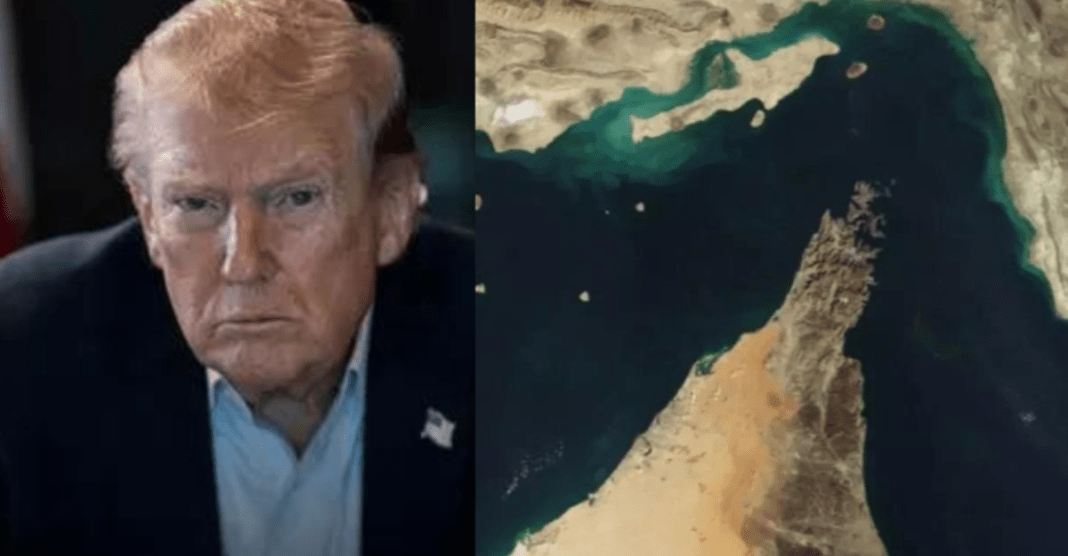

Trump’s 48-Hour ‘Obliteration’ Ultimatum: WASHINGTON/TEHRAN – In a move that has pushed the world to the precipice of a global energy war, U.S. President Donald Trump has issued a “final and devastating” 48-hour ultimatum to the Iranian leadership.
In a high-stakes directive issued via Truth Social, the President warned that the United States military is prepared to “hit and obliterate” Iran’s civil and industrial power infrastructure unless the Strait of Hormuz is immediately and fully reopened to all international shipping.
The 48-Hour Countdown
Trump’s 48-Hour ‘Obliteration’ Ultimatum: The ultimatum was posted at 5:14 AM IST on Sunday, March 22, 2026.
According to the timeline set by the White House, the deadline is set to expire just before midnight GMT on Monday, March 23 (early Tuesday morning, March 24, in the Middle East).
“If Iran doesn’t FULLY OPEN, WITHOUT THREAT, the Strait of Hormuz, within 48 HOURS from this exact point in time, the United States of America will hit and obliterate their various POWER PLANTS, STARTING WITH THE BIGGEST ONE FIRST!” the President wrote.
This aggressive posturing marks a sharp reversal from Trump’s rhetoric only 24 hours earlier, where he had suggested a “winding down” of military operations.
Analysts suggest the shift is a direct response to skyrocketing domestic fuel prices and a devastating Iranian missile strike that recently hit near Israel’s Dimona nuclear research facility.
Iran’s Response: “A Region in the Dark”
Trump’s 48-Hour ‘Obliteration’ Ultimatum: Tehran’s response was swift and defiant. The Khatam al-Anbiya Central Headquarters, Iran’s top military command, issued a statement warning that any attack on Iranian energy infrastructure would trigger a “total regional blackout.”
Ebrahim Zolfaqari, a spokesperson for the Iranian military, stated that if the U.S. follows through on Trump’s threat:
Permanent Closure: The Strait of Hormuz will be “completely and permanently closed” until every destroyed Iranian plant is fully rebuilt.
Retaliatory Strikes: Iran will target all energy, information technology, and water desalination plants belonging to the U.S. and its allies in the Persian Gulf.
Base Targeting: Specifically, Iranian missiles are now aimed at regional stations powering U.S. military bases in Qatar, Bahrain, and the UAE.
“If our people sit in the dark, the entire Gulf will go dark,” the statement concluded.
Strategic Targets: The Energy Grid at Risk
Military strategists believe the “biggest” plant mentioned by Trump refers to the Damavand Combined Cycle Power Plant near Tehran, which produces over 2,800 MW and is critical for the capital’s stability. Other potential high-value targets include:
The Bushehr Nuclear Power Plant: A strike here would be seen as the ultimate escalation, carrying massive environmental risks.
Shahid Rajaee Plant (Qazvin): A central hub for the northern industrial corridor.
Neka Thermal Power Plant: Essential for the energy security of the Caspian region.
By targeting the grid, the U.S. aim is to “disarm” Iran’s industrial and military capabilities without a ground invasion—a strategy often referred to as “infrastructure warfare.”
The Global Chokepoint: Why Hormuz Matters
The Strait of Hormuz is arguably the most important piece of maritime geography in the world.
Approximately 20% of the world’s oil and nearly one-third of global liquefied natural gas (LNG) pass through this narrow waterway daily.
Since the conflict escalated on February 28 following the death of Supreme Leader Ali Khamenei, Iran has used its “Hormuz Card” to paralyze the global economy:
Skyrocketing Prices: Crude oil has surged past $110 per barrel, with gasoline prices in the U.S. hitting record highs.
Defense Paralysis: A recent analysis by West Point’s Modern War Institute warns that the blockade is strangling the U.S. defense industry by cutting off the supply of sulfur and copper needed for munitions and electronics.
Regional Outrage: Nations including Saudi Arabia, Kuwait, the UAE, and Qatar are caught in the crossfire, as their primary export route remains a war zone.
A Widening Conflict: From Israel to Diego Garcia
The war is no longer contained to the Levant. Over the weekend, Iran launched long-range ballistic missiles at the U.S.-UK military base at Diego Garcia in the Indian Ocean.
This was the first time Iran utilized its 4,000-km range missiles in this conflict, proving they can reach as far as European capitals like Paris, Berlin, and Rome.
In Israel, the atmosphere remains tense as the military reports intercepting dozens of Iranian drones and missiles daily.
Prime Minister Netanyahu has vowed to retaliate “on all fronts,” further complicating Trump’s efforts to maintain a “U.S.-led” resolution to the crisis.
International Reaction: Condemnation and Fear
The G7 nations, alongside South Korea, Australia, and Bahrain, have issued a strong condemnation of Iran’s blockade, calling it a “violation of international law.”
However, cracks are appearing in the coalition:
European Union: Leaders in France and Germany have expressed “grave concern” over targeting civilian power plants, fearing a humanitarian collapse in Iran could trigger a fresh wave of millions of refugees toward Europe.
Russia and China: Russia has officially opposed the blockade but warned that any strike on Iran’s sovereign infrastructure would have “unpredictable global consequences.”
The Arab League: Most Gulf states are trapped in a nightmare scenario, they want the Strait open, but they fear that a U.S. strike will lead to the destruction of their own desalination plants, their only source of drinking water.
The Final Hours
As the 48-hour clock ticks toward Tuesday morning, the global community is on a war footing. President Trump’s “Maximum Pressure 2.0” has reached its ultimate test.
If Iran blinks and reopens the Strait, Trump will claim a historic victory for “peace through strength.”
If Tehran holds its ground, the world may witness a systematic dismantling of a nation’s energy grid, potentially sparking a wider Middle Eastern war that could last for years.
The next 24 hours will decide the fate of global energy, regional stability, and the lives of millions.
By: Snigdha
Also Read: Rupee at 93.27: How the Historic Fall Will Hike Your LPG and Smartphone Prices