

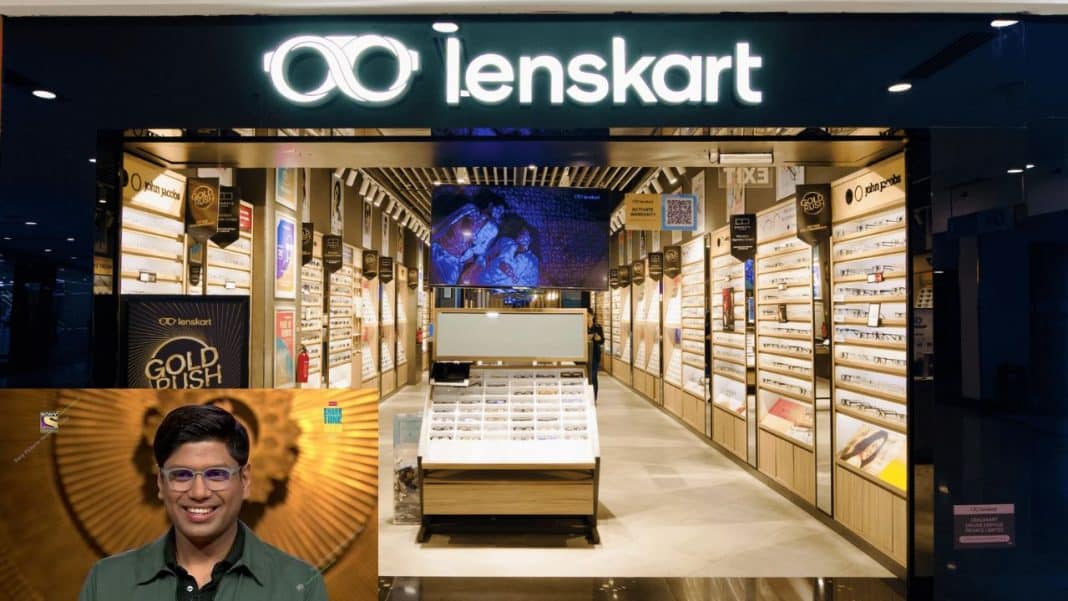

Lenskart Updates Dress Code: Eyewear major Lenskart has found itself at the center of a heated public debate after an internal dress code document triggered allegations of religious bias.
The controversy, which quickly spread across social media platforms, forced the company to respond with a revised in-store style guide that now explicitly allows employees to display religious and cultural symbols.
How the Controversy Began
The issue came to light when an older version of Lenskart’s employee dress code was circulated online.
The document appeared to prohibit visible Hindu religious markers such as bindi and tilak, while allowing certain other forms of religious attire, including the hijab.
This perceived inconsistency led to sharp criticism, with many users accusing the brand of selective inclusivity.
As screenshots and opinions flooded platforms like X (formerly Twitter), the debate intensified.
Several commentators argued that a company operating in a diverse country like India should adopt a neutral and inclusive approach toward all forms of religious expression, rather than appearing to favor one over another.
The criticism was not limited to individuals—public figures and social media commentators also weighed in, amplifying the issue and pushing it into mainstream discourse.
Company Clarification and Public Statement
In response to the growing backlash, Lenskart clarified that the controversial document was outdated and no longer reflected its current policies.
Shortly after, co-founder Peyush Bansal addressed the situation publicly, stating that the company had “heard” the concerns of its customers and community.
The company released an updated style guide and made it publicly accessible, emphasizing transparency.
In its statement, Lenskart acknowledged that any previous communication that may have caused discomfort or made employees feel excluded was regrettable.
It reiterated that the organization’s core philosophy is rooted in inclusivity and respect for individual identity, adding that no employee should feel compelled to suppress their beliefs or traditions at the workplace.
We have heard you. Clearly and openly. Over the past few days, our community and customers have spoken – and we have listened.
— lenskart (@Lenskart_com) April 18, 2026
Today, we are standardizing our In-Store Style Guide and sharing it publicly and transparently: https://t.co/lC8KlLLUZm
These guidelines explicitly and…
What the New Dress Code Allows
The revised guidelines mark a clear departure from the earlier version. Employees are now explicitly permitted to wear a wide range of religious and cultural symbols.
These include traditional Hindu identifiers such as bindi, tilak, and sindoor, as well as items like kalawa (sacred thread), mangalsutra, bangles, and kada.
In addition, head coverings—including hijabs and turbans—continue to be allowed. The only requirement is that such items must be worn in a manner that is neat, secure, and does not interfere with day-to-day work responsibilities.
The policy also permits modest accessories like earrings, rings, chains, and nose pins, provided they align with professional standards expected in a retail environment.
At the same time, the company has retained a structured dress framework to maintain brand consistency.
Store staff are required to wear Lenskart-issued T-shirts, paired with plain dark blue jeans and closed shoes suitable for store operations.
Emphasis on Inclusion and Workplace Safety
Beyond appearance, Lenskart highlighted broader commitments in its updated communication.
The company stated that it would continue to ensure fair treatment for employees and provide reasonable accommodations for religious practices, medical needs, disabilities, and personal circumstances such as pregnancy.
Employees have also been assured that they can approach the HR department with concerns without fear of retaliation—an important point in light of the criticism surrounding the earlier policy.
Public Reaction: Divided and Intense
Despite the company’s efforts to address the issue, public reaction has remained sharply divided.
While some users appreciated the revised policy and the acknowledgment of concerns, a significant number remained unconvinced.
Critics argued that the correction came only after widespread outrage, questioning why such provisions were absent in the first place.
Some called the apology insufficient, describing it as reactive rather than sincere.
There were also calls for stronger accountability, with a section of users demanding action against those responsible for drafting the earlier policy.
Others went a step further, urging boycotts and encouraging consumers to disengage from the brand.
Additional Controversy Around Festive Campaign
Compounding the situation, Lenskart was simultaneously facing criticism over a Pongal-themed advertisement.
Some viewers claimed that the campaign misrepresented elements of the traditional South Indian festival, questioning the authenticity of its visuals and styling.
This parallel controversy further intensified scrutiny of the company, with critics linking both incidents to a perceived lack of cultural sensitivity.
Company Background and Market Presence
Founded in 2010 by Peyush Bansal along with Amit Chaudhary and Sumeet Kapahi, Lenskart started as an online platform focused on contact lenses.
Over the years, it has grown into a vertically integrated eyewear brand with a strong omnichannel presence.
As of 2026, the company operates more than 2,500 retail stores across India and has expanded into international markets, including Japan, Southeast Asia, and the Middle East. Its rapid growth has made it one of the most prominent players in the eyewear segment.
The Road Ahead
The episode highlights the challenges large consumer brands face in balancing standardization with cultural diversity, especially in a country as varied as India.
While Lenskart has taken steps to address immediate concerns, the sustained backlash indicates that rebuilding public trust may take more than just policy revisions.
For now, the updated dress code signals a shift toward broader inclusivity—but whether it will be enough to repair the brand’s image remains to be seen.