

Bindi Row Rekindled: A fresh debate around corporate dress codes and religious expression has emerged in India, with Lenskart and Air India both finding themselves at the center of controversy within days of each other.
Air India Faces Backlash
The issue began when images of Air India’s internal grooming guidelines for cabin crew started circulating online.
The document appeared to place restrictions on wearing religious symbols such as sindoor and tikka.
According to the guidelines, applying any kind of sindoor or forehead markings was not permitted.
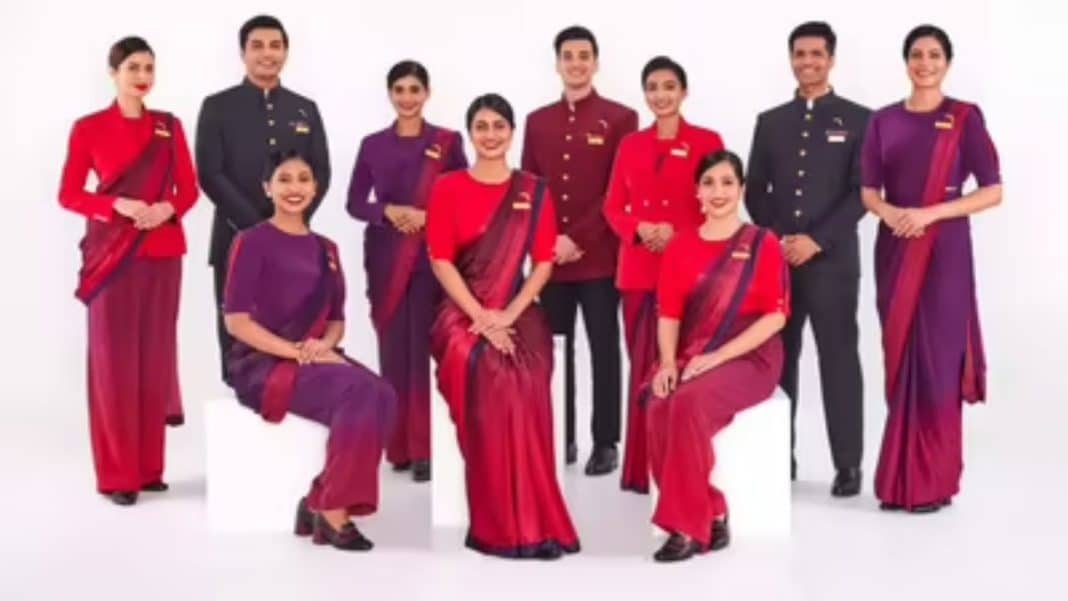
While bindis were not entirely banned, the rules were quite specific, crew members could wear a small bindi (up to 5mm) only with a saree.
The same was not allowed with the Indo-Western uniform, which drew criticism from many who viewed the distinction as unnecessary and culturally insensitive.
As the document spread on social media, it triggered strong reactions, with users questioning whether such policies limit personal and religious expression in professional spaces.
Company Clarifies Its Position
Amid the growing backlash, Air India issued a clarification, stating that the document being shared was outdated and does not reflect the airline’s current policies.
The airline’s spokesperson emphasized that employees are free to wear bindis and that the viral images were taken from an older manual that is no longer in use.
Industry Perspective
Some aviation experts pointed out that grooming guidelines are standard across global airlines.
These rules are often designed to maintain uniformity, safety, and a consistent brand image rather than target any specific religion or community.
The Lenskart Controversy
The timing of the Air India debate is notable, coming shortly after Lenskart faced similar criticism.
An earlier version of its internal style guide had surfaced online, suggesting restrictions on wearing bindi and tilak while allowing other religious attire, which sparked accusations of bias.
The company later clarified that the document was outdated and not part of its official HR policy.
Its co-founder and CEO, Peyush Bansal, publicly apologized and acknowledged that the wording in the document was incorrect and did not reflect the company’s values or practices.
Policy Update and Resolution
Following the backlash, Lenskart introduced a revised style guide on April 18.
The updated policy explicitly allows employees to wear cultural and religious symbols, including bindi, tilak, and sindoor, signaling a move toward a more inclusive approach.
A Larger Conversation
Together, these incidents have reignited a broader discussion about how companies balance professional appearance with individual identity.
While organizations aim to maintain consistency in branding and presentation, employees increasingly expect workplaces to respect and accommodate cultural and religious diversity.
As such debates gain traction online, companies may face growing pressure to ensure that their policies are both inclusive and clearly communicated to avoid misunderstandings.
Also Read: Lenskart Updates Dress Code After Row Over Religious Symbols, But Backlash Persists