


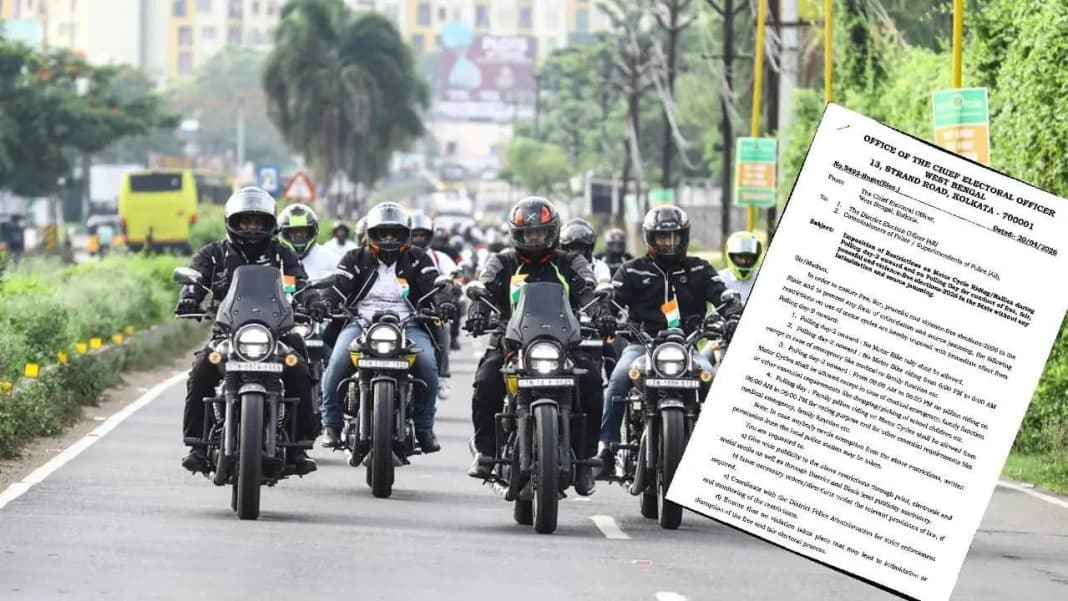

In a decisive move to maintain order during the upcoming Assembly elections, the Election Commission of India has introduced stringent restrictions on two-wheeler movement across West Bengal.
The measures are aimed at preventing disruptions and ensuring a secure environment for voters.
Night Movement Restricted to Prevent Misuse
The new rules, which came into effect on Tuesday, apply to all 152 constituencies scheduled for voting in the first phase on April 23.
As per the directive, motorcycles and scooters are not allowed on roads between 6 pm and 6 am, except in cases of genuine emergencies such as medical situations or urgent family needs.
Ban on Bike Rallies, Limits on Pillion Riding
In addition to the night-time ban, authorities have also prohibited bike rallies entirely, citing concerns that such gatherings could be used to influence or intimidate voters.
During daytime hours—between 6 am and 6 pm pillion riding has also been restricted.
However, certain exceptions have been made, including for medical emergencies, family-related obligations, and essential activities like dropping or picking up schoolchildren.
Relaxations Allowed on Polling Day
On polling day, the Commission has allowed limited relaxation. Family members will be permitted to travel together on two-wheelers for voting and other necessary purposes during the daytime window.
Officials emphasized that these steps are intended to eliminate any potential for voter intimidation and to maintain a peaceful atmosphere at polling booths.
Those seeking exemptions must secure prior written approval from their local police authorities.
Political Tensions Continue Ahead of Voting
Chief Election Commissioner Gyanesh Kumar reiterated the Commission’s commitment to free and transparent elections, assuring that all necessary steps are being taken to uphold fairness.
The restrictions come amid ongoing tensions between the poll body and the ruling Trinamool Congress, which has raised concerns over voter list revisions.
The Bharatiya Janata Party and the Commission have dismissed these allegations, calling them baseless.
With the first phase of polling approaching, the focus now remains on whether these measures will help ensure a calm and orderly voting process across the state.