


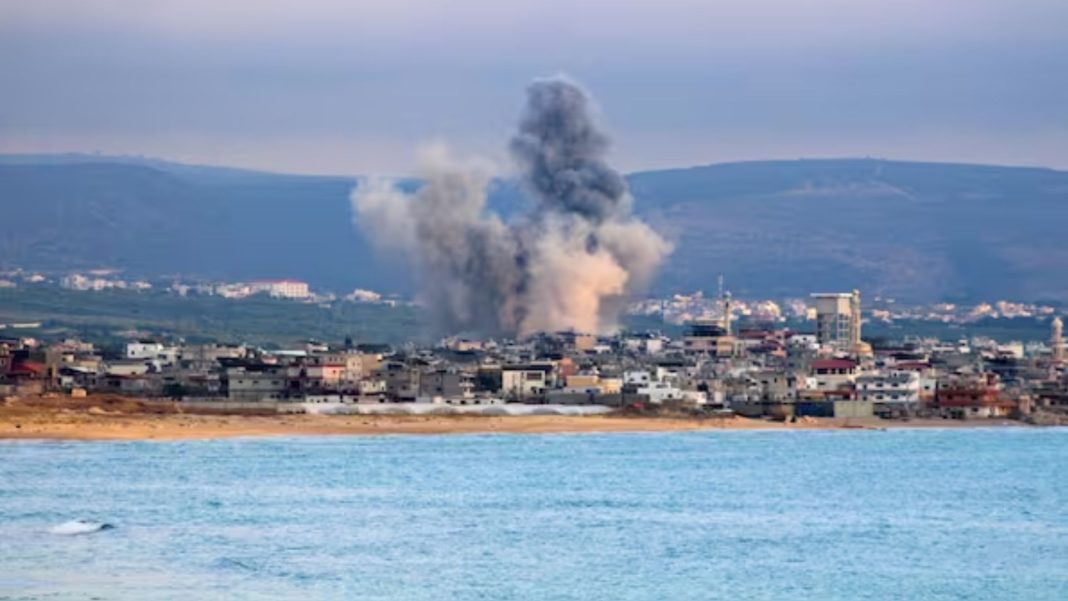

US-Iran Conflict: The Middle East is witnessing a dangerous escalation in military tensions as the United States and Iran have engaged in a series of direct retaliatory strikes. The confrontation began when the United States Central Command (CENTCOM) launched targeted “self-defense” airstrikes against Iranian military installations in southern Iran.
According to official statements from CENTCOM, the operation was a direct response to Iran’s recent aggressive actions in the region, specifically the downing of an American MQ-1 drone operating over international waters.
CENTCOM Statement: “The weekend strikes were precision-planned actions to neutralize immediate threats to international shipping lanes and American assets.”
— U.S. Central Command (@CENTCOM) June 1, 2026
The US military deployment targeted key locations in Goruk City and on Qeshm Island. These sites housed vital Iranian radar and command-and-control stations. During the precision operation, American fighter jets successfully eliminated Iranian air defense systems, a ground control station, and two one-way attack drones. Washington emphasized that these drones posed an immediate threat to commercial vessels in the region, and confirmed that no US service members were harmed during the operation.
The Retaliation: Iran Strikes Back via IRGC Aerospace Force
US-Iran Conflict: Iran was quick to launch a military counter-offensive. The Islamic Revolutionary Guard Corps (IRGC) confirmed that its Aerospace Force initiated missile and drone strikes against a strategic US-utilized airbase.
While Tehran did not officially disclose the exact geographical location of the targeted base, the IRGC claimed this specific facility was used by the US to launch a preliminary attack on an Iranian telecom tower located on Sirik Island in the Hormozgan province. Iran framed this move as a direct act of vengeance against what it called American military aggression.
Regional Collateral: Kuwait Triggers Air Defense Systems
US-Iran Conflict: The rapid exchange of fire between the two heavyweights sent shockwaves across neighboring Gulf nations. Kuwait immediately went into high alert, activating its national air defense systems as sirens wailed across the country.
Local Kuwaiti reports confirmed threats of incoming missiles and drones crossing their airspace, highlighting how quickly a localized US-Iran conflict could spill over into a broader regional war.
The Escalation Profile: How the Conflict Unfolded
The crisis began with Iran taking down the US MQ-1 drone over international waters. This triggered a swift response from CENTCOM, which launched highly coordinated weekend airstrikes to dismantle Iran’s radar capabilities and drone launch sites in southern Iran.
Simultaneously, the IRGC reported that the US targeted their communication infrastructure on Sirik Island. This led to Iran’s immediate counter-strike with missiles and drones aimed at the American-linked airbase, which subsequently forced neighboring Kuwait to activate its emergency defense protocols to secure its own airspace.
The Ceasefire in Jeopardy
What makes this flare-up particularly critical is that it has occurred during an active, albeit fragile, regional ceasefire. CENTCOM has firmly stated that it will not tolerate “unprovoked Iranian aggression” and remains fully prepared to defend its strategic interests and ensure the freedom of navigation in international shipping corridors.
With both sides refusing to back down and Gulf neighbors caught in the crossfire, diplomatic channels are under immense pressure to prevent this volatile situation from spiraling into an all-out regional war.
Also Read : Indo-Pacific Stability: Pete Hegseth Hails ‘Powerful India’ as Strongest Anchor