


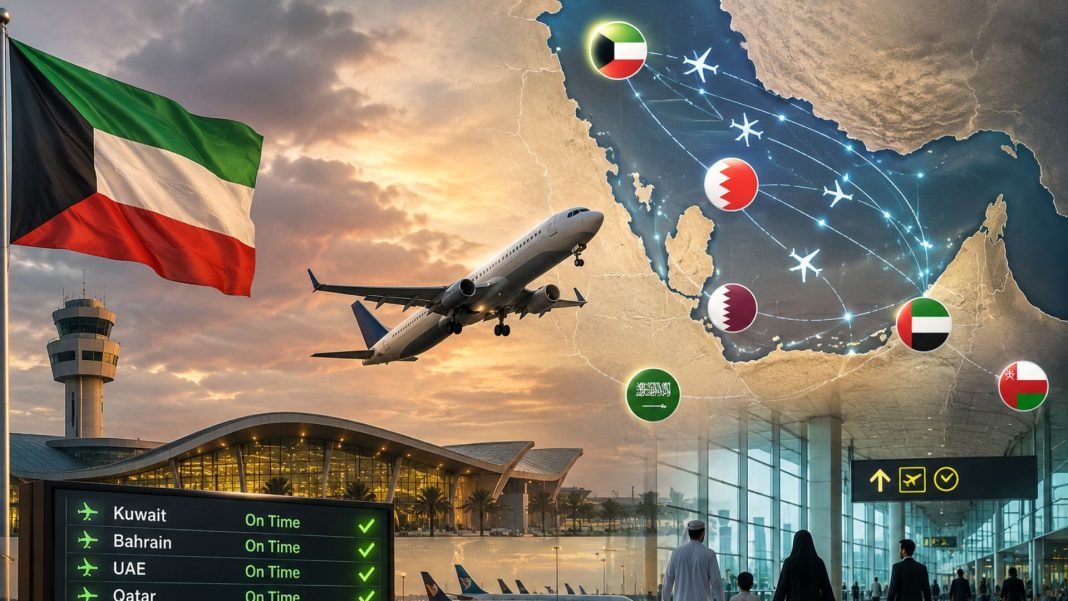

Iran Attack Update: Aviation networks across the Gulf Cooperation Council (GCC) region faced severe disruptions following a wave of military attacks launched by Iran.
The escalating regional tensions forced several countries to immediately lock down their skies, leaving thousands of passengers stranded and air traffic controllers scrambling to reroute international flights.
However, after hours of high alert, the regional airspace is gradually returning to safety.
Kuwait has become one of the first Gulf nations to officially announce the full resumption of its commercial flight operations.
Kuwait Reopens Airspace After High-Stakes Security Review
Iran Attack Update: The Directorate General of Civil Aviation (DGCA) of Kuwait confirmed that normal air traffic resumed on Saturday morning.
The decision to reopen the skies was made after an extensive emergency assessment with national security agencies to ensure zero risk to commercial airliners.
“The air traffic control has been normalized starting today,” a senior Kuwaiti aviation official stated. “This standard protocol was implemented only after receiving a green light from our state security forces, confirming that the flight paths are now entirely secure.”
Chaos in the Skies: Flights Diverted Mid-Air Amid Missile Fears
Iran Attack Update: The sudden closure of the Gulf airspace on Friday night triggered immediate chaos for regional carriers. As Iran launched its strikes, air traffic authorities in Kuwait clamped down on their airspace to prevent any civilian casualties from potential stray missiles or drone activity.
This emergency lockdown directly impacted Kuwait’s premier carriers, forcing mid-air diversions:
Kuwait Airways & Jazeera Airways Hit: At least 11 inbound and outbound flights belonging to the national carrier Kuwait Airways and low-cost giant Jazeera Airways had to abort their landing sequences.
Emergency Rerouting: With Kuwait’s skies temporarily sealed, these 11 commercial aircraft were urgently diverted and safely landed at alternative airports in neighboring friendly countries.
GCC Aviation Scrambles to Recover from Regional Shockwaves
While Kuwait has restored normalcy, the wider GCC aviation sector is still dealing with the ripple effects of the Iranian strikes. The Middle East serves as the crucial crossroads for global aviation, connecting Europe, Asia, and the Americas.
Flight tracking data showed massive congestion over safe corridors as airlines bypassed the active conflict zones. Industry experts warn that while flight schedules are being restored, passengers across the region should brace for cascading delays and increased flight times over the next 48 hours as airlines reposition their aircraft and crews.
What’s Next for Gulf Travelers?
Airlines in the region have advised passengers to continuously check their flight status before heading to the airports. Although Kuwait’s airspace is fully operational, carriers are working through a massive backlog of delayed flights and rescheduled routes.
Security agencies across the GCC remain on high alert, monitoring the skies closely to ensure that civil aviation remains insulated from the ongoing geopolitical conflict.
Also Read : India-Venezuela Reset: PM Modi Met Acting President Delcy Rodriguez and Secured Crucial Energy Supply Lines