


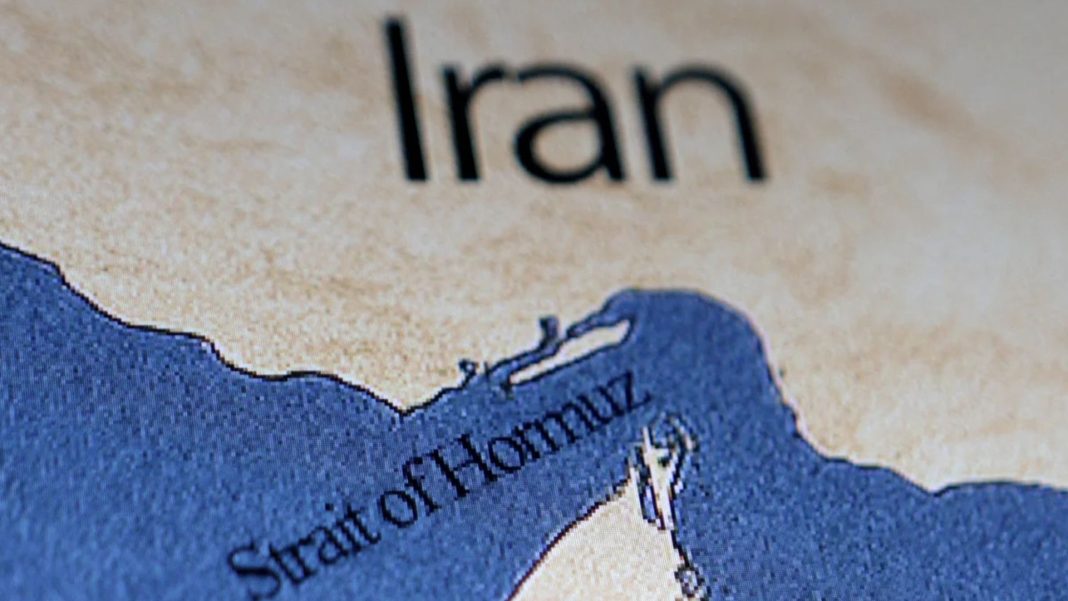

Iran Strait of Hormuz: A massive geopolitical storm is brewing in West Asia, threatening to push global energy markets into absolute chaos. Amid escalating military clashes with the United States, Iran has made a stunning, high-stakes claim: the Islamic Republic now exercises “full control” over the Strait of Hormuz.
This narrow body of water is widely regarded as the absolute oil lifeline of the global economy. By declaring that no ship can pass without direct permission from Tehran, Iran has injected severe suspense into international shipping.
Is this mere political posturing to gain leverage in ongoing draft peace negotiations with the Trump administration, or does Iran truly hold the power to choke the global oil supply?
The Ultimate Ultimatum: Admiral Sayyari Defies Washington
Iran Strait of Hormuz: The dramatic declaration came from Rear Admiral Habibollah Sayyari, the Deputy Chief of Iran’s Army for Coordination. Speaking on state television, the senior commander confidently rejected Washington’s claims that recent targeted US airstrikes had crippled Iran’s naval operations and surveillance assets.
“Both sides of the Strait of Hormuz are firmly under the control of Iran’s Armed Forces,” Admiral Sayyari announced, asserting that the country’s heavily expanded drone fleets and coastal defenses remain fully intact. “No vessel can enter this strategic waterway without our clear authorization.”
Sayyari’s aggressive stance comes at a critical moment. Just hours prior, US President Donald Trump announced a potential breakthrough in a draft agreement to end the broader conflict that erupted earlier this year.
By projecting total dominance over the Strait, Tehran is sending a loud and clear message to the White House: Iran will not yield to military pressure, and any final peace deal must recognize its authority over this vital global transit route.
Rhetoric vs. Reality: Does Tehran Actually Hold the Reins?
Iran Strait of Hormuz: To evaluate the validity of Iran’s claims, military analysts point to a highly calculated mix of physical capability and aggressive information operations:
Natural Geographic Dominance: Geographically, Iran controls the entire northern coastline of the Strait. This proximity gives its fast-attack craft, anti-ship missiles, and massive drone arsenals the natural ability to severely disrupt maritime traffic at a moment’s notice.
The “Permit” Policy: By enforcing a strict traffic separation scheme and forcing vessels to seek permission, Iran is running a highly coercive maritime policy designed to push US and Western escort warships out of the area entirely.
Psychological Warfare: While US Central Command (CENTCOM) maintains that it will continue to protect commercial vessels, Iran’s public narrative of “total shutdown” is highly effective.
It creates massive panic among international shipping lines, forcing many to completely suspend their operations out of sheer legal and financial panic.
The Billion-Dollar Question: Will the Global Oil Trade Collapse?
If Iran decides to enforce its “no permission, no passage” rule to its extreme limit, the economic fallout would trigger an immediate global emergency.
A prolonged closure of the Strait would instantly wipe out millions of barrels of oil from daily circulation. Energy experts warn that crude oil prices could blast past $150 to $200 per barrel, triggering severe global inflation and deep recessions across major economies.
Furthermore, countries like India, which rely heavily on Middle Eastern crude imports via this exact route, face immediate vulnerabilities regarding fuel security and soaring commodity prices.
What Lies Ahead in the High-Stakes US-Iran Standoff?
The immediate future depends heavily on how the Trump administration responds to Sayyari’s blatant defiance. Despite current backchannel diplomacy in Qatar aimed at unfreezing $24 billion in Iranian assets, the US military is actively attempting to enforce its own economic counter-blockade on Iranian ports.
With US Apache helicopters and naval warships actively patrolling the Gulf of Oman, any small miscalculation in the Strait could easily blow up a fragile ceasefire.
For now, international markets and shipping cartels are left waiting in deep suspense, watching to see if international maritime law still holds any power, or if Iran truly holds the master key to the world’s energy supply.
Also Read : G7 Summit: Why Did Macron Invite PM Modi to the G7 Summit? What Is France’s Real Agenda Behind the Visit?