


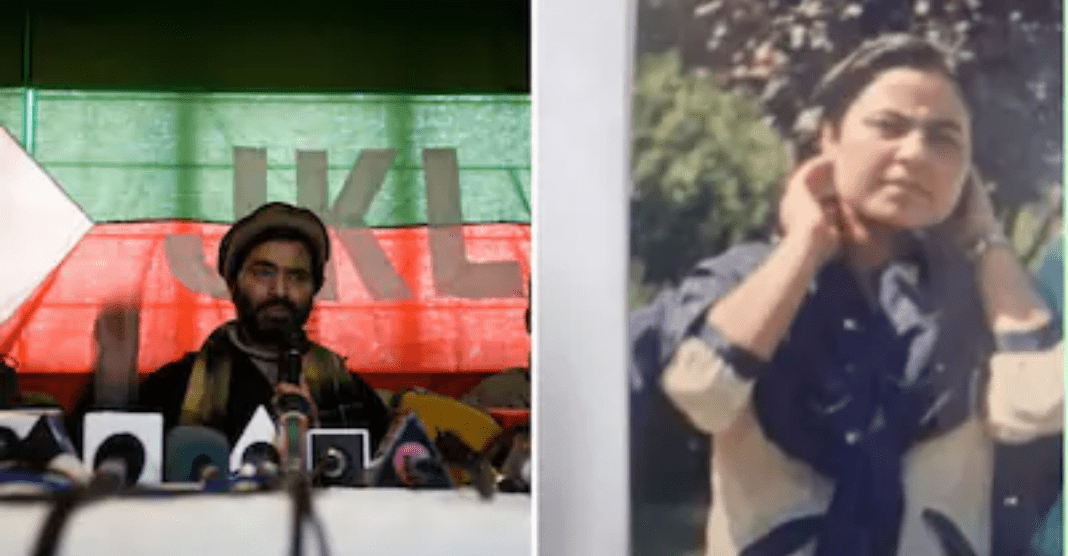

36 Years Later: In a landmark development that pierces through decades of fear and silence, the State Investigation Agency (SIA) of Jammu and Kashmir has filed a comprehensive 737-page chargesheet before a special TADA/POTA court in Srinagar.
The chargesheet names jailed Jammu and Kashmir Liberation Front (JKLF) chief Yasin Malik as the mastermind behind the 1990 abduction, torture, and brutal murder of 27-year-old staff nurse Sarla Bhat.
The breakthrough sends a definitive message that the passage of time will not shield perpetrators of legacy terror crimes from legal accountability.
The Nurse Who Refused to Leave
36 Years Later: To understand the gravity of Sarla Bhat’s sacrifice, one must revisit the terrifying atmosphere of early 1990 in the Kashmir Valley.
A systematic campaign of targeted killings was underway, aimed at forcing the Kashmiri Pandit community into a mass exodus.
High-profile figures like lawyer Tikka Lal Taploo and Justice Neelkanth Ganjoo had already been assassinated.
While most Kashmiri Pandit healthcare workers at the Sher-i-Kashmir Institute of Medical Sciences (SKIMS) fled for safety, Sarla Bhat chose to stay behind, dedicated to her duty as a staff nurse.
A Fabricated Pretext and Paranoia
36 Years Later: The Soura neighborhood, where SKIMS is located, was a JKLF stronghold at the time. Wounded terrorists were frequently brought to the hospital for treatment, placing Sarla Bhat in proximity to them.
This proximity triggered an intense paranoia within the JKLF leadership, who feared she might leak operational details to intelligence agencies.
The tipping point occurred on April 8, 1990, when J&K Police raided a terror hideout in Narwara. Yasin Malik, who was present, managed to escape but sustained injuries.
Blinded by paranoia, Malik falsely concluded that Sarla Bhat was the police informer.
The SIA chargesheet explicitly notes that this allegation was completely fabricated, a manufactured pretext to justify a cold-blooded, premeditated assassination meant to terrorize the local minority community.
The Horror of April 18, 1990
36 Years Later: According to investigative records, Sarla Bhat was last seen alive at SKIMS on the afternoon of April 18, 1990.
She was abducted by JKLF terrorists near the Buchpora Crossing and dragged toward the Illahibagh-Lal Bazar area.
The young nurse was subjected to severe physical torture before being shot dead with an automatic rifle at Omer Colony, Malbagh.
Piecing Together a Cold Case Across Decades
Reconstructing a 36-year-old crime scene presented monumental challenges for the SIA when the case was transferred to them in March 2024.
Under the leadership of senior IPS officer Nitish Kumar (ADG CID/SIA) and the meticulous on-ground efforts of Superintendent of Police Divya Dev, investigators went door-to-door to trace aging witnesses, retired nurses, and journalists from that era.
The team successfully reassured victim families who had long lost faith in the system, building a watertight case file using oral testimonies alongside critical scientific evidence.
Ballistic and Electronic Backing
The prosecution’s case is heavily reinforced by modern forensic and electronic evidence:
- Ballistic Verification: Forensic (FSL) analysis confirmed that three empty cartridge cases recovered from the 1990 crime scene were fired from the exact same 7.62 × 39 mm automatic firearm, validating eyewitness accounts of burst rifle fire.
- Admission of Command Structure: The SIA has submitted authenticated video evidence of Farooq Ahmad Dar (alias Bitta Karate) admitting to targeted killings carried out under the direct command of top JKLF leadership.
Alongside Yasin Malik, the chargesheet names Khurshid Ahmad Chalkoo—the shooter who reportedly fled to Pakistan-occupied Jammu and Kashmir, and three other deceased terrorists. Malik is currently serving a life sentence in Delhi’s Tihar Jail on separate terror-financing convictions.
A Gateway to Unresolved Legacy Cases
Sarla Bhat’s assassination was a structural component of a larger campaign that resulted in the displacement of over half a million Kashmiri Pandits.
Senior officials indicate that the breakthroughs achieved during this investigation have already provided vital leads into other unresolved legacy cases from 1989–1990.
The SIA is expected to initiate similar legal actions soon regarding the assassinations of Justice Neelkanth Ganjoo, Tikka Lal Taploo, and poet Sarwanand Kaul Premi, marking a significant step toward historical justice in the region.