


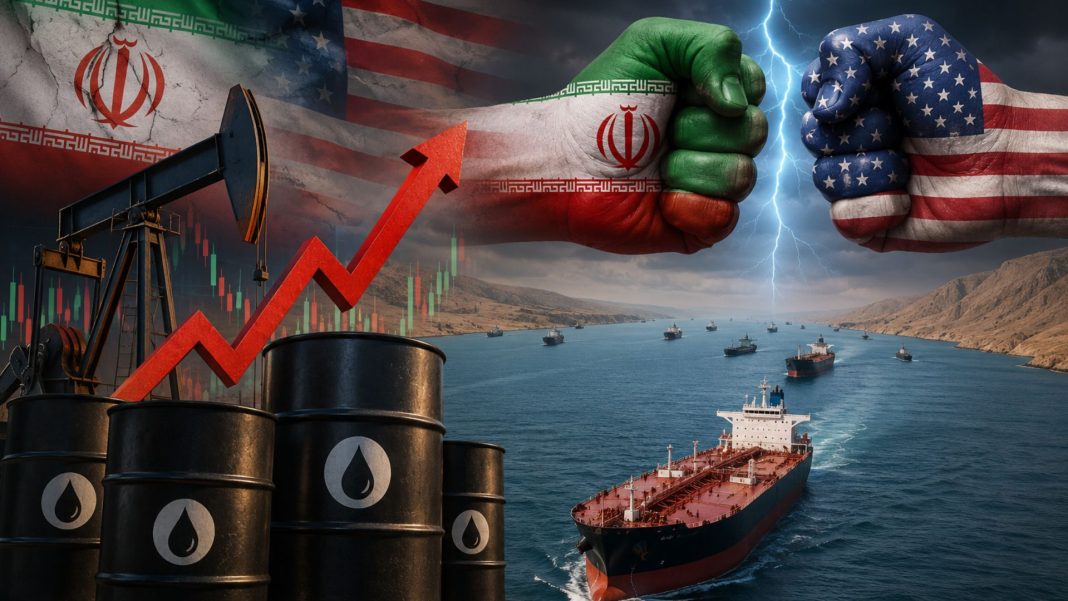

Iran US Tensions : In a major global escalation, Iran has announced that it will keep the strategic Strait of Hormuz completely closed to all maritime traffic.
Iranian military officials confirmed that the blockage will remain in place as long as Tehran perceives United States policies and military presence in the region as hostile.
The decision places one of the world’s most vital oil transit chokepoints under full Iranian military lockdown, sparking immediate fears of global energy supply disruptions and rising geopolitical tensions.
Full Military Control: Tehran Shuts Key Trade Gateway
Iran US Tensions : According to a report by Iran’s semi-official Fars News Agency, citing a senior military source, Iranian armed forces have established total operational control over the Strait of Hormuz.
Under the current security measures, Iranian authorities stated that no vessel, commercial or otherwise, will be permitted to navigate through the waterway.
Key Declarations from Iranian Military Sources:
Total Lockdown: Complete control exercised over all ship movements through the narrow passage.
National Interest First: Any future decision to reopen or maintain restrictions will depend strictly on security evaluations and Iran’s national interests.
Direct Response to Washington: The closure is directly tied to ongoing threats, sanctions, and hostile posture from the United States.
“The Strait of Hormuz is under the complete control of the Iranian armed forces. Any decision to reopen or continue restrictions… will be made entirely based on security considerations and national interests. As long as US threats and hostile actions continue, this position will not change.”
— Iranian Military Source (via Fars News Agency)
Why the Strait of Hormuz Matters to the World
Iran US Tensions : The Strait of Hormuz is widely considered the single most important oil transit chokepoint on the planet. Connecting the Persian Gulf with the Gulf of Oman and the Arabian Sea, it serves as the primary maritime highway for global energy exports.
The Strategic Value:
Global Energy Lifeline: A significant portion of the world’s daily petroleum supply passes through this narrow maritime corridor.
Major Exporters Affected: Key crude producers, including Saudi Arabia, Iraq, the UAE, Kuwait, and Qatar, rely on this route to transport oil and Liquefied Natural Gas (LNG) to global markets.
Price Volatility: Any sustained disruption or blockade instantly triggers sharp spikes in worldwide oil, gas, and freight prices.
Rising US-Iran Friction: A Ticking Time Bomb
The latest announcement comes amid months of intensifying friction between Washington and Tehran over regional security, economic sanctions, and maritime enforcement operations.
While the United States and its international partners insist on maintaining freedom of navigation in international waters, Iran maintains that external naval presence near its borders poses a direct threat to its national sovereignty.
What Happens Next?
Global Market Impact: Financial and energy markets are preparing for potential surges in crude oil and shipping insurance rates.
Naval Patrols & Escorts: Western allies may consider naval escorts for commercial tankers operating in surrounding waters.
Diplomatic Countermeasures: International bodies and trade partners are expected to call for urgent diplomatic dialogue to prevent a broader conflict at sea.