


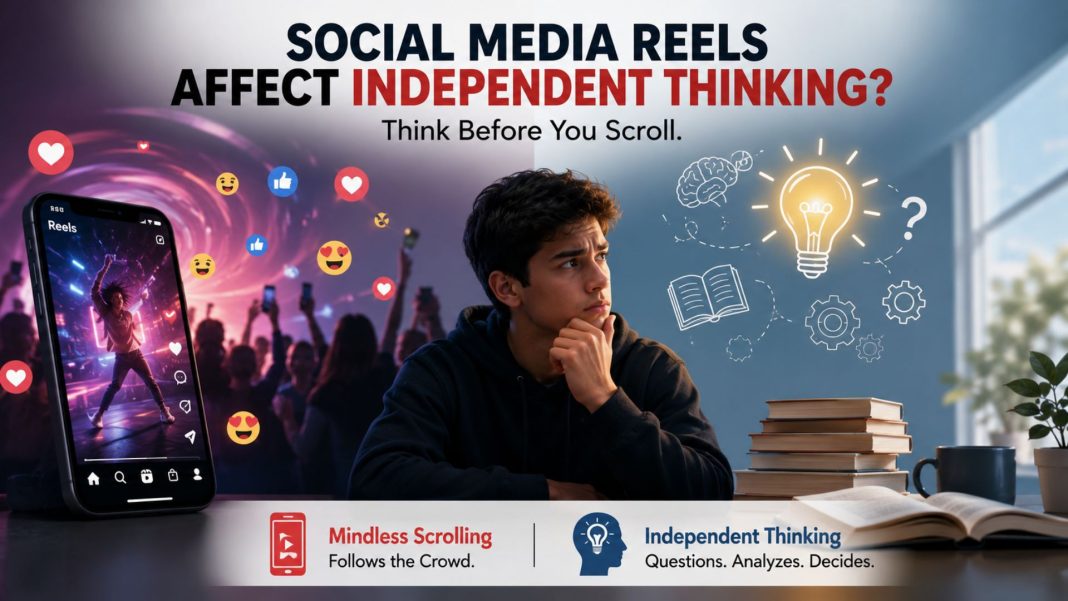

Social Media and Independent Thinking: In today’s digital world, social media has become an inseparable part of everyday life. Millions of people spend hours scrolling through short videos, trending posts, and viral opinions across various platforms.
While these platforms offer entertainment, information, and opportunities to connect, psychologists and media experts have increasingly raised concerns about one important question: Are people slowly losing the habit of thinking for themselves?
According to media reports, British author and journalist Johann Hari recently discussed how excessive dependence on algorithms, endless scrolling, and constant digital distractions may be influencing human attention, decision-making, and independent thinking.
While these observations reflect an ongoing public debate rather than an undisputed scientific conclusion, they have renewed conversations about how social media shapes modern behavior.
Why Social Media and Independent Thinking Are Being Discussed Together
Social Media and Independent Thinking: The rapid growth of short-form content has changed how people consume information. Instead of reading complete articles, books, or detailed reports, many users now rely on brief videos or viral posts for news and opinions.
According to media reports, experts believe that recommendation algorithms often prioritize content that attracts maximum engagement.
As users repeatedly watch similar videos, they may begin seeing the same viewpoints again and again.
This can unintentionally limit exposure to diverse perspectives and reduce opportunities for independent evaluation.
Researchers generally describe this phenomenon as the creation of “filter bubbles” or “echo chambers,” where people are more likely to encounter opinions that match their existing beliefs.
What Is Herd Mentality?
Herd mentality refers to the tendency of individuals to follow the actions or opinions of a larger group without carefully examining the facts themselves.
Psychologists have studied this behavior for decades, long before social media existed. However, according to several media reports, digital platforms can amplify this tendency because users are constantly exposed to likes, shares, comments, and trending content that signals what appears to be popular.
When a particular opinion gains massive visibility online, many people may accept it simply because it is widely shared rather than because they have independently verified the information.
Experts emphasize that this does not happen to everyone, but it remains a growing concern in the digital age.
How Algorithms Influence What We See
One of the biggest drivers behind online content consumption is the recommendation algorithm.
According to media reports, these systems analyze user activity including watch history, likes, searches, and engagement to recommend similar content. Their primary goal is to keep users engaged for longer periods.
While personalized recommendations improve user experience in many cases, some digital researchers argue that excessive personalization may reduce exposure to alternative viewpoints.
As a result, users may unknowingly spend more time consuming content that reinforces existing opinions instead of encouraging critical thinking.
Attention Span and Digital Distractions
Several academic studies over the years have explored whether constant digital interruptions affect concentration.
According to media reports, experts suggest that continuously switching between notifications, reels, short videos, and multiple apps may make sustained focus more difficult for some individuals.
However, researchers also note that attention span is influenced by multiple factors, including lifestyle, sleep quality, stress, education, and work habits. Therefore, social media should not be viewed as the only reason behind reduced concentration.
The relationship is complex and continues to be studied by psychologists and neuroscientists.
Reading, Writing, and Critical Thinking
Many educators have expressed concern that heavy dependence on bite-sized content could reduce the time people spend reading long-form material.
According to media reports, regular reading encourages deeper understanding, better vocabulary, and analytical thinking. Writing, similarly, requires organizing thoughts logically, evaluating evidence, and expressing ideas clearly.
Experts believe that maintaining these habits can help strengthen independent thinking even in an increasingly digital environment.
Is Social Media Entirely Harmful?
The answer is no.
Social media has transformed communication, education, business, healthcare awareness, emergency response, and access to information.
Millions of students learn new skills online, professionals build careers through digital platforms, and small businesses reach customers more efficiently than ever before.
The concern raised by experts is not about using social media itself but about how it is used.
Balanced usage, diverse information sources, and conscious digital habits can help users enjoy the benefits without becoming overly dependent on algorithm-driven content.
Practical Ways to Strengthen Independent Thinking
Experts recommend a few simple habits that can encourage critical thinking in the digital age:
Read complete articles instead of relying only on headlines or short clips.
Verify important claims through credible and multiple sources.
Spend time reading books or long-form content regularly.
Follow people with different viewpoints to avoid information bubbles.
Limit unnecessary screen time and take regular digital breaks.
Ask questions before accepting viral claims as facts.
These small habits can improve decision-making and encourage more thoughtful engagement with online content.
Conclusion
The discussion around Social Media and Independent Thinking reflects a broader conversation about how technology is changing human behavior.
According to media reports, experts including Johann Hari have argued that excessive dependence on algorithms and constant digital consumption may influence attention, decision-making, and the ability to think independently.
At the same time, researchers continue to emphasize that these effects vary from person to person and are shaped by many social, educational, and psychological factors.
Rather than abandoning social media altogether, experts suggest developing healthier digital habits, verifying information before accepting it, and making time for reading, reflection, and meaningful conversations.
In an age where information is available instantly, the ability to think critically may become one of the most valuable skills of all.
Disclaimer: This article is based on publicly available information, media reports, and expert opinions. It is intended for informational purposes only and should not be considered scientific, medical, or professional advice.