


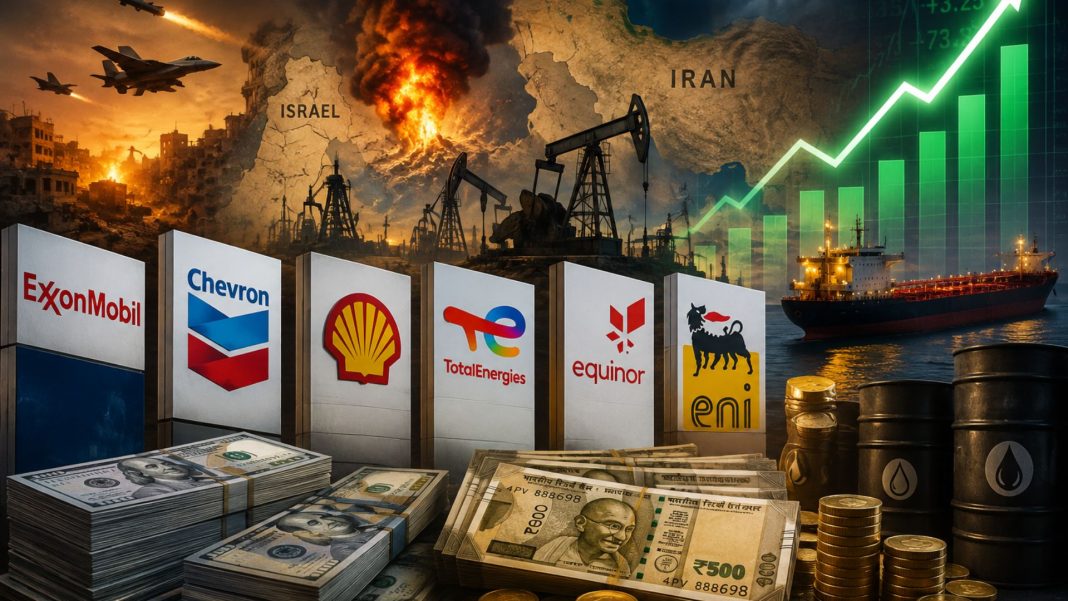

War in Middle East Brings Windfall Profits for 6 Oil Giants: As military tensions near the Strait of Hormuz and the conflict involving Iran sent shockwaves through global energy supply chains, everyday consumers across the globe faced a brutal squeeze on their household budgets.
Petrol and diesel prices shot up, electricity bills spiked, and basic living costs soared. Yet, on the other side of this global economic storm, the world’s biggest fossil fuel giants recorded one of their most lucrative quarters in recent history.
According to industry reports, the top energy majors banked a staggering $81 billion (approximately ₹7 lakh crore) in second-quarter (Q2) profits alone. To put that sum into perspective, this three-month income exceeds India’s entire annual defense budget for FY25-26 (approx. ₹6.81 lakh crore).
The Conflict Spike: Crude Oil Jumps from $70 to $120
War in Middle East Brings Windfall Profits for 6 Oil Giants: When military operations and shipping blockades flared up near critical sea lanes like the Strait of Hormuz, global energy markets panicked over potential supply disruptions.
The Price Surge: Crude oil jumped from roughly $70 per barrel to peak near $120 per barrel between April and June.
Average Jump: Over the quarter, average crude prices rose by 23%, directly transmitting inflation across transport, agriculture, and manufacturing sectors.
The Squeeze on Consumers: Tanking consumer purchasing power triggered double-digit percentage hikes in pump prices worldwide, hitting middle- and lower-income families hardest.
Big Oil’s Q2 Profit Bonanza: Who Earned What?
War in Middle East Brings Windfall Profits for 6 Oil Giants: While consumers paid extra at the pump, corporate earnings statements revealed massive profit surges driven by higher crude margins and elevated refining revenues.
| Oil Major | Notable Q2 Earnings & Trends |
|---|---|
| ExxonMobil | Doubled profits year-over-year, driven by record diesel output and elevated global oil prices. |
| Chevron | Reported strong sequential profit gains, posting over $12 billion in quarterly earnings. |
| Shell | Benefited from surging LNG demand and higher crude trading volumes, boosting quarterly performance. |
| TotalEnergies | Capitalized on increased LNG exports and robust crude trading activity to deliver strong Q2 results. |
| Equinor | Took advantage of tight European energy markets, achieving multi-year profit highs. |
| Eni | Posted multi-year earnings highs, supported by elevated European gas prices and resilient energy demand. |
“The crisis in the Middle East created a perfect storm for energy traders. Tighter supply, fear of maritime blockades, and rising demand meant energy producers could command premium pricing at almost zero additional operational cost.” — Global Energy Analyst
Global Backlash: Calls Grow for “Windfall Taxes
“The contrast between public suffering and record corporate profits has reignited fierce political debates across Western and developing economies alike:
Renewed Windfall Profit Tax Demands: Lawmakers in the U.S. Congress and European parliaments are proposing emergency surcharges on oil corporations earning abnormal profits due to war conditions.
Climate & Economic Activism: Human rights and environmental groups have criticized fossil fuel majors, pointing out that “crisis is being monetized while ordinary families bear the burden of fossil-flation.”
Corporate Defense: Oil executives argue that penalizing energy companies through windfall taxes discourages vital long-term energy security investments needed to replace volatile Middle Eastern supplies.
Ongoing Market Volatility & Future Outlook
As the conflict continues to simmer in key shipping lanes, analysts warn that energy prices may remain volatile through late 2026:
Strait of Hormuz Security: Maritime traffic remains restricted, keeping freight insurance rates elevated and crude prices supported well above pre-conflict averages.
Central Banks On Edge: Central banks worldwide are holding interest rates higher for longer to combat sticky energy-driven inflation.
Consumer Relief Measures: Several governments are contemplating temporary fuel tax cuts to insulate citizens from high petrol and diesel costs at the pump.