
National Handloom Day: On August 7, 2026, India celebrates its 12th National Handloom Day, honoring over 35 lakh weavers and allied artisans who keep the nation’s rich textile heritage alive. From the grand halls of the Rashtrapati Bhavan Cultural Centre to trending viral reels on Instagram, today marks a powerful convergence of ancient craftsmanship and modern youth culture.
As part of the nationwide celebrations, President Droupadi Murmu conferred the prestigious Sant Kabir Handloom Awards and National Handloom Awards to top master craftspeople, while Prime Minister Narendra Modi urged the nation, especially Gen Z and millennials, to post “Get Ready With Me” (GRWM) videos featuring authentic handwoven apparel.
Why Is National Handloom Day Celebrated on August 7?
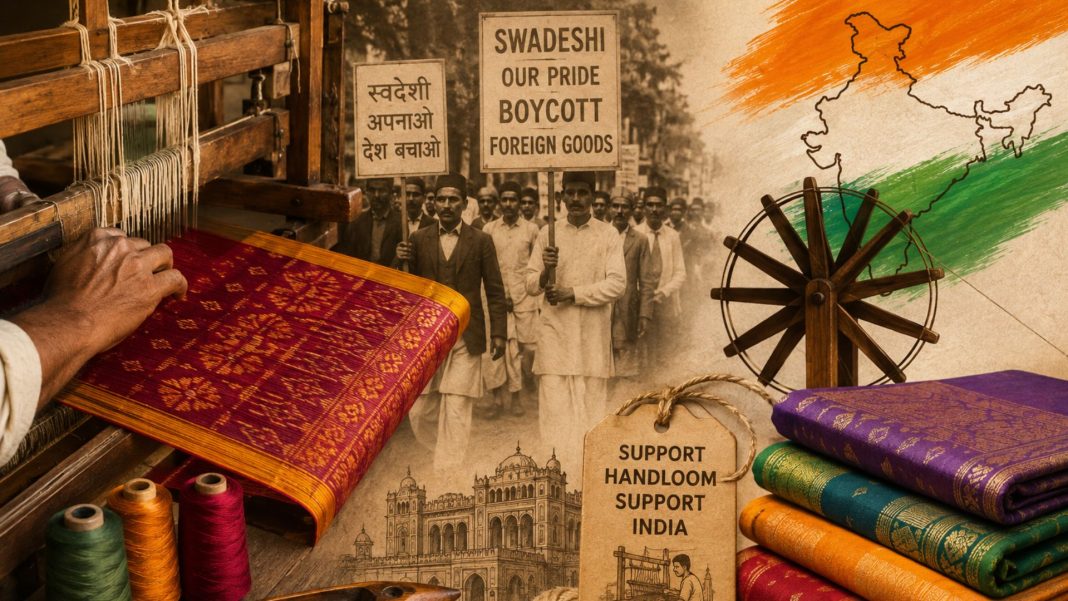
National Handloom Day: The historical significance of August 7 date traces back to August 7, 1905, when the historic Swadeshi Movement was officially launched at the Calcutta Town Hall.
The movement encouraged citizens to boycott foreign goods and support indigenous industries, making the handloom a symbol of India’s economic freedom and self-reliance (Atmanirbhar Bharat).
To commemorate this legacy, Prime Minister Narendra Modi inaugurated the first official National Handloom Day in Chennai in 2015. Fast forward to 2026, and the humble loom has evolved from a historical icon into a major driver of sustainable fashion and rural economic independence.
National Handloom Day 2026
National Handloom Day: Women-Led Development: Over 72% of India’s handloom workforce comprises women weavers, making handloom one of the largest self-sustaining, women-led economic sectors in rural India.
National Recognition: A total of 22 national awards (including 3 Sant Kabir Awards and 19 National Handloom Awards) were presented in New Delhi to acknowledge extraordinary innovation in traditional weaving.
The Handloom Hackathon 2026: Launched under the banner “Weaving Innovation”, the Ministry of Textiles introduced a nationwide hackathon inviting tech startups, students, and artisans to solve challenges in digital marketing, sustainable supply chains, and loom productivity.
Social Media Push: PM Modi called on citizens to mark the day with the same enthusiasm as Friendship Day, encouraging people to buy directly from artisanal clusters and share handloom stories using the official hashtag
From Pit Looms to Global Runways: India’s Weaving Powerhouses
India accounts for nearly 95% of the world’s handwoven fabrics. Every region brings its own unique weave, technique, and Geographical Indication (GI) protected identity:
| Region / State | Famous Handloom Heritage | Distinctive Character |
|---|---|---|
| Gujarat | Patan Patola, Bhujodi Shawls, Tangaliya | Double-ikat precision with intricate geometric motifs |
| Varanasi, Uttar Pradesh | Banarasi Silk | Rich gold and silver Zari brocades with intricate floral patterns |
| Telangana | Pochampally Ikat | Precise resist-dyeing techniques applied before weaving |
| Assam | Muga Silk & Mekhela Chador | Naturally golden silk, traditionally associated with Assam |
| Tamil Nadu | Kanchipuram Silk | Heavy mulberry silk featuring contrasting, solid-color borders |
| Odisha | Sambalpuri Bandha | Tie-and-dye techniques on warp and weft, featuring storytelling motifs |
The Sustainable Fashion Revolution: Why Handloom Matters Now More Than Ever
In an era dominated by fast fashion, synthetic microplastics, and high-carbon industrial factories, Indian handloom offers a time-tested model for zero-carbon, eco-friendly luxury:
Low Carbon Footprint: Handloom production uses manual pedal power rather than heavy electricity, consuming minimal energy.
Biodegradable Fibers: Artisans work almost entirely with natural fibers, pure cotton, wild silks, linen, and wool, dyed with organic vegetable and plant dyes.
Circular Design & Upcycling: Initiatives like “Weave The Future 4.0” held in New Delhi bring together designers and recyclers to convert textile waste into sustainable, high-value consumer products.
The Modern Twist: How Technology & E-Commerce Are Empowering Weavers
While the technique remains traditional, the ecosystem around handloom is rapidly modernizing:
e-Pehchan Cards & Digital ID: Government initiatives have verified and issued digital identity cards to millions of artisans, giving them direct access to welfare schemes, loans, and subsidies without middlemen.
Direct-to-Consumer (D2C) Platforms: E-commerce stores, social media marketplaces, and official platforms like Garvi Gurjari and India Handloom Brand are connecting weaver clusters directly with buyers in the US, Europe, Japan, and the Middle East.
Authenticity Safeguards: GI tags and QR-coded handloom marks ensure that buyers receive authentic hand-woven textiles rather than power-loom imitations.
How You Can Celebrate and Support Indian Handloom Today
Supporting local artisans doesn’t take much effort, but its impact on rural families is profound:
Wear Handloom with Pride: Choose an authentic handloom outfit, whether a Khadi shirt, an Ikat saree, or a handwoven scarf, for your workday or casual outings.
Buy Local, Buy Direct: Purchase directly from government handloom emporiums, certified artisan co-operatives, or verified craft exhibitions.
Share Your Story: Post your handloom look on social media using #NationalHandloomDay, tagging local weavers or craft brands to boost their reach.
Frequently Asked Questions (FAQs)
- When is National Handloom Day celebrated in India?
National Handloom Day is celebrated every year on August 7 to recognize the contributions of Indian weavers and honor the Swadeshi Movement launched on August 7, 1905.
- Who launched National Handloom Day?
Prime Minister Narendra Modi launched the first National Handloom Day on August 7, 2015, at the University of Madras in Chennai.
- Why is handloom important for India’s economy?
Handloom is the second-largest employer in rural India after agriculture. It supports over 35 lakh workers, empowers rural women (who make up over 70% of the workforce), and drives sustainable eco-friendly exports worldwide.
Also Read : Vande Mataram Bill Passed: What Penalties Will You Face for Disrespecting the National Song?