


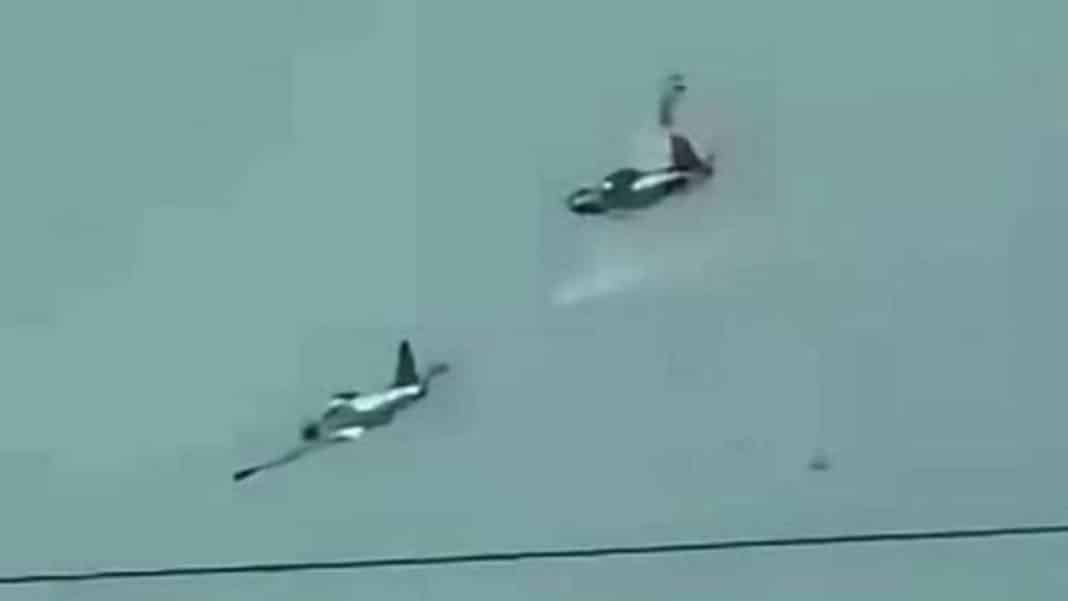

Philippines Plane Crash: A routine flight training exercise turned into a tragic disaster south of Manila when two trainer aircraft collided in mid-air. The Philippine Air Force (PAF) confirmed that all four service personnel aboard the two aircraft were killed instantly in the impact.
The disaster unfolded at approximately 3:51 PM local time near Fernando Air Base in Lipa City. Both aircraft involved, SIAI-Marchetti SF-260 light trainers, were executing low-altitude maneuvers when they made contact.
Debris from one of the shattered planes rained down near military personnel barracks inside the airbase perimeter, underscoring how close the accident came to causing even greater casualties on the ground.
Military response teams rushed to secure the crash area and recover the victims. Officials have launched a comprehensive investigation to determine the exact sequence of events leading up to the tragedy.
Complete Grounding of SF-260 Fleet Ordered Pending Probe
Philippines Plane Crash: In the immediate aftermath of the fatal collision, the Philippine Air Force ordered an immediate, fleet-wide grounding of all remaining SF-260 aircraft.
Fleet Status: All SF-260 trainer operations are suspended indefinitely until safety investigators complete a thorough technical audit.
Safety Protocol: Investigators are evaluating potential factors, including mechanical malfunction, extreme wake turbulence, or human error during close-formation low-altitude flight.
Casualty Details: Authorities have withheld the identities of the deceased pilots pending full notification of their families, honoring privacy requests during this period of grief.
This accident represents the fifth major mid-air aviation collision globally this year, highlighting the inherent risks involved in tactical formation training and low-level flight exercises.
Legacy Equipment Under Fire: Italy-Sourced Trainers in Focus
Philippines Plane Crash: The SF-260 is an Italian-designed light aircraft manufactured by SIAI-Marchetti (now part of Leonardo). The Philippine government procured 18 units of these propeller-driven trainer aircraft between 2010 and 2011 to serve as primary flight trainers for military aviators.
Despite their role as foundational training platforms, the SF-260 fleet has faced recurring safety incidents in recent years:
Philippine Air Force Aircraft Accidents
| Date | Location | Incident Details / Casualties |
|---|---|---|
| May 2026 | Benguet, Northern Philippines | An SF-260 aircraft crashed in a mountainous region during a navigation flight, killing two pilots. |
| January 2023 | Bataan Province, Philippines | An SF-260 trainer aircraft crashed into a rice field during a routine flight, resulting in two fatalities. |
| October 2026 | Lipa City, Fernando Air Base | Two SF-260 aircraft collided mid-air at low altitude during training, resulting in four fatalities. |
The repeated loss of aircrews and airframes has amplified scrutiny regarding the maintenance burden and structural longevity of these aging trainers.
Modernization Pressure Mounts Amid South China Sea Tensions
The fatal crash exposes the ongoing challenges confronting the Armed Forces of the Philippines (AFP) as they struggle to modernize their military inventory.
Critical Operational Bottlenecks:
Severe Budgetary Constraints: Funding shortfalls have repeatedly delayed procurement programs aimed at replacing legacy hardware across the Air Force, Navy, and Army.
Maintenance Strain: Heavy operational reliance on older airframes increases the burden on maintenance crews and risks operational fatigue.
Geopolitical Urgency: Expanding territorial disputes and heightened activity in the South China Sea have placed intense pressure on the air force to train and deploy combat-ready pilots rapidly.
Military analysts note that while the country is eager to upgrade its defense posture, procurement delays leave pilot candidates reliant on older equipment during high-risk training phases.
What Lies Ahead
The crash investigation team is retrieving flight logs, maintenance records, and air traffic communications from Fernando Air Base. Ground safety teams are also assessing structural damage around the base barracks where aircraft fragments fell.
As the defense establishment mourns the loss of four aviators, pressure is expected to build on defense leadership to accelerate the acquisition of modern, safer training platforms to protect the nation’s next generation of pilots.