


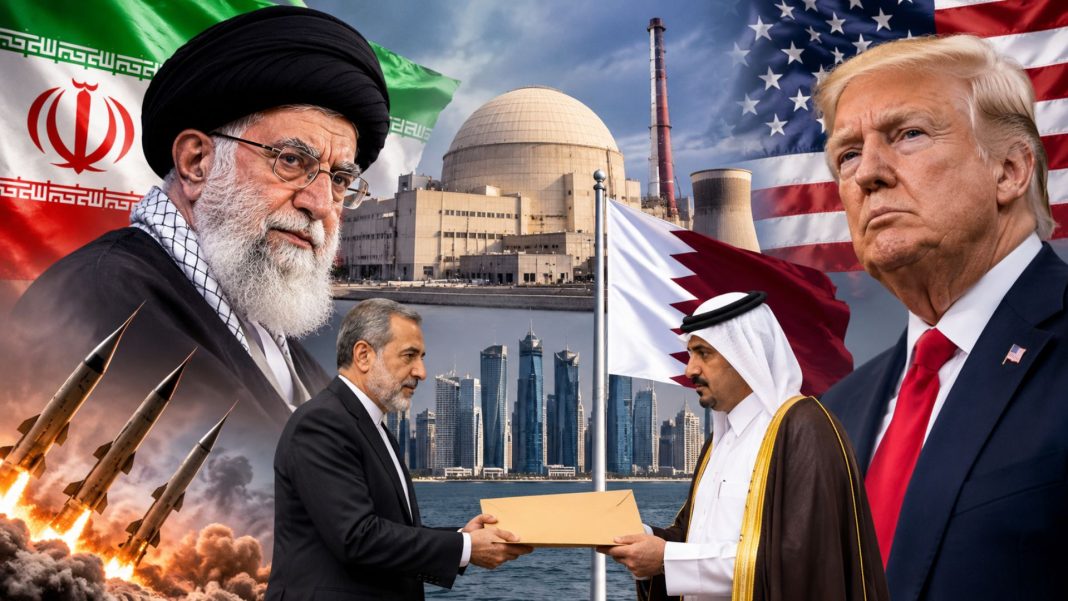

Tehran’s 7 Demands: Amid ongoing military conflicts and rising regional volatility, Iran has officially submitted a new nuclear proposal to the United States aimed at de-escalating tensions and paving the way for diplomatic negotiations.
Transmitted through Qatar, which continues to act as a crucial diplomatic bridge between the two arch-rivals, the proposal outlines non-negotiable prerequisites established by Tehran. Iranian officials have made it clear that any formal dialogue regarding their nuclear activities, as well as the reopening of the strategic Strait of Hormuz, remains strictly contingent upon Washington fulfilling seven core conditions.
According to media reports citing a senior Iranian official speaking on the condition of anonymity, the United States is currently reviewing the contents of the draft proposal. While specific procedural details remain classified, the preliminary demands focus heavily on economic relief, military disengagement, and sovereignty guarantees.
The 7-Point Mandate: What Iran Demands from Washington
Tehran’s 7 Demands: Iran’s updated diplomatic framework outlines specific economic, financial, and strategic security demands designed to reset bilateral relations and secure regional guarantees:
- Immediate Lifting of US Sanctions
Tehran’s primary demand centers on the total removal of unilateral economic sanctions imposed by Washington. These punitive measures have severely restricted Iran’s foreign trade networks, isolated its financial institutions, and limited its capacity to participate in the global economy.
- Unfreezing of Overseas Financial Assets
Iran is calling for the unconditional release of billions of dollars in sovereign assets currently frozen in foreign banking institutions due to US sanctions compliance. Reclaiming these reserves is seen as essential for stabilizing Iran’s domestic economy.
- Financial Compensation for War Damages
In a bold prerequisite, Iran insists on financial reparations from the US government to cover destruction inflicted upon its strategic infrastructure, military installations, and state assets during recent armed engagements.
- Termination of the US Naval Blockade
Tehran demands an immediate end to naval restrictions and blockades enforcing controls over Iranian maritime trade routes and ports. Iranian authorities highlight that these maritime operations severely impede the flow of commercial goods and international freight.
- Unrestricted Global Oil Exports
The proposal stipulates the complete withdrawal of curbs targeting Iran’s energy sector. Iran seeks unhindered access to international markets to export crude oil and petroleum products without fear of secondary sanctions on purchasing nations.
- Cessation of Military Strikes Against Iran and Regional Allies
Iran asserts that all offensive operations targeting its territory, as well as actions directed against allied regional groups and partner forces, must cease immediately. Tehran insists that stability cannot be achieved while military campaigns by US and Israeli forces persist across the Middle East.
- Scaled-Down US Military Presence in the Middle East
Rounding out the seven demands is a call for a significant reduction of US armed forces stationed across West Asia. Iran emphasizes that diminishing the footprint of American bases and military personnel in the region is critical to ensuring long-term security.
Diplomatic Deadlock: The Sequence Debate Stalling Progress
Tehran’s 7 Demands: Despite mutual recognition that a diplomatic resolution is necessary to avoid a broader regional war, negotiations remain stalled due to fundamental disagreements over sequence and priority.
Washington’s position focuses strictly on nuclear containment. The US administration maintains that Iran must first commit to verifiable limits on its nuclear program and offer absolute guarantees against weaponization before any form of policy relief can be considered.
Conversely, Tehran rejects early nuclear concessions, insisting that economic sanctions and security threats must be neutralized first. The core impasse comes down to a fundamental question: Should nuclear compliance precede economic relief, or must economic and security conditions be met before nuclear discussions can commence?
Qatar Steps Up as Key Regional Mediator
With direct diplomatic channels between Washington and Tehran remaining closed, third-party mediation has proven indispensable. Qatar has once again assumed a central diplomatic role, facilitating communication and delivering sensitive policy drafts between the two nations.
Doha’s historical experience in navigating complex Middle Eastern dynamics makes it uniquely positioned to broker dialogue. While the US government has not yet publicly confirmed receipt or acceptance of the terms, diplomats view the Qatari channel as the most viable path to preventing further escalation.
Whether this latest proposal leads to a diplomatic breakthrough or reinforces the existing stalemate depends entirely on Washington’s upcoming assessment and Tehran’s willingness to engage in structured compromise.
Also Read : Strategic Breakthrough: Iran Lifts 8-Month Strait of Hormuz Blockade for Indian Vessels