


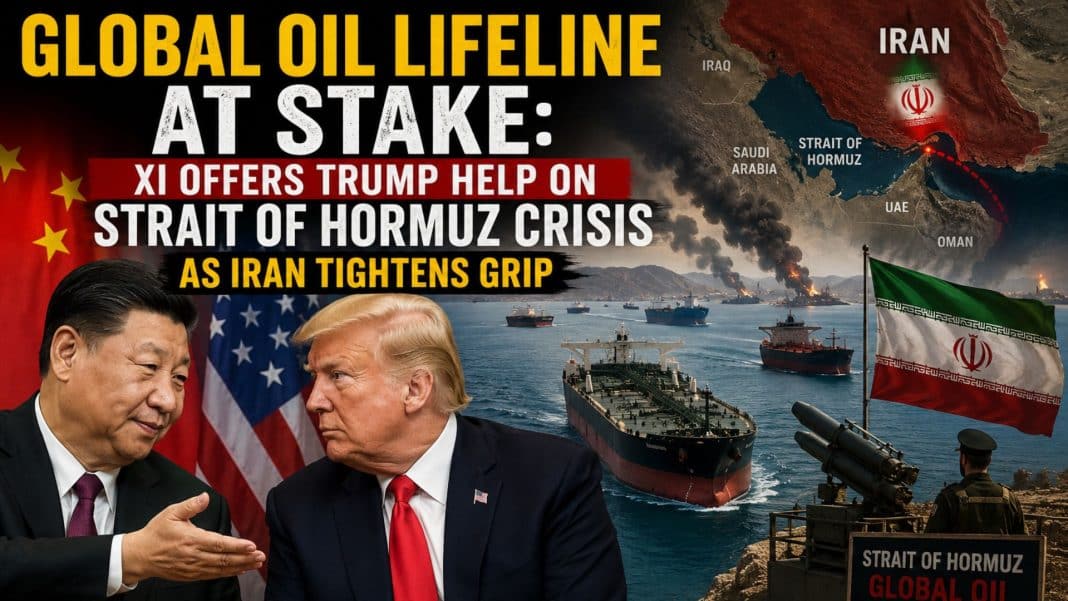

Global Oil Lifeline at Stake: The volatile waters of the Middle East have triggered a fascinating shift in global geopolitics.
In a surprising turn of events, U.S. President Donald Trump revealed that Chinese President Xi Jinping has offered to step in and help keep the critical Strait of Hormuz open.
As Iran enforces strict new maritime rules over this vital energy chokepoint, the world’s two largest economies are finding rare common ground to avert a global economic meltdown.
The Trump-Xi Equation: A Rare Diplomatic Convergence
Global Oil Lifeline at Stake: Speaking in an exclusive interview with Fox News, President Trump disclosed that President Xi Jinping expressed a strong desire to see a diplomatic breakthrough between Washington and Tehran.
“If there’s any way I can help, I would like to help,” Trump quoted President Xi as saying.
Why is China stepping up?
The motivation behind Beijing’s offer isn’t purely diplomatic, it is deeply economic.
The Oil Factor: China is the largest buyer of Iranian crude oil.
Mutual Interests: Any disruption or closure of the Strait of Hormuz directly threatens China’s energy security.
The Trump Verdict: “A country that buys that much oil naturally has a relationship with Iran. China absolutely wants the Strait of Hormuz to remain open,” Trump noted.
In a move to further solidify this unexpected thaw in U.S.-China relations, Trump has extended an official invitation to President Xi and First Lady Peng Liyuan to visit the White House this coming September.
Responding with equal diplomatic warmth during a state banquet in Beijing, Xi Jinping struck a remarkably soft tone. He suggested that China’s vision for national rejuvenation and Trump’s “Make America Great Again” agenda can mutually coexist, calling U.S.-China ties the most critical bilateral relationship in the world.
Iran’s New Maritime Rules: Total Control Over the Strait
Global Oil Lifeline at Stake: While Washington and Beijing talk diplomacy, Tehran is flexing its muscles on the water. Iran has officially implemented strict new regulations for all vessels traversing the Strait of Hormuz.
Under these new rules, commercial ships can no longer pass through freely; they are now subject to mandatory Iranian surveillance, vetting, and explicit clearance before being allowed transit.
Because a massive chunk of the world’s daily oil trade passes through this narrow corridor, these restrictions have sent shockwaves through global energy markets and international shipping boards.
Geopolitical Fallout and the BRICS Appeal
The ripple effects of Iran’s maritime blockade are being felt across global platforms. During a recent BRICS alliance meeting, Iran made a direct appeal to member nations, urging them to issue a formal and open condemnation of the actions taken by the United States and Israel.
This move highlights Tehran’s strategy to leverage its diplomatic ties with emerging economies to counter Western pressure.
Meanwhile, shipping companies are growing increasingly anxious, as any prolonged standoff in the Strait could disrupt global supply chains and spike oil prices worldwide.
What Lies Ahead?
The Strait of Hormuz is currently caught in a tug-of-war between Iran’s rigid naval blockade and the combined economic interests of the U.S. and China.
While the threat to global inflation and oil supply lines is very real, the crisis has opened an unexpected door for Washington and Beijing to work together.
Whether Xi Jinping’s mediation can successfully cool down Iran’s stance remains the multi-billion-dollar question for the global economy.
Also Read : Modi 7 agreements UAE: India and UAE Lock Major Accords in PM Modi’s Historic Visit