


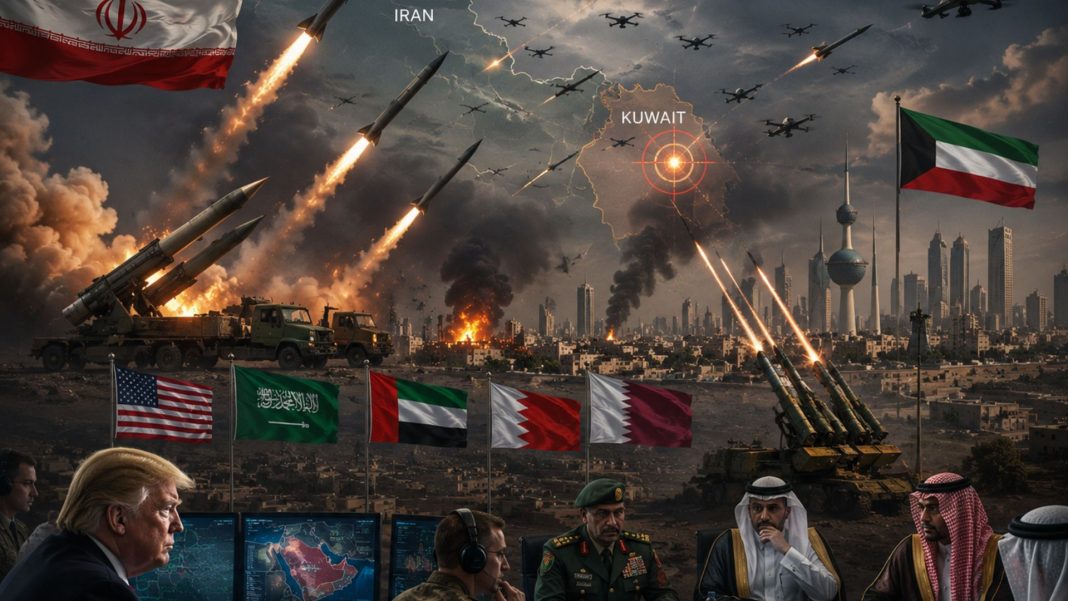

Middle East Flare-Up: In a massive escalation of regional tensions, Iran launched a ballistic missile and a fleet of attack drones targeting Kuwait late Wednesday night. The strike, which directly threatened a key U.S. military hub in the region, was successfully thwarted by a coordinated defense effort between Kuwaiti and American forces.
The United States Central Command (CENTCOM) has labeled the attack a “flagrant violation” of regional stability, warning that it stands ready with its Gulf allies to defend its forces and strategic interests against continued Iranian aggression.
The Midnight Strike: What Happened?
Middle East Flare-Up: According to official data released by CENTCOM, the attack unfolded in two distinct phases on the night of May 27:
The Drone Swarm: At around 10:17 PM, Iran deployed five one-way attack drones (suicide drones) over and around the strategic Strait of Hormuz. U.S. forces intercepted and destroyed all five drones before they could reach their intended targets.
The Ballistic Missile: Shortly after the drone deployment, Iran fired a ballistic missile directly toward Kuwait, aiming near a critical airbase housing U.S. troops. The Kuwaiti Air Defense Forces swiftly intercepted and neutralized the missile mid-air, preventing any casualties or ground damage.
The Pre-emptive Counter: Acting on real-time intelligence, U.S. forces also successfully neutralized a sixth drone on the ground in Bandar Abbas, Iran, right before it could be launched from an Iranian control site.
At 10:17 p.m. ET on May 27, Iran launched a ballistic missile toward Kuwait that was successfully intercepted by Kuwaiti forces. This egregious ceasefire violation by the Iranian regime occurred hours after Iranian forces launched five one-way attack drones that posed a clear…
— U.S. Central Command (@CENTCOM) May 28, 2026
The Motive: A Tit-for-Tat Cycle of Violence
Middle East Flare-Up: Military analysts and intelligence reports suggest this aggressive move by Tehran was a direct retaliatory strike.
The Trigger: Earlier this week, CENTCOM forces launched a targeted strike on an Iranian drone base near the southern port city of Bandar Abbas, destroying several Iranian unmanned aerial vehicles (UAVs).
In response, Iran’s Islamic Revolutionary Guard Corps (IRGC) openly declared its intent to target allied military installations in the region, culminating in Wednesday’s midnight assault on Kuwait.
Gulf Nations Unite: Fierce Diplomatic Backlash
Middle East Flare-Up: The attack has triggered a wave of furious condemnation from neighboring Gulf nations, effectively isolating Tehran diplomatically in the region.
United Arab Emirates (UAE): Condemned the strike in the strongest terms, boldly labeling it a “terrorist attack” and explicitly naming Iran as the perpetrator.
Saudi Arabia & Qatar: Issued strong statements calling the missile strike a “clear violation of Kuwait’s sovereignty” and pledged absolute solidarity.
Gulf Cooperation Council (GCC): Secretary-General Jasem Mohamed Al-Budaiwi stated the attack violated international law and the UN Charter, affirming that the GCC stands shoulder-to-shoulder with Kuwait.
Why This Matters: The Big Picture
This incident marks a dangerous shift in the Middle East security landscape for three major reasons:
Direct Threat to US Forces: Kuwait hosts thousands of American military personnel across several bases (including Camp Arifjan and Ali Al Salem Air Base). Targeting Kuwait is a direct challenge to the U.S. military footprint.
Strait of Hormuz Vulnerability: By deploying drones around the Strait of Hormuz , the world’s most critical oil transit chokepoint, Iran is signaling its capability to disrupt global energy supplies at will.
Kuwait’s Defensive Success: The successful interception highlights the advanced readiness of Kuwait’s own defense systems, proving that regional partners are increasingly capable of handling high-tech aerial threats alongside the U.S.
A Region on High Alert
While the immediate threat has been neutralized, the situation remains a powder keg. CENTCOM has reiterated that its forces remain on high alert, actively monitoring Iranian movements.
With the UAE, Saudi Arabia, and Qatar firmly backing Kuwait, Iran’s latest gamble may have backfired, inadvertently strengthening the military and diplomatic coalition between the U.S. and its Gulf Arab partners.
The international community now watches closely to see if Tehran will de-escalate or double down on its aggressive posture.
Also Read ; Strait of Hormuz Dispute: Trump Warns Oman of “Destruction” as Tensions Escalate