


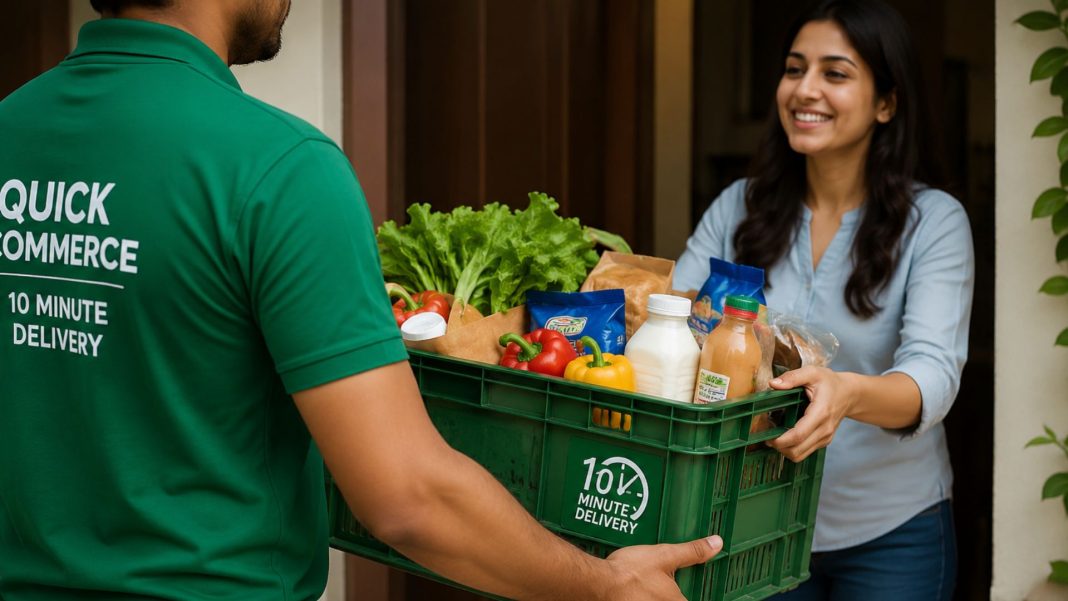

Online Grocery Expiry Date Disclosure Crisis: India’s online grocery and quick-commerce market has transformed the way millions of people shop.
From vegetables and dairy products to packaged foods and personal care items, consumers can now receive deliveries within minutes.
But a new nationwide consumer survey has raised a serious question: How can shoppers judge a product’s freshness if they cannot see its expiry date before placing an order?
A recent survey conducted by community platform LocalCircles found that nearly 48% of consumers buying groceries online are still unable to find “Best Before” or expiry date information on many digital platforms.
The survey collected responses from more than 17,000 consumers across 164 districts, making it one of the most extensive consumer studies conducted on the issue in recent years.
The findings have reignited concerns about transparency in India’s rapidly growing online grocery ecosystem.
What the Survey Found
Online Grocery Expiry Date Disclosure Crisis: According to the survey, only a small percentage of consumers reported consistently seeing expiry-date information across all platforms.
A large section of respondents said they either found the information only occasionally or could not find it at all.
The study also noted a modest improvement compared to 2024, when non-compliance levels were reportedly higher. However, nearly one in every two consumers surveyed still struggles to access critical shelf-life information before making a purchase.
For products such as bread, dairy items, packaged snacks, health foods, baby products, and beverages, the expiry date often plays a major role in purchasing decisions.
Without this information, consumers are effectively making purchases without knowing how much usable shelf life remains.
Why Expiry Dates Matter More Online Than Offline
Online Grocery Expiry Date Disclosure Crisis: In a physical store, shoppers can inspect packaging themselves. They can read manufacturing dates, expiry dates, batch numbers, and storage instructions before buying.
Online shopping removes that ability.
Consumers must rely entirely on the information displayed on an app or website. If key product details are missing, buyers have no practical way to verify freshness before placing an order.
Consumer groups argue that expiry-date visibility is particularly important because online grocery platforms often operate through large warehouses and dark stores where inventory moves rapidly.
Customers typically see only a product image and a brief description rather than the actual item that will be delivered.
What Indian Rules Actually Require
The issue is not merely about consumer preference it is linked to existing regulations.
Under the Legal Metrology (Packaged Commodities) framework governing e-commerce sales, packaged products sold online are expected to display important declarations that help consumers make informed decisions, including “Best Before” or “Use By” information where applicable.
In addition, food safety norms require online sellers to ensure that products supplied to consumers have sufficient shelf life remaining at the time of delivery.
Reports indicate that food products listed online are expected to retain either at least 30% of their shelf life or have a minimum number of days remaining before expiry, depending on the category.
The challenge, however, is that consumers often cannot independently verify this information before completing a purchase.
Which Platforms Are Under Scrutiny?
The LocalCircles study found significant differences between platforms.
According to the survey findings, Amazon Now, BigBasket, and Flipkart Minutes were generally found to be displaying expiry-related information more consistently.
Meanwhile, platforms including Zepto, Blinkit, Swiggy Instamart, JioMart, and Milkbasket were cited by the survey as showing lower levels of compliance in displaying “Best Before” details for many packaged products.
It is important to note that the survey reflects consumer observations and platform practices can change over time as companies update their systems.
What Consumers Are Complaining About
Consumer complaints generally fall into three categories:
Missing Expiry Information
Many users report that expiry or best-before dates are simply unavailable at the time of purchase.
Limited Shelf-Life Products
Some consumers say they have received products with very little shelf life remaining, particularly in categories such as bread and packaged foods. These complaints have been repeatedly highlighted in consumer forums and survey responses.
Confusing Product Information
In some cases, platforms display only the total shelf life of a product rather than the actual expiry date of the item that may be delivered. Experts argue that shelf-life duration alone does not help consumers determine product freshness.
Has the Government Taken Action?
The issue has already attracted regulatory attention.
Reports indicate that concerns regarding near-expiry products and missing expiry information were raised with food safety authorities in previous years.
Food regulator FSSAI has stated that online display requirements fall under rules administered by the Department of Consumer Affairs through the Legal Metrology framework.
This has created a regulatory grey area where responsibility is spread across multiple authorities, while consumers continue to demand greater transparency.
Industry observers believe stronger coordination between regulators, e-commerce companies, and food safety authorities may be necessary to ensure uniform compliance.
The Bigger Question for India’s E-Commerce Industry
India’s quick-commerce boom has been built on speed, convenience, and accessibility. Yet as the industry matures, consumers are beginning to ask tougher questions about transparency and product information.
Price, discounts, ratings, delivery speed, and return policies have long dominated online shopping decisions.
Freshness and shelf-life visibility may now be emerging as equally important factors, especially in categories involving food, beverages, and health-related products.
For an industry that increasingly handles everyday essentials, trust could become just as important as delivery speed.
Conclusion
The LocalCircles survey highlights a growing consumer concern at the heart of India’s online grocery revolution.
While digital grocery shopping continues to expand across cities and smaller towns, nearly half of surveyed consumers still report difficulty finding expiry-date information before purchasing products online.
The debate is no longer about whether consumers should have access to this information.
The real question is whether India’s rapidly growing online grocery ecosystem can deliver the level of transparency that modern consumers increasingly expect.
As regulators, platforms, and consumer groups continue to discuss the issue, one thing is clear: convenience alone may no longer be enough. Consumers also want confidence in what they are buying.
Also Read: Cocktail 2 Movie Review: A Diluted, Soulless Mocktail That Fails to Match the Original Magic