


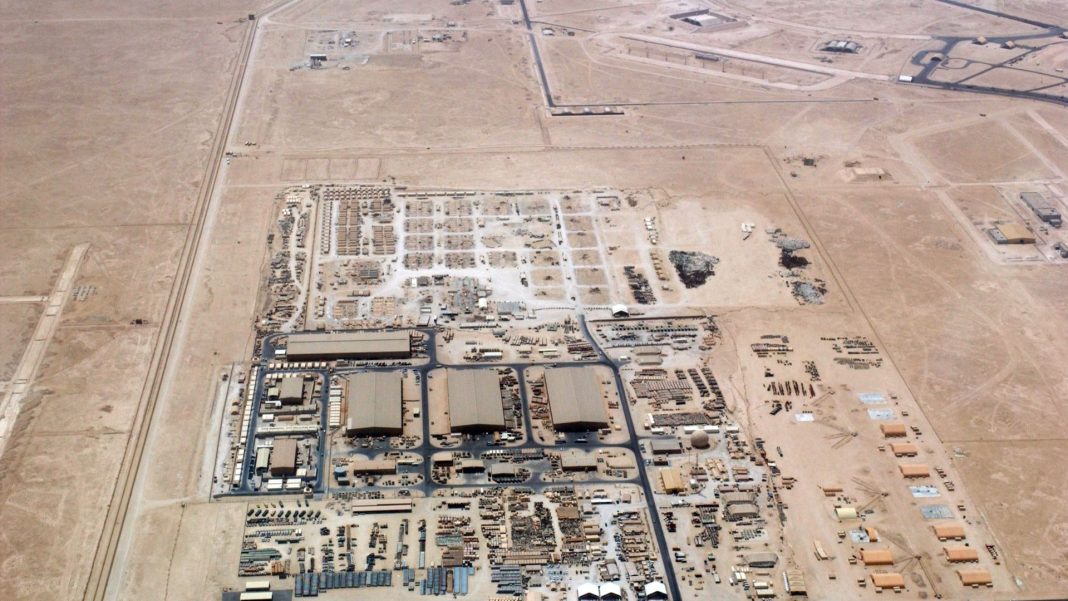

Qatar air base attack : In a dramatic and highly dangerous escalation that could tip West Asia into a full-scale regional war, Iran’s Islamic Revolutionary Guards Corps (IRGC) has claimed responsibility for a massive, direct military strike on the Al Udeid Air Base in Qatar.
Al Udeid is not just any military installation; it is the crown jewel of American strategic power in the region. Hosting the forward headquarters of the US Central Command (CENTCOM), the base serves as the operational nerve center for all American military maneuvers across the Middle East, North Africa, and Central Asia.
By targeting this ultra-secure facility, Tehran has crossed a definitive red line, shifting the conflict from proxy warfare to a direct, catastrophic confrontation with the United States.
HIMARS Turned to Ash: The Shocking Scale of Hardware Destruction
Qatar air base attack : According to official statements released by the IRGC, the strike was calculated to inflict maximum strategic and structural damage. Iranian state media claims that precision-guided munitions successfully breached the base’s advanced air defense umbrellas.
Capital Equipment Destroyed (As Claimed by IRGC):
HIMARS Rocket Systems: Multiple High Mobility Artillery Rocket Systems, highly prized for their precision firepower, were reportedly caught in the blast zones and obliterated.
Missile Stockpiles: Secondary explosions tore through specialized American missile storage depots, lighting up the Qatari desert sky for hours.
Logistical & Military Hardware: Advanced communication arrays, radar installations, and tactical vehicles parked on the tarmac were reduced to mangled steel.
While Washington and CENTCOM officials have yet to release a detailed damage assessment, independent satellite monitoring networks reported intense thermal anomalies and massive smoke plumes rising from the high-security zones of the airbase immediately following the reported strike time.
Special Forces Caught in the Crosshairs: Tehran Claims Fatalities
Qatar air base attack : The most volatile aspect of the IRGC’s claim centers around human casualties. Iranian military commanders assert that the strike did not just target machinery, but specifically hit sectors housing elite personnel.
IRGC Casualty Claims:
US Special Forces: Elite American commandos stationed at the base for rapid-deployment operations are claimed to be among the dead and wounded.
Anti-Iran Militants: Tehran alleges that the base was actively housing and training foreign, anti-government fighters intended for covert operations inside Iran. The strike reportedly wiped out these proxy assets alongside their American handlers.
If Washington confirms American service members were killed in this raid, the United States will be under immense political and military pressure to launch an immediate, overwhelming kinetic retaliation directly against Iranian soil.
Why Al Udeid Matters: The Strategic Anatomy of America’s Desert Fortress
To understand the sheer magnitude of this development, one must look at the sheer scale of the Al Udeid Air Base. Situated in the desert south of Doha, Qatar, the facility has long been considered virtually untouchable due to its size and geopolitical positioning.
The Hub of CENTCOM: It houses over 10,000 American and coalition troops, making it the largest gathering of US military personnel in the entire Middle East.
The Runway to the Region: With a massive 12,000-foot runway, it acts as the primary logistical and refueling artery for US bombers, fighter jets, and reconnaissance aircraft operating throughout the Persian Gulf.
A Geopolitical Shield for Qatar: The base historically cemented Qatar’s status as a major non-NATO ally, balancing Doha’s delicate diplomatic ties between Washington and Tehran.
An attack on Al Udeid is an attack on the very core of America’s ability to project power globally. It signals that no asset in West Asia, no matter how large or heavily defended, is safe from Iran’s missile arsenal.
The Oil and Shipping Panic: Markets Brace for Total Chaos
This strike adds fuel to an already raging fire. In recent weeks, the conflict across West Asia had already threatened global shipping routes, forcing tankers to bypass the Strait of Hormuz and the Red Sea in favor of the grueling journey around Africa’s Cape of Good Hope.
With a direct strike inside Qatar, a country that sits right on the edge of the Persian Gulf and shares the world’s largest natural gas field with Iran, the economic stakes have surged overnight.
The Immediate Economic Fallout:
Oil Shockwaves: Brent crude futures spiked instantly following the IRGC announcement, as traders price in the reality of a hot war involving a major OPEC producer.
Maritime Freeze: Commercial shipping companies are reportedly instructing all remaining vessels in the Persian Gulf to halt operations or flee the area, fearing that shipping lanes will become an active crossfire zone.
Insurance Skyrocketing: War risk insurance premiums for maritime and aviation routes operating out of the Gulf have reached prohibitive highs, effectively paralyzing regional supply chains.
India’s Worst Nightmare: Energy Security and 8 Million Expats in Danger
For New Delhi, the IRGC’s strike on Al Udeid hits dangerously close to home. India’s strategic stakes in Qatar and the wider Gulf region are immense, spanning energy, remittances, and human lives.
- The Threat to the Blue-Collar Lifeline
Qatar is home to roughly 800,000 Indian expatriates, while the wider Gulf region houses over 8 million Indians. A full-scale war breaking out right in their backyard raises the terrifying prospect of a mass evacuation crisis, dwarfing historical airlifts. Furthermore, any disruption to the billions of dollars in remittances sent back to India annually would deal a severe blow to the domestic economy.
- The Crushing Cost of a Gas Blockade
While India imports a massive amount of its crude oil from the Gulf, its dependence on Qatar for Liquefied Natural Gas (LNG) is absolute. Qatar is India’s largest supplier of LNG, powering domestic fertilizers, power plants, and city gas networks. If the waters around Qatar become unnavigable due to direct military conflict, India’s industrial sectors face immediate fuel rationing.
Broken Alliances: The Implosion of Regional Diplomacy
The strike on Al Udeid completely shatters the delicate diplomatic balancing acts maintained by Gulf nations. Qatar has long served as a neutral ground, frequently mediating talks between the US, Iran, Hamas, and various regional factions. By executing an attack on Qatari soil, Iran has sent a chilling message to the region: Neutrality is no longer an option.
Other alternative trade and transit networks, such as the India-Middle East-Europe Corridor (IMEC), which were already on life support due to ongoing hostilities, are now decisively dead in the water. The geopolitical reality has shifted entirely from building economic bridges to preparing for wartime contingencies.
What Happens Next? The World Awaits Washington’s Response
The global community is currently holding its breath. The ball is now firmly in Washington’s court. The Biden administration faces a critical dilemma: logistically downplay the IRGC’s claims to avoid an uncontrollable spiral, or launch a devastating retaliatory campaign against Iranian military infrastructure.
As US warships in the Arabian Sea go on high alert and the Indian Navy expands its own protective operations under Operation Sankalp, the lines between deterrence and total war have entirely blurred.
The strike on Al Udeid has rewritten the rules of engagement in West Asia, and the economic and military fallout will be felt from the boardrooms of New Delhi to the gas stations of Europe.
Also Read : West Asia’s ‘Dual-Chokepoint’ Crisis: Will the Red Sea Shut Down After the Strait of Hormuz?