


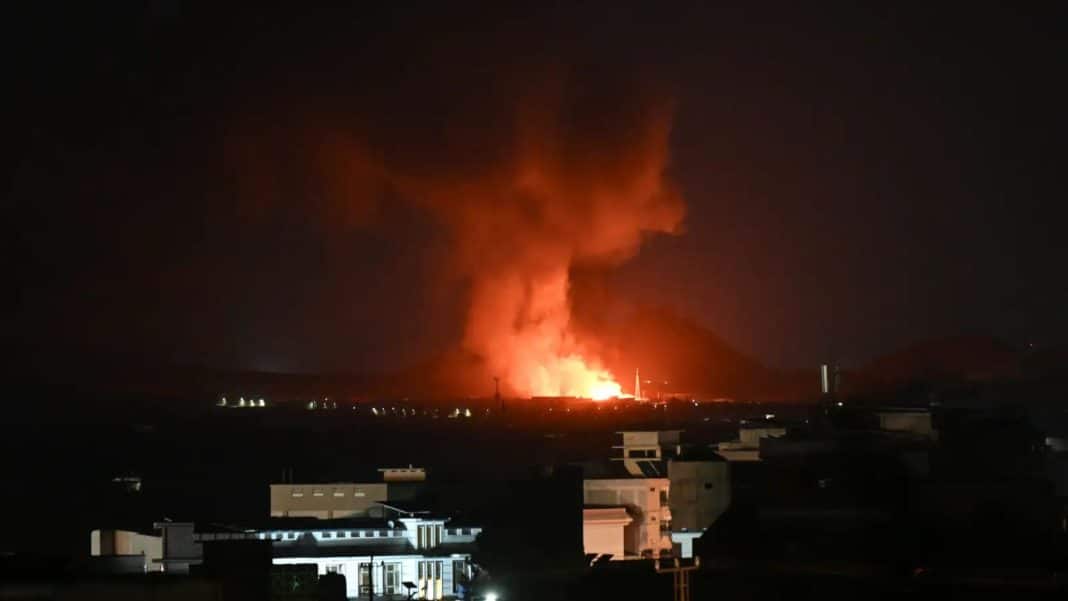

Tensions Soar at Durand Line: Cross-border volatility between Pakistan and Afghanistan has reached a dangerous flashpoint. In a sharp military escalation, Pakistan carried out targeted airstrikes across 10 strategic sites inside Afghan territory on Thursday morning.
Islamabad confirmed the action, describing it as a proportionate counter-offensive following a series of hostile drone intrusions launched from Afghan soil a day earlier.
The retaliatory strikes mark one of the most severe direct engagements between the neighboring nations in recent times, further straining an already fragile security dynamic along the Durand Line.
Islamabad’s Official Stance: Precision Strikes in Self-Defense
Tensions Soar at Durand Line: Providing details on the operation, Pakistan’s Federal Minister for Information, Attaullah Tarar, announced that the military neutralized launchpads and storage facilities hosting offensive platforms.
“In exercise of its sovereign right to self-defence, Pakistan conducted precision aerial and drone strikes against 10 locations in Afghanistan used for launching and storing these drones,” Tarar stated on X.
Key highlights from the Pakistani Ministry of Information include:
Targeted Objectives: Operations were restricted to pre-identified military and launch assets directly connected to cross-border incursions.
Air Defense Interception: Pakistani multi-layered air defense grids successfully tracked and intercepted 8 inbound drones on Wednesday before they could hit high-value targets.
Zero Domestic Damage: Neutralization of the aerial threats occurred near perimeter zones, preventing impact or casualties on the Pakistani side.
Firm Warning: Islamabad emphasized that while it seeks regional stability, continued proxy threats or sovereignty violations will draw immediate, decisive counteractions.
Infiltration Attempts & Artillery Clashes
According to defense officials, the trigger for the heightened posture was an attempted infiltration late Wednesday. Operatives linked to the outlawed Tehrik-i-Taliban Pakistan (TTP) allegedly attempted to cross border sectors from Afghan provinces including Paktia and Nangarhar.
Following the interception of infiltration teams and incoming drones near Kohat and Torkham, heavy border clashes erupted. Border units engaged in exchanges involving artillery, heavy mortars, and small arms fire targeting tactical posts along the perimeter.
The Afghan Response: Denials and Counter-Claims
Kabul has maintained a stance of flat denial regarding involvement in the drone sorties.
Spokesperson for the Afghan Taliban administration, Zabihullah Mujahid, dismissed Islamabad’s assertions, stating that Afghan security elements had not authorized or executed drone ops into Pakistani airspace.
While Kabul did not issue an immediate operational brief regarding Thursday’s 10-point strikes, previous military exchanges saw Afghan authorities warning against unilateral aerial intrusions.
Just days prior, a similar aerial deployment by Pakistan in Kunar and Paktika provinces sparked severe friction. While Pakistan claimed neutralization of active militant hideouts, local sources in Afghanistan reported civilian casualties and infrastructural damage, a claim that drew heavy condemnation from Kabul.
Roots of Conflict: Why TTP Remains a Regional Flashpoint
The friction between Islamabad and the Afghan Taliban administration stems from deep structural security disputes centered on the TTP:
Historical Pivot (2001): The operational divergence dates back to 2001, when Pakistan aligned with international coalition efforts. This move alienated militant factions, leading to the formation of the TTP, which targeted the Pakistani state
Ideological Alignment: While the Afghan Taliban and the TTP operate as distinct administrative and tactical entities, they share deep ideological roots, historical ties, and operational overlap.
Safe Haven Allegations: Islamabad designates the TTP as Fitna-al-Khawarij and repeatedly alleges that the group operates unhindered out of sanctuaries in eastern Afghanistan. Kabul consistently refutes these claims, asserting that Afghan soil is not permitted for use against any neighboring country.
As cross-border aerial engagements replace traditional ground standoffs, security analysts caution that without sustained diplomatic channels or effective counter-terrorism coordination, the border region risks spiraling into broader, unmanaged conflict.