



Venezuela Earthquake 2026: On the evening of June 24, 2026, northwestern and central Venezuela were struck by an unprecedented seismic catastrophe that has fundamentally rewritten the nation’s disaster response history.
Within a span of less than 40 seconds, two historically massive strike-slip earthquakes, a magnitude 7.2 foreshock at 6:04 p.m. local time, followed immediately by a devastating magnitude 7.5 mainshock, ripped through the Veroes municipality in the Yaracuy region. The impact radiated instantly across the capital of Caracas and the hard-hit coastal disaster zone of La Guaira.
Registering as the most powerful seismic event to strike the country or its coastal boundaries in more than 125 years, the “seismic doublet” has left a trail of immense structural ruin and rising casualties.
Acting President Delcy Rodríguez declared a national state of emergency as critical medical centers faced functional collapses and thousands of missing citizens remained buried under high-rise debris.
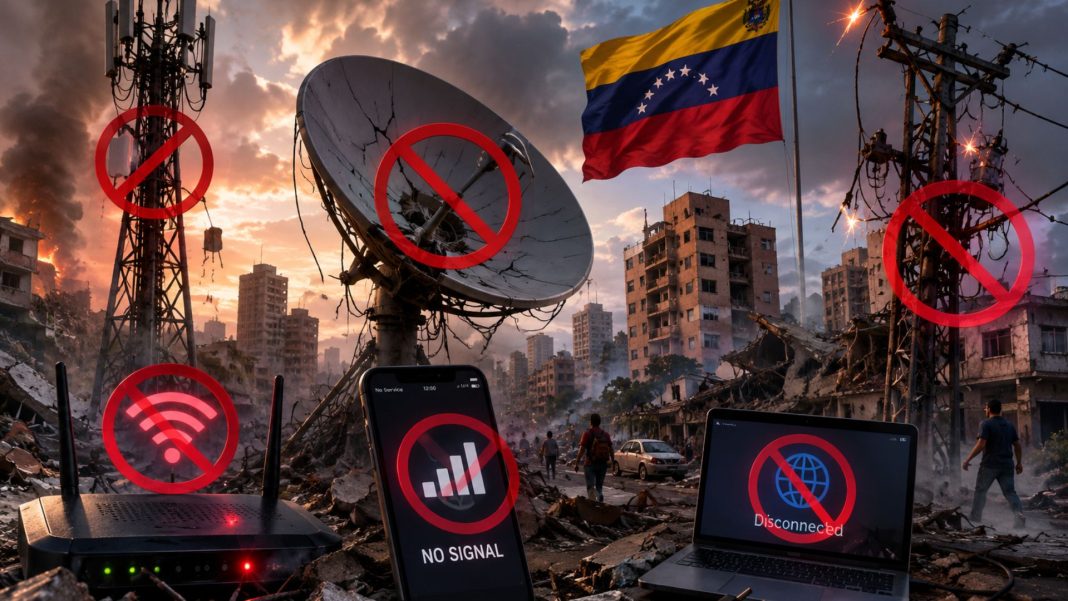
However, beyond the immediate structural failures, a much more paralyzing crisis is unfolding. The simultaneous, cascading collapse of Venezuela’s aviation gateway, power grid, telecommunications infrastructure, and utility networks has plunged millions into a dark, pre-industrial reality. Cut off from the digital world, the nation faces a fundamental question: How will Venezuela recover and emerge from the rubble of this total systemic breakdown?
AIR TRANSPORT IN TURMOIL: THE CRIPPLED HUB OF MAIQUETÍA
Ceilings Fall, Terminal Grounded
Venezuela Earthquake 2026: The immediate face of the operational crisis materialized at the Simón Bolívar International Airport in Maiquetía, the essential aviation gateway serving Greater Caracas. As the magnitude 7.5 mainshock sent violent lateral ground accelerations across the coast, the airport’s rigid concrete and architectural infrastructure buckled under the mechanical stress.
Severe Structural Damage: Internal suspended ceilings, architectural facades, and heavy internal panels collapsed entirely, littering terminal check-in counters, immigration lines, and boarding gates with tons of sharp debris.
Flight Freeze: With structural integrity checks required for the air traffic control towers and runways showing visible fractures, aviation authorities immediately suspended all commercial, private, and cargo operations.
The Aid Bottleneck
The forced closure of Maiquetía Airport has introduced a logistics nightmare into the rescue process. The “golden hours” immediately following an earthquake are when international urban search-and-rescue teams, specialized canine squads, and emergency medical kits must arrive to maximize survival rates under the rubble.
With the nation’s premier runway out of commission, emergency response operations face a severe bottleneck, forcing global humanitarian aid to plan around slower maritime ports or lesser-equipped domestic strips far from ground zero.
CASCADING FAILURES: VENEZUELA’S POWER GRID GOES DARK
Substation Destabilization and Preventive Blackouts
Venezuela Earthquake 2026: The seismic waves acted like a physical wrecking ball to the regional power transmission networks across the north-central states of Yaracuy, Carabobo, and Miranda. The shallow depth of the mainshock (confined to roughly 10 kilometers along the San Sebastián fault system) meant that maximum energy reached the surface, snapping high-voltage transmission lines and toppling heavy distribution towers.
The shaking instantly caused structural displacement, catastrophic short circuits, and oil leaks within regional sub-stations, triggering an immediate and widespread electrical blackout across central cities.
To prevent secondary disasters, specifically widespread urban fires fueled by live, snapped high-voltage cables touching collapsed buildings, grid operators intentionally executed preventive blackouts in highly compromised municipal parishes.
The Hospital Power Vacuum
The complete loss of municipal electricity immediately exacerbated the health sector crisis. Major medical facilities, such as the Hospital Dr. Francisco A. Rísquez and the Hospital Magallanes de Catia, were forced to rapidly transition their emergency rooms and intensive care units onto local diesel backup generators.
However, with triage zones overwhelmed by a massive influx of thousands of injured citizens, these temporary generators are under extreme stress, creating an urgent race against time to supply emergency fuel to keep lifelines running.
THE SILENT CRISIS: TOTAL TELECOMMUNICATIONS BLACKOUT
Fractured Fiber-Optics and Muted Towers
Perhaps the most terrifying element of the June 24 disaster is the total digital silence that followed. Modern telecommunications infrastructure depends heavily on ground stability, relying on rigid networks of underground fiber-optic backbones and elevated cellular routing towers.
The horizontal shifts of the strike-slip faults physically sheared through major subterranean fiber corridors running parallel to the northern transit highways. Concurrently, cell towers that survived the physical shaking lost their main municipal power sources.
While emergency battery backups were activated, many rapidly failed due to structural damage to the base stations or wore out within hours, resulting in a near-total collapse of internet connectivity and mobile networks across Greater Caracas.
The Operational Cost of Disconnection
This telecommunications blackout has severely crippled rescue operations on multiple fronts:
Pan American Health Organization
Coordinating Blind: First responders, civil defense teams, and red cross volunteers have found themselves unable to map active building collapses efficiently, leading to delays in dispatching heavy concrete cutters and cranes to parishes where victims are actively trapped.
The Trauma of the Unknown: For regular citizens, the digital void means an agonizing inability to contact family members. In an era where modern disaster relief leverages crowdsourced social media data to target rescue sites, Venezuela was suddenly rendered completely mute on the global grid.
UTILITY PIPELINES SHUT DOWN: DRY PIPES AND SAFELOCKED GAS
Preventing the Ultimate Fire Hazard
While the above-ground destruction dominated the landscape, an equally critical emergency was unfolding beneath the asphalt streets of Caracas. Civil engineering teams and utility networks recognized that natural gas pipelines are highly vulnerable to ruptures during shallow fault movements.
To prevent catastrophic explosions across fractured city blocks, authorities rushed to execute manual and automated emergency shutdowns of major natural gas distribution lines. Simultaneously, municipal aqueducts and clean water lines suffered hundreds of ruptures due to ground displacement, automatically severing water supply networks across several northern states.
Secondary Sanitation Risks
The complete suspension of water and gas lines introduces long-term humanitarian vulnerabilities. Without clean, running water, sanitary standards in crowded hospital emergency wards and makeshift open-air triage camps are deteriorating rapidly.
Furthermore, the cancellation of natural gas means displaced families have no safe means to boil water or cook food, raising concerns among international health bodies regarding potential outbreaks of waterborne diseases if utilities remain offline.
CITIZENS IN EXILE: A NATION SPENDING LIFE ON THE ASPHALT
The Psychology of Constant Aftershocks
The mental toll of the disaster has proven to be just as disruptive as the physical infrastructure collapse. Because the earthquakes struck as a seismic doublet, the psychological sensation was that the earth simply refused to stop shaking. In the 24 hours following the main 7.5 event, northern Venezuela was rocked by dozens of strong, persistent aftershocks.
Timeline of Systemic Collapse (June 24 Evening)
06:04 PM — Foreshock (Mw 7.2): Panic begins across north-central regions; initial masonry cracking observed.
06:05 PM — Mainshock (Mw 7.5): Massive structural shockwaves strike 39 seconds later; airport roofs collapse and the electrical grid fractures.
Night-Long — 30+ Aftershocks: Subterranean utility lines shear completely; thousands of residents flee to highways and public parks.
THE RECOVERY BLUEPRINT: HOW VENEZUELA CAN EMERGE FROM THE CRISS-CROSS OF RUIN
Emerging from a multi-sector structural collapse of this magnitude requires a highly coordinated, phased response that transitions from emergency survival into high-tech resilient rebuilding.
Phase 1: Securing the Emergency Lifelines
The absolute first step to stabilizing the crisis involves restoring basic operational logistics and localized communications:
Alternative Logistics Hubs: Until Simón Bolívar International Airport completes its structural integrity audits and clears the terminal debris, air traffic must be diverted to secondary military landing strips or nearby regional maritime ports to let international urban search-and-rescue teams land safely.
Deploying Satellite Comms: To break the digital blackout, emergency operations must bypass fractured ground infrastructure by deploying rapidly deployable satellite communication terminals across critical crisis management centers and hospitals.
Phase 2: Interdependent Utility Patching
Because infrastructure is entirely interdependent, utilities cannot be brought back online arbitrarily.
Step 1: Emergency Fuel Distribution — Directly powers hospital triage centers and heavy rescue cranes at building collapse sites.
Step 2: Substation Patches — Slowly re-electrifies surviving telecommunication cell towers and major water treatment pumps.
Step 3: Pipeline Pressure Tests — Conducts rigorous safety checks before the safe, gradual restoration of municipal natural gas.
By safely running diagnostics on the underground gas lines before re-pressurizing systems, engineers can avoid secondary gas explosions while municipal power slowly restores water filtration plants.
Phase 3: The Long Road to Anti-Seismic Reconstruction
Long-term emergence from the 2026 disaster demands a deep structural overhaul. Moving forward, the Ministry of Housing and Infrastructure must mandate strict adherence to modern anti-seismic building codes across the Caribbean-South American plate boundary zone.
Rebuilding public schools, high-rises, and transport hubs using base-isolation systems and flexible underground piping joints will ensure that when the San Sebastián fault inevitably moves again, Venezuela’s networks will bend rather than break.
Until then, the resilience of the nation relies entirely on the courage of its emergency crews working tirelessly in the silent dark to pull their country back into the light.
Also Read : Venezuela Earthquake: Devastating 7.2 and 7.5 ‘Doublet’ Quakes Hit, Japan Shaken by 6.9 Tremor Hours Later