

UP Assembly Elections: With the Uttar Pradesh Assembly elections approaching, political activity in Aligarh district has started gaining momentum.
Major political parties have begun strengthening their organizational networks and conducting internal assessments, while public representatives who were once rarely seen among voters are now becoming increasingly active in their constituencies.
Following the conclusion of elections in five states, including West Bengal, the political focus has now shifted entirely toward Uttar Pradesh.
If elections are held on schedule, less than a year remains for parties to finalize strategies, identify strong candidates, and reconnect with voters at the grassroots level.
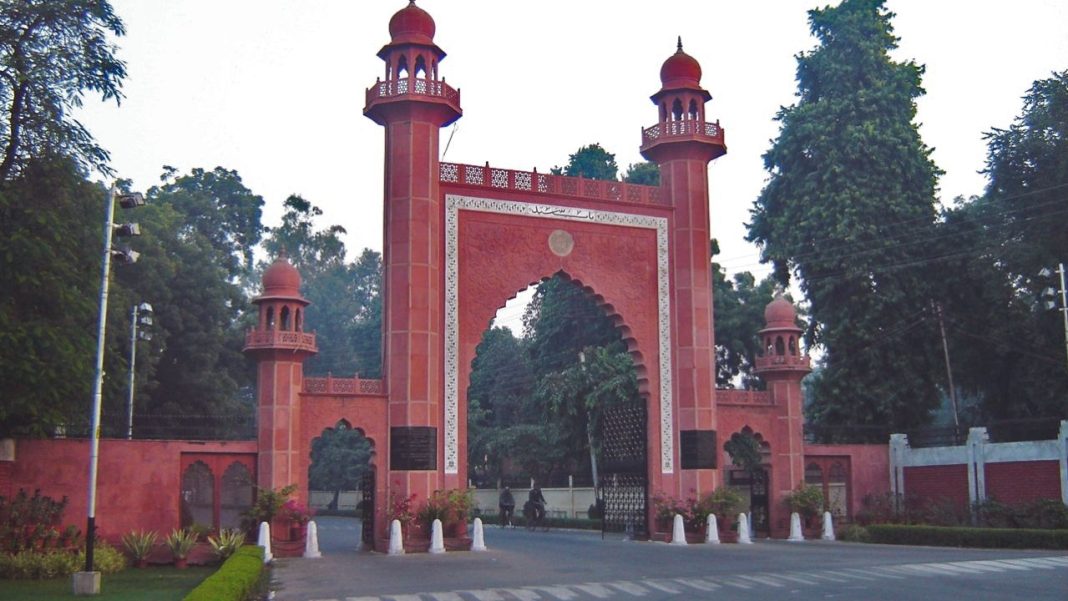
Aligarh Continues to Hold Political Importance
Aligarh has long been considered a politically influential district in Uttar Pradesh. During the eras of former Prime Minister Chaudhary Charan Singh and former Uttar Pradesh Chief Minister Kalyan Singh, several major political trends in the state were shaped from this region.
Because of its historical and social significance, every major political party considers Aligarh crucial in its electoral calculations.
Historically, before Independence, the Congress dominated the district. Later, during the rise of Chaudhary Charan Singh, the Janata Party emerged strongly across the region.
In recent years, however, the Bharatiya Janata Party has maintained control over all seven assembly seats in the district for two consecutive elections.
BJP and SP Begin Detailed Political Surveys
As election preparations intensify, both the ruling BJP and the Samajwadi Party have started conducting detailed political surveys in the district.
The BJP is reportedly collecting feedback regarding the performance and popularity of current legislators, potential candidates, public dissatisfaction, and local political equations.
The party is also evaluating the impact of recent administrative and political developments at the constituency level to avoid weaknesses during ticket distribution.
Meanwhile, the Samajwadi Party has deployed its youth wings and local organizational units to study caste equations, influential local leaders, and the ground strength of prospective candidates, especially in reserved constituencies.
The party is preparing constituency-wise reports to sharpen its strategy ahead of the elections.
The Bahujan Samaj Party is also believed to be assessing the political influence and acceptability of possible contenders, although it has not publicly acknowledged any formal survey exercise.
Public Representatives Suddenly More Active
One of the most noticeable changes in recent weeks has been the sudden increase in the visibility of elected representatives.
Leaders who earlier maintained limited public interaction have now begun organizing public grievance meetings and frequent constituency visits.
Political leaders are increasingly attending social gatherings, meeting local residents, responding to complaints, and participating in community events.
In several cases, even family members of politicians are being sent to represent them at local functions and public occasions.
This renewed activity is being viewed as a clear indication that political parties have already shifted into election mode.
Opposition Focused on Key Battleground Seats
Currently, the BJP holds all seven assembly seats in Aligarh district. However, four constituencies- City, Kol, Chharra, and Atrauli were once strongholds of the Samajwadi Party in 2012.
In the 2022 elections, SP finished as a close runner-up on these seats, making them central to the party’s comeback strategy.
The remaining seats Khair, Iglas, and Barauli have previously seen strong influence from the Rashtriya Lok Dal.
Political parties are now closely studying caste combinations, alliance possibilities, and voting trends in these constituencies.
Political observers also note that after the 2024 Lok Sabha elections and subsequent bypolls, the Samajwadi Party appears to have improved its position in Khair constituency, where it reportedly reached a very close second position, signaling a more competitive contest in the upcoming assembly elections.