


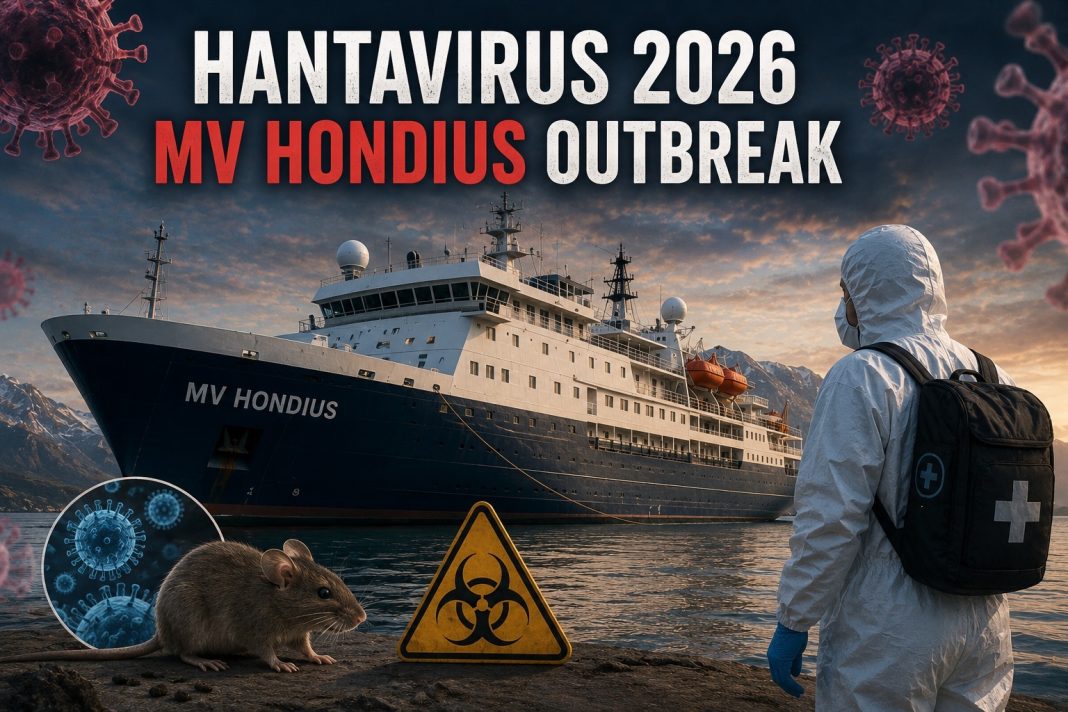

Hantavirus 2026: In the vast, silent expanse of the Atlantic, a luxury voyage turned into a high-stakes medical emergency.
The MV Hondius, a vessel designed for polar exploration and scenic wonder, recently found itself at the center of a global health drama.
Among the 150 individuals caught in this viral storm were two Indian crew members, now at the heart of a complex international evacuation and quarantine operation.
As the ship docked in the sunny Canary Islands on Sunday, May 10, 2026, the world watched a precision-guided medical maneuver unfold.
From the rugged tip of Argentina to the ports of Europe, here is the full breakdown of the hantavirus outbreak, the Indian response, and what you need to know about this rare pathogen.
The Evacuation: A Diplomatic and Medical Lifeline
Hantavirus 2026: The Embassy of India in Spain confirmed on Sunday that the two Indian nationals serving as crew members have been safely evacuated from the MV Hondius.
Following a protocol established by the World Health Organization (WHO) and Spanish authorities, the duo has been transported to the Netherlands.
Current Status of the Indian Crew:
Health Status: Both individuals are currently healthy and asymptomatic, meaning they show no signs of illness.
Quarantine: Despite feeling well, they will undergo a mandatory quarantine in the Netherlands as per international health safety protocols to account for the virus’s long incubation period.
Diplomatic Oversight: Indian Ambassador to Spain, Jayant N. Khobragade, is personally coordinating with Spanish officials to ensure their continued well-being.
The disembarkation was a scene of clinical precision.
Director-General of the WHO, Tedros Adhanom Ghebreyesus, noted that the operation involved full personal protective equipment (PPE) and rigorous disinfection processes for every passenger and crew member leaving the vessel.
What is Hantavirus? Understanding the “Rodent Virus”
Hantaviruses are a family of viruses primarily hosted by rodents-specifically mice, rats, and voles.
Unlike many other viruses that spread through coughing or sneezing, Hantavirus is typically a “hidden” threat found in dusty, enclosed spaces.
How it spreads
Hantavirus 2026: Humans generally become infected by inhaling aerosolized particles. When rodent urine, droppings, or nesting materials are stirred up (like when cleaning a storage area or a ship’s hold), the virus enters the air.
If a person breathes in those particles, the infection can take hold. While rare, bites or direct contact with waste can also cause infection.
The Andes Strain Mystery:
The outbreak on the MV Hondius is particularly concerning because it involves the Andes strain. While most hantaviruses stay strictly between rodents and humans, the Andes strain is the only version known to occasionally spread from person to person through close contact. This explains why the WHO and Spanish authorities treated the cruise ship evacuation with such extreme caution.
The Timeline: From Ushuaia to Tenerife
The journey began on April 1, 2026, departing from Ushuaia, Argentina. What was meant to be a month-long luxury transit turned into a nightmare as the virus began to circulate among the 150 people on board.
Casualties: To date, three people have died due to the outbreak.
Confirmed Cases: Five passengers who disembarked have tested positive for the virus.
Incubation: The challenge for health officials is the “silent window”—symptoms typically appear anywhere from one to eight weeks after exposure, making strict quarantine a necessity for everyone on board, even those who feel perfectly fine today.
India’s Domestic Context: Is There a Risk of Martial Law?
Whenever a “new” or rare virus hits the news, social media often buzzes with fears of lockdowns or “Martial Law.”
It is important to clarify: There is currently no threat of Martial Law in India related to this outbreak.
Hantavirus is not highly contagious in the way COVID-19 was. It does not spread rapidly through casual community contact.
The Indian government and health ministries are monitoring the two evacuated citizens, but because the virus is not airborne in a general sense, the risk to the Indian public is considered extremely low.
There are no domestic restrictions, and the situation is being handled as a localized maritime medical event rather than a pandemic threat.
Should We Be Afraid? The WHO Perspective
The WHO has classified this as an “isolated cluster.”
While the death rate for Hantavirus Pulmonary Syndrome (HPS) can be high sometimes reaching 38%,the risk is almost entirely confined to those who were on the ship or those in South American regions where the virus is endemic.
Tedros Adhanom Ghebreyesus has reassured the public that the epidemiological assessment is thorough.
With the ship now undergoing deep disinfection and passengers in controlled quarantine, the “chain of transmission” is effectively being broken.
How to Stay Safe: Prevention is Key
For the general public, especially those in urban or rural areas with rodent activity, the best defense is simple hygiene:
Seal the Gaps: Ensure rodents cannot enter your home or storage areas.
Wet Cleaning: Never sweep or vacuum dry rodent droppings. Use a disinfectant or bleach solution to wet the area down first so that particles don’t become airborne.
Ventilation: If you are entering a cabin, shed, or basement that hasn’t been opened in a long time, let it air out for at least 30 minutes before spending time inside.
The two Indian crew members in the Netherlands represent the resilience of India’s overseas workforce and the efficiency of modern diplomatic-health partnerships.
While the MV Hondius incident serves as a stark reminder of the unpredictable nature of zoonotic diseases, the swift global response suggests that this “viral voyage” is being brought to a safe, albeit cautious, conclusion.
For now, the message from health experts is clear: Stay informed, but do not panic. The world is much better prepared for these “isolated cases” than ever before.
By:Snigdha