


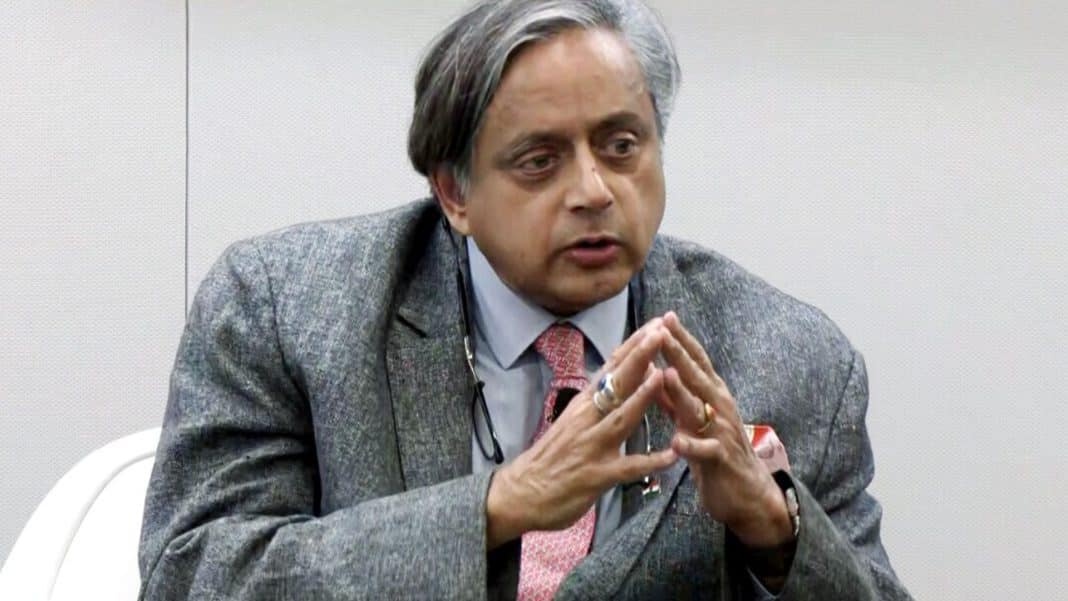

Shashi Tharoor US Trade War: In a thought-provoking session at Stanford University, Congress MP and former diplomat Shashi Tharoor raised a pointed question that has sent ripples through the Indian-American community: Why is the wealthiest ethnic group in the U.S. so silent while their interests are under fire?
As President Donald Trump ramps up aggressive trade tariffs and tightens H-1B visa regulations, the Indian diaspora, traditionally seen as a powerhouse of influence, appears to be in a state of “puzzling inaction.”
The “Missing” Lobby: No Calls, No Complaints
Shashi Tharoor US Trade War: Tharoor highlighted a startling disconnect between the community’s economic might and its political advocacy.
He recounted a conversation with a Congresswoman from Texas who represents nearly 19,000 Indian-American voters.
Despite the massive impact of new trade barriers on Indian businesses and services, she reported receiving not a single phone call from her Indian constituents expressing concern.
This passivity stands in stark contrast to other influential immigrant groups in the U.S. who are known for their vocal, organized, and relentless lobbying efforts.
Tharoor expressed concern that while Indian-Americans have achieved unparalleled financial success, they have failed to convert that wealth into sustained political pressure to safeguard the India-U.S. relationship.
The Psychology of Success: Fear of the “Backlash”
Shashi Tharoor US Trade War: Why would the most successful ethnic group in America choose silence over protest? Philanthropist Asha Jadeja, speaking at the forum, suggested that the community is grappling with a “New Anxiety” born out of its own visibility.
As the wealthiest demographic in the country, many Indian-Americans fear becoming targets of “nativist resentment.”
With a significant portion of H-1B visas held by Indians, the community finds itself directly in the crosshairs of current political rhetoric.
“The community is at a stage where they fear that being too loud might invite a backlash,” the panel noted.
Instead of public protest, many are choosing to keep their heads down and stay “under the radar.”
A Fragmented Identity: No Longer a United Bloc
The discussion further delved into the changing internal dynamics of the diaspora. Sumit Ganguly argued that the Indian-American community is no longer the monolithic voting bloc it once was.
Today, it is deeply divided along partisan lines, mirroring the polarization of the U.S. itself.
Unlike other diaspora groups that are often unified by “existential threats,” the Indian community lacks a single cohesive center for action.
This fragmentation, combined with the centralization of policy-making in the White House, has made it increasingly difficult for the diaspora to influence Washington’s strategic direction.
The “Jewish Model”: A Five-Year Transition?
Despite the current hesitation, the panel was optimistic about a shift toward a more empowered model of influence.
Asha Jadeja pointed toward the Jewish diaspora’s history of grassroots organizing as a gold standard for Indian-Americans to emulate.
While she called the current silence “shameful,” she viewed it as a transitional phase of political maturity.
When asked how long it would take for the community to find its voice and organize effectively, Jadeja predicted, “It will take five years.”
Rebuilding the World Order: The Law of the Jungle?
The conversation concluded with a broader warning about the global stage. Shashi Tharoor cautioned against a world governed by “autocratic power” rather than international norms.
He warned that abandoning established rules leads to the “Law of the Jungle,” where no nation truly wins.
For India to thrive, Tharoor emphasized that both the Indian government and its powerful overseas community must work together to rebuild a world order based on “common rules.”
The verdict from Stanford was clear: For the Indian diaspora to protect its future, it must move beyond economic success and embrace its role as a political heavyweight. The time for silence, the experts agree, must come to an end.
Also Read : Trump China Summit: US Reoffers $100 Million Aid Amid Cuba Crisis, Trump to Discuss Issue With Xi Jinping