


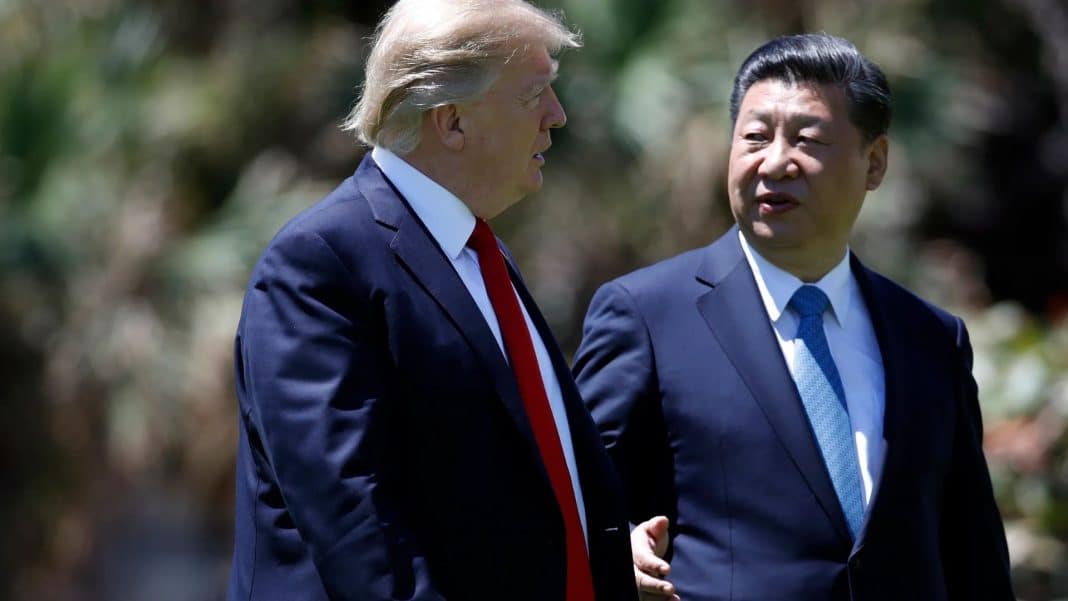

Trump China Summit: In a move that has blindsided diplomatic circles, the Trump administration has officially renewed a $100 million humanitarian aid package for Cuba.
The offer comes at a critical juncture, as the island nation grapples with its most severe economic collapse in decades, and as President Trump touches down in Beijing for a high-stakes summit with Chinese President Xi Jinping.
The timing is far from accidental. By placing a massive aid offer on the table while simultaneously boarding a plane to meet Cuba’s biggest benefactor, the White House is signaling a bold new chapter in its “Maximum Pressure” campaign.
A Nation on the Brink
Trump China Summit: Cuba is currently suffocating under the weight of chronic power outages, acute food shortages, and a historic exodus of its citizens.
While the Trump administration’s intensified sanctions have undoubtedly tightened the noose, the State Department is now pivoting the narrative, framing the crisis as a choice for the Cuban leadership: Relief or Resistance.
According to a statement released Wednesday, the $100 million in aid is intended to bypass the communist government entirely. The funds are slated to be distributed through:
1 The Catholic Church
2 Independent humanitarian organizations
3 Non-governmental grassroots groups
The U.S. State Department was blunt in its assessment: “The decision rests with the Cuban regime to accept our offer of assistance or deny critical life-saving aid.
” The message is clear, if the lights stay off and the shelves stay empty, Washington wants the Cuban people to blame Havana, not the U.S. embargo.
The “China Factor” and the Beijing Summit
Trump China Summit: The most intriguing layer of this diplomatic onion is the Beijing connection.
China has long been Cuba’s economic lifeline, providing political backing and financial credits that keep the island afloat.
Before departing for his bilateral summit with President Xi Jinping, Trump confirmed that Cuba is high on the agenda.
This suggests that the U.S. may be looking to negotiate a “grand bargain” regarding Caribbean security and influence.
“Cuba is a failed country and only heading in one direction, down!” Trump posted on social media before takeoff. “Cuba is asking for help, and we are going to talk! In the meantime, I’m off to China!”
By offering aid just as he meets Xi, Trump is effectively testing Beijing’s willingness to continue subsidizing a failing state while offering a U.S.-led alternative, on Washington’s terms.
The Rubio Influence: Hardline with a Human Face
The fingerprints of Secretary of State Marco Rubio are all over this policy. As the highest-ranking Cuban-American in U.S. history and a career-long hawk on Havana, Rubio has mastered the art of “confrontational compassion.”
Under Rubio’s guidance, the administration has maintained a crushing sanctions regime while publicly championing the “well-being of the Cuban people.” This latest aid offer serves as a powerful rhetorical tool. If Havana accepts, the U.S. gains a foothold through independent organizations. If Havana refuses, as they have previously with offers of satellite internet—the administration can paint the Cuban government as the sole architect of its people’s misery.
The Satellite Standoff
This isn’t the first time the U.S. has reached out with a “catch.” The State Department noted that previous offers, including technical support for unrestricted satellite internet access, were flatly rejected by the Cuban Communist Party.
Havana views such offers not as charity, but as “Trojan Horse” diplomacy designed to undermine state control. By renewing the offer now, the U.S. is daring the Cuban government to say “no” again during a period where the Cuban public’s patience is at an all-time low.
What Happens Next ?
The ball is now firmly in Havana’s court, but the eyes of the world are on Beijing. Will Trump pressure Xi Jinping to scale back support for the island? Or will the Cuban government swallow its pride to accept the $100 million and provide immediate relief to its starving population?
As the President’s motorcade rolls through Beijing, the fate of the Caribbean’s largest island hangs in a delicate balance between American “tough love” and Chinese strategic interests. For the people of Cuba, the $100 million represents a potential lifeline; for the politicians in Washington and Havana, it is a high-stakes game of geopolitical chess.
Also Read : Don’t Panic Buy: Govt Calms Public After PM Modi Raises Concerns Over West Asia Crisis