


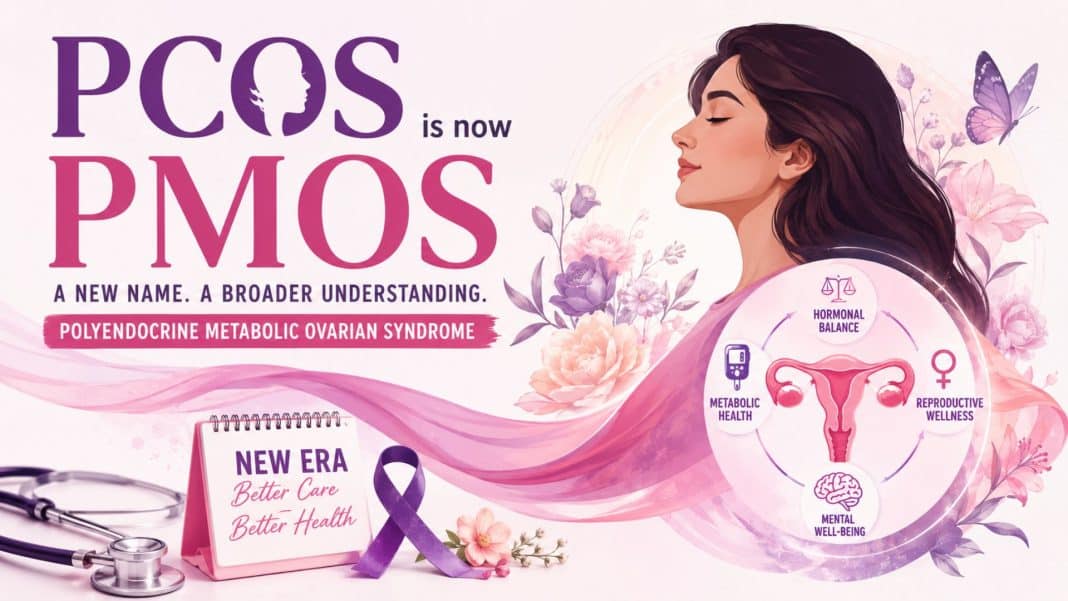

Why is PCOS Being Renamed to PMOS?: For decades, millions of women worldwide have lived with a diagnosis that felt incomplete, misleading, and often stigmatizing.
Polycystic Ovary Syndrome (PCOS) has long been the “go-to” label for a complex web of hormonal and metabolic struggles. However, as of May 2026, the medical world has officially pivoted.
Following a global consensus published in The Lancet, PCOS has been renamed Polyendocrine Metabolic Ovarian Syndrome (PMOS).
This is not just a cosmetic update; it is a fundamental shift in how we understand, diagnose, and treat women’s health.
Here is everything you need to know about this landmark transition and why it matters especially for women in India.
The End of a Misnomer: Why the Name Change Was Necessary
Why is PCOS Being Renamed to PMOS?: The term “PCOS” was coined based on the appearance of “cysts” on the ovaries. However, medical science has since proven two critical points that made the old name obsolete:
They aren’t actually cysts: The “cysts” seen on ultrasounds are actually small, immature follicles that haven’t developed properly due to hormonal imbalances.
The “Ovary-Only” Myth: Many women diagnosed with PCOS never develop these follicles, while others have them but no other symptoms. By focusing only on the ovaries, the old name ignored the fact that this is a whole-body endocrine disorder.
The new name, PMOS, finally acknowledges that the ovaries are just one part of a much larger metabolic puzzle.
Breaking Down the New Identity: What is PMOS?
Why is PCOS Being Renamed to PMOS?: The acronym PMOS provides a roadmap to the actual nature of the condition:
P – Polyendocrine: This signifies that multiple hormone systems not just reproductive ones are out of sync.This includes androgens (like testosterone), insulin, and often cortisol.
M – Metabolic: This is the most crucial addition. It highlights the condition’s deep links to insulin resistance, weight gain, and the long-term risk of Type 2 diabetes and heart disease.
O – Ovarian: It maintains the connection to reproductive health, acknowledging the impact on ovulation and fertility.
S – Syndrome: It remains a “syndrome”—a collection of symptoms that vary from person to person.
The Indian Context: A Health Crisis in Focus
In India, the shift to PMOS is a game-changer. Recent studies by the Indian Council of Medical Research (ICMR) suggest that the prevalence of this condition in India ranges from 3.7% to over 22%, with urban adolescents being the most affected.
For many Indian families, “PCOS” was often viewed strictly through the lens of fertility and marriage. If a woman could conceive, the condition was often ignored.
By renaming it Polyendocrine Metabolic Ovarian Syndrome, the medical community is sending a loud message: This is a lifelong metabolic health issue, not just a “pregnancy problem.”
Indian women are genetically more predisposed to insulin resistance at a lower BMI than Western populations.
PMOS emphasizes the need for early screening for diabetes and cardiovascular risks, which often go unnoticed in young Indian women.
Symptoms & Long-term Risks: The Full Picture
PMOS is characterized by a “spectrum” of symptoms. You don’t need all of them to have the condition:
Hormonal: Excess facial hair (hirsutism), severe acne, and thinning scalp hair.
Menstrual: Irregular, heavy, or completely absent periods.
Metabolic: Rapid weight gain around the abdomen and “Acanthosis Nigricans” (darkened skin patches around the neck or armpits, signaling insulin resistance).
Mental Health: A significant increase in the risk of anxiety, depression, and body dysmorphia.
If left unmanaged, PMOS increases the risk of Type 2 diabetes, Hypertension, Fatty Liver Disease, and Sleep Apnea.
How the PMOS Label Changes Treatment
The “PCOS to PMOS” transition shifts the treatment goal from “fixing periods” to “managing the system.” Under the new PMOS framework, multidisciplinary care is the gold standard:
Beyond the Gynecologist: While Gyns are essential, the “Endocrine” and “Metabolic” parts of the name mean that Endocrinologists and Dietitians now play a lead role in treatment.
Holistic Management: Treatment now prioritizes Insulin Sensitizing (often through Metformin or Inositol), stress management, and “circadian health” (improving sleep quality).
Mental Health Support: Recognizing PMOS as a systemic disorder helps reduce the “stigma” and “shame” associated with weight and hair growth, encouraging women to seek psychological support.
A New Era for Women’s Health
The renaming of PCOS to Polyendocrine Metabolic Ovarian Syndrome (PMOS) is a victory for patient advocacy.
It validates the experiences of millions of women who felt their symptoms were dismissed because their “scans looked normal.”
For women in India and globally, this name change is a call to action. It’s time to stop looking at the ovaries in isolation and start looking at the whole woman.
PMOS is not a life sentence; it is a manageable condition that requires a broader, kinder, and more scientific approach to care.