



India Fuel Price Hike: The West Asia crisis has sent shockwaves through the global economy, and India is now taking aggressive steps to manage the impact.
In a span of just 72 hours, the Indian government rolled out four major economic policy shifts aimed at protecting the country’s foreign exchange reserves and stabilizing the rupee.
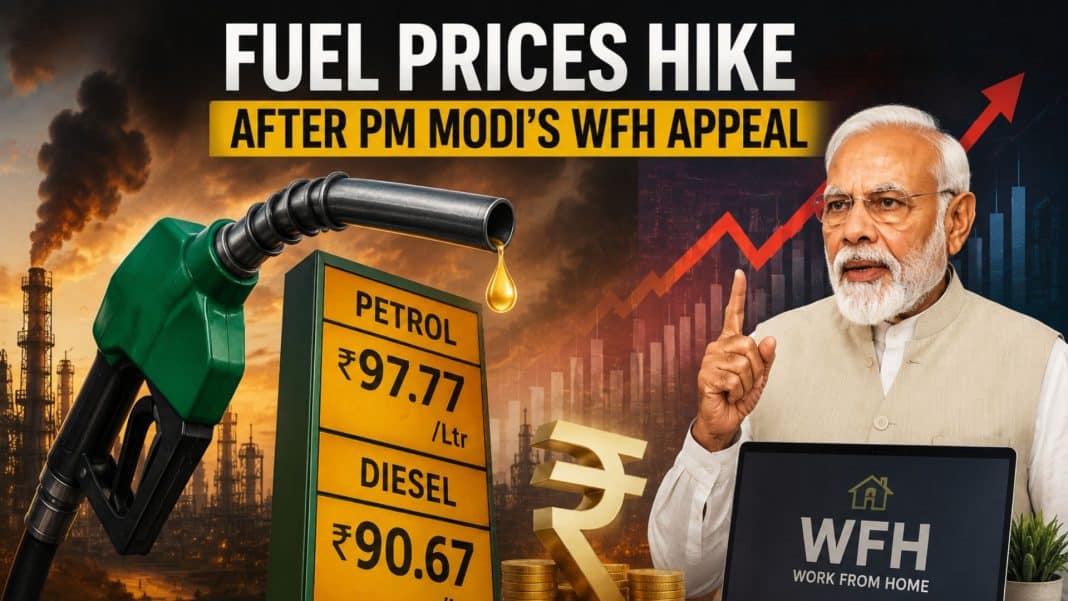
The most significant of these was the first retail fuel price hike in four years, announced on Friday, May 15, 2026.
This move follows a period of intense global volatility and a direct appeal from the Prime Minister for citizens to adopt austerity measures.
The Fuel Hike: A Rs 3 Jump in Retail Prices
India Fuel Price Hike: After nearly four years of keeping retail prices steady, the government officially increased the cost of petrol and diesel by Rs 3 per litre.
This decision was driven by the surge in global crude oil prices, which have climbed significantly due to the ongoing conflict in West Asia.
In the national capital, Delhi, petrol now stands at Rs 97.77 and diesel at Rs 90.67. In Mumbai, the financial hub, prices have crossed the century mark, hitting Rs 106.68 for petrol and Rs 93.14 for diesel.
Other major metros like Kolkata and Chennai have seen similar sharp increases.
Beyond petrol and diesel, Compressed Natural Gas (CNG) prices were also hiked by Rs 2.
This is expected to have a “multiplier effect” on the economy, as it directly increases the cost of public transport and the delivery of essential goods.
PM Modi’s “Wake-Up Call” and the WFH Appeal
India Fuel Price Hike: The price hike came just days after Prime Minister Narendra Modi addressed the nation with an unusual request. To conserve foreign exchange and reduce the country’s massive oil import bill, he urged citizens to:
Work from Home (WFH): To minimize unnecessary travel and fuel consumption.
Avoid Gold Purchases: To stop the outflow of US dollars.
Postpone International Travel: To keep foreign currency within the country.
While Union Petroleum Minister Hardeep Singh Puri assured the public that India has “sufficient reserves,” he emphasized that the PM’s appeal should be treated as a necessary wake-up call.
Until this hike, state-run oil companies were absorbing losses of nearly Rs 1,600 crore daily to shield consumers. However, with inventories running low, a price correction became unavoidable.
Three Other Major Economic Decisions
The fuel hike was the final piece of a 72-hour policy blitz. The government has taken three other critical steps to stabilize the economy:
Gold and Silver Import Duty Hike
On May 13, the Centre raised the total effective import duty on gold from 6% to 15%. Since India is one of the world’s largest consumers of gold, importing it requires vast amounts of US dollars.
By making gold more expensive, the government aims to reduce “non-essential” imports and protect the value of the rupee.
Rising Milk Prices
On May 14, India’s leading dairy cooperatives, Amul and Mother Dairy, announced a price increase of Rs 1 to Rs 2 per litre across various milk variants.
This was attributed to the rising costs of energy, packaging, and logistics. For instance, Amul Gold now costs Rs 70 per litre, adding further pressure to the monthly kitchen budget of the average household.
The Sugar Export Ban
Simultaneously, the government banned the export of raw, white, and refined sugar until September 30, 2026.
This decision was influenced by the El Niño weather pattern affecting crop yields and the need to maintain sufficient domestic stocks to keep prices under control during the West Asia crisis.
What Lies Ahead for the Indian Economy?
The government’s strategy is clear: focus on Self-Reliance and Dollar Conservation. By curbing the export of essentials like sugar and discouraging the import of luxuries like gold, the Ministry of Finance is trying to narrow the trade deficit.
There are also reports that the government may soon ease taxes for foreign investors in Indian bonds to attract more “Greenback” (USD) inflows.
For the common man, the immediate future holds higher costs for commuting and groceries, but policymakers argue these “bitter pills” are necessary to prevent a larger economic collapse amid global warfare.