


Before the ‘Melodi’ Meme Went Viral: Long before massive distribution networks or multi-billion dollar sweet conglomerates existed, Marhaura was recognized as the industrial backbone of Bihar, earning the title of the “Manchester of Bihar.”
The town’s economic growth began under British rule when its geography blessed with abundant water from two nearby rivers made it perfect for agriculture.
In 1904, the Cawnpore Sugar Works Limited established Bihar’s first sugar mill here.
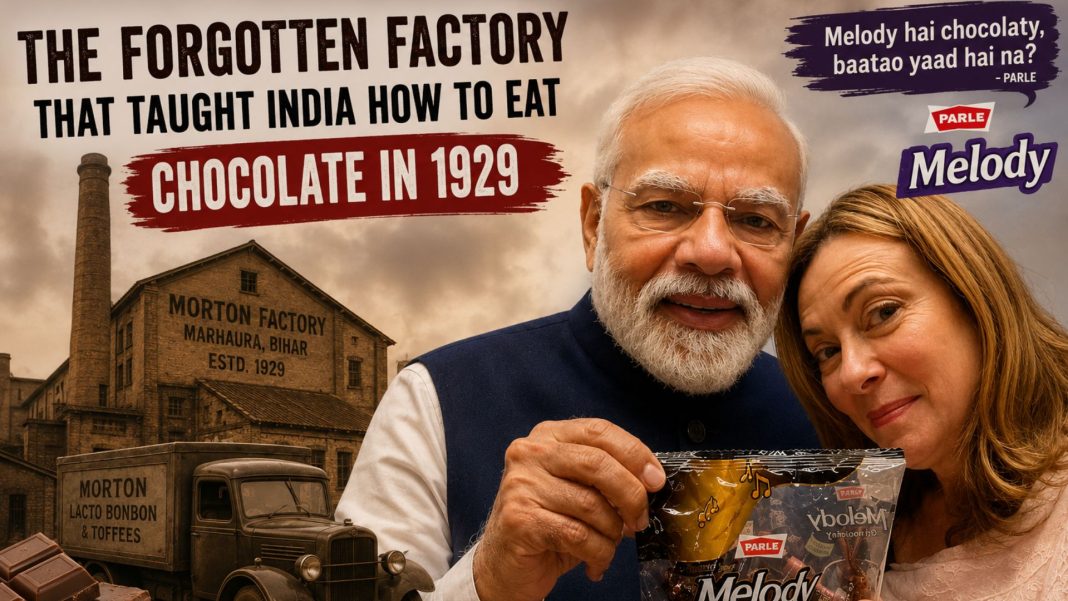
Recognizing a golden opportunity with an endless local supply of fresh sugar, British confectionery giant C&E Morton Limited (famous for supplying canned food to British troops during World War I) stepped in. In 1929, they opened the legendary Morton Factory.
The factory utilized locally sourced ingredients to create iconic sweets:
Lacto Bonbon: A rich, hard-boiled milk candy that became a national favorite.
Cream & Coconut Toffees: Crafted using local milk supplies, refined sugar, and fine coconut powder.
For decades, the factory faced zero major competition. The sweets manufactured in this small Bihar town were not only popular in local markets but were also supplied to the Indian Army and served on Air India flights.
Local farmers would cultivate sugarcane for the neighboring mill and rear buffaloes to supply thousands of liters of fresh milk daily to the Morton plant.
Shifting Landscapes: The Transition of Production Post-Independence
Before the ‘Melodi’ Meme Went Viral: As the years rolled on, the ownership of the Morton factory shifted from its British founders to a prominent Indian business house, transforming it completely into an indigenous brand. However, the post-independence landscape brought major changes to India’s sweet industry.
In 1929, the same year Morton opened, industrialist Mohanlal Dayal Chauhan established the house of Parle in Mumbai’s Vile Parle suburb. Initially focusing on biscuits and candies, newer players began leveraging emerging ports, better logistical infrastructure, and larger coastal consumer bases.
When Parle introduced Melody in 1983 with its famous tagline, “Melody hai chocolaty, baatao yaad hai na?“, the confectionery manufacturing hub had heavily migrated toward states like Maharashtra, Gujarat, and Tamil Nadu. These regions offered smoother supply chains, uninterrupted electricity, and massive proximity to metropolitan target markets.
From Industrial Marvel to Dust: Why the Pioneer Faded Away
Before the ‘Melodi’ Meme Went Viral: While production centers flourished in western and southern India, the pioneering units in Marhaura began to crumble. By the late 1990s, the entire industrial ecosystem of the town collapsed due to a combination of distinct issues:
Managerial Neglect & Bankruptcy: Failing to upgrade manufacturing tech made it hard to compete with modern, automated automated plants in Mumbai or Chennai.
Severe Labor Unrest: Deep disputes regarding exploitative wage structures (where workers received as little as ₹2,500 a month) crippled operations.
Infrastructure Breakdown: Frequent power outages and a lack of policy support from successive state governments pushed the parent company toward bankruptcy.
The neighboring sugar mill shut down in 1997, cutting off the direct supply of cheap sugar. Consequently, the historic Morton Factory permanently closed its gates in 2000.
A Forgotten Legacy Awaiting a Sweet Revival
Today, the sprawling 52-room colonial-era guest houses and vast factory grounds lie in ruins, frequently targeted by scrap thieves. The local economy suffered heavily, forcing generations of youth to migrate out of Bihar in search of employment.
While a modern diesel locomotive factory has brought some economic activity back to Marhaura since 2018, the emotional connection remains tied to the aroma of boiling sugar and milk that once defined the town.
In recent times, the state government approved a roadmap to revive closed sugar mills, giving locals a glimmer of hope that the chimney stacks of Marhaura might one day breathe life into the region again.
The next time a “Melodi” meme pops up on your social media timeline, remember that India’s real chocolate journey didn’t start with modern marketing campaigns it began nearly a century ago in a bustling, forgotten corner of Bihar.